Why Do Some Cars Keep Headlights On After Locking?
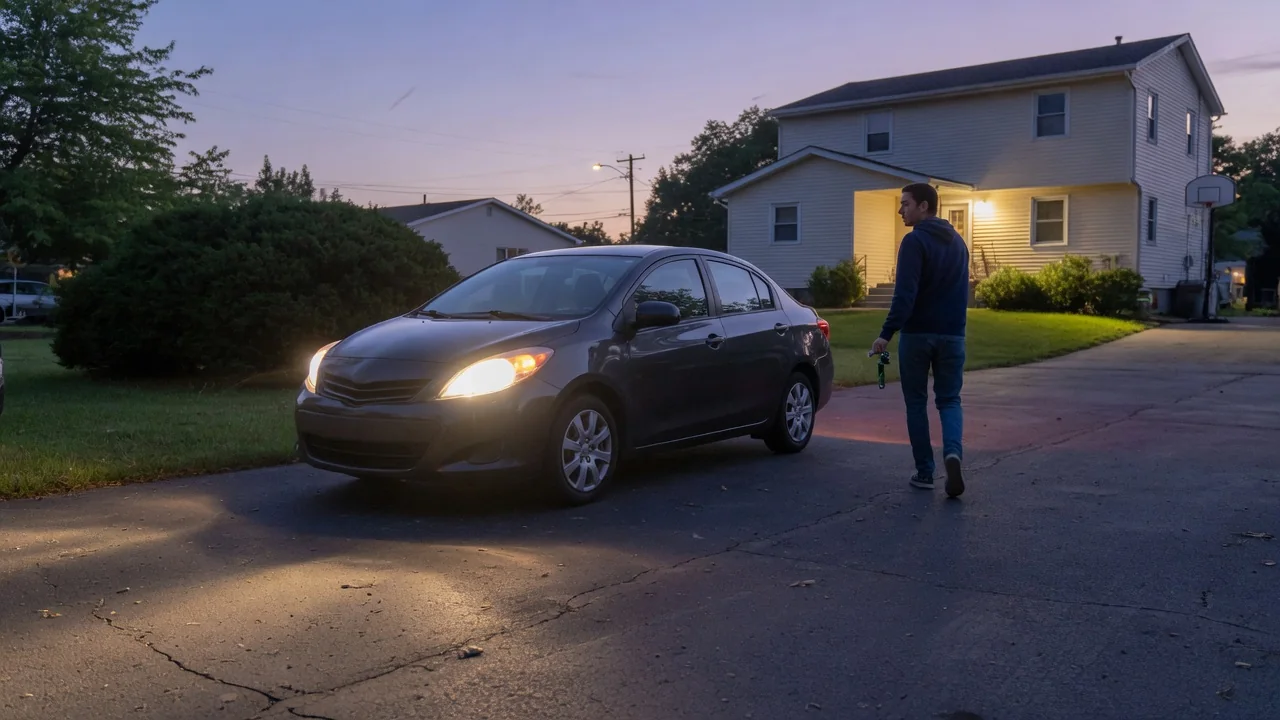
Walking away from a parked car and seeing the headlights still glowing can look like a mistake, yet it is usually deliberate. Many drivers ask why do some cars keep headlights on after locking, and the answer is a convenience feature often called follow-me-home lighting. It lights the path to a door, then shuts itself off after a short delay.
Courtesy setting
Follow-me-home lighting is a courtesy function built into the exterior lighting control of many modern vehicles. When the ignition is switched off and the car is locked, the body control module keeps the low beams, and sometimes the parking lamps or fog lamps, powered for a brief period. The purpose is practical: a dark driveway, an unlit parking lot, or a garage with no wall switch nearby becomes easier to cross when the car itself provides light for the first few steps away from it.
How the feature is triggered differs between manufacturers. On some vehicles it works automatically whenever the light switch sits in the auto position and the ambient light sensor reports darkness. On others the driver requests it, for instance by pulling the high-beam stalk once after switching off the ignition. A related function, sometimes called approach or welcome lighting, turns lamps on when the car is unlocked. The owner's manual and the vehicle settings menu show which versions a particular model actually has.
Timer
The lights stay on because a timer is running inside the control module, not because a switch has been left in the wrong position. Once the trigger condition is met, such as the ignition turning off, the driver's door closing, or the lock command arriving from the key fob, the module starts counting down. When the count ends, it cuts power to the lamps without any action from the driver. That is why the headlights go dark on their own after the car has been standing locked for a short while.
The length of that delay is often adjustable. Many vehicles offer a choice of durations in the instrument cluster or infotainment settings, typically ranging from a few seconds to a minute or more, along with an option to switch the function off entirely. Some cars restart the countdown if a door is reopened, while others extend the delay with each pull of the stalk. Because the menu names and available steps vary by brand and model year, the settings screen is the most reliable place to confirm what a given car allows.
Battery considerations
A reasonable worry is whether lights burning with the engine off will drain the battery. In normal use the effect is small. Headlights draw a meaningful current, but only for the short timed period, and a healthy battery handles that load easily. LED headlamps consume noticeably less power than older halogen bulbs, which reduces the demand further. The energy used is replaced the next time the engine runs and the alternator charges, or in a hybrid or electric vehicle, when the high-voltage system tops up the twelve-volt battery.
The picture changes somewhat with a weak or aging battery, very cold weather, or a pattern of repeated short trips that never allow a full recharge. In those conditions every extra electrical load matters a little more, and shortening the delay or disabling the feature is a sensible precaution. Many vehicles also include battery protection logic that shuts off lamps and other consumers if voltage falls too low or if lights remain on beyond a set limit. Whether a specific car has that safeguard depends on its design.
Everyday Use and Observations
In daily driving the feature tends to follow a recognizable pattern. The driver parks at night, turns off the ignition, steps out, and presses the lock button. The headlights remain on, the car confirms the lock with a flash or a chirp, and after the set delay everything goes dark. During daylight the same car may switch its lamps off immediately, because the light sensor sees no need for illumination. Noticing that difference between day and night is a good sign the system is working as intended.
Small variations are common and usually harmless. Some cars light only the low beams, others add tail lamps, license plate lamps, or puddle lights under the mirrors. A vehicle parked in a dim garage at noon may still trigger the delay because the sensor reads low ambient light. Neighbors or passengers occasionally mention that the lights were left on, which is a natural reaction to an unfamiliar car. Watching once from a distance to see the lamps shut off provides simple reassurance that nothing was forgotten.
Limits and Next Steps
The courtesy delay has clear boundaries, and behavior outside them deserves attention. Lights that are still on many minutes after locking, or that stay on until the battery is flat, are not following a normal timer. First check the simple causes: a light switch left in the manual on position, parking lamps selected by a stalk or switch position on some models, or a door, hood, or tailgate that the car does not register as closed. Any of these can keep lamps or modules awake longer than expected.
If the settings look correct and the lights still refuse to turn off, or the feature stops working without any change being made, the cause may lie in a switch, a sensor, a relay, or the control module itself. That kind of fault is best diagnosed with vehicle-specific information rather than guesswork, since the logic differs widely between manufacturers. The owner's manual explains the intended behavior, and a qualified technician with the right diagnostic equipment can confirm whether the system is operating as designed or needs repair.