What Is a Remote Window Open Feature?
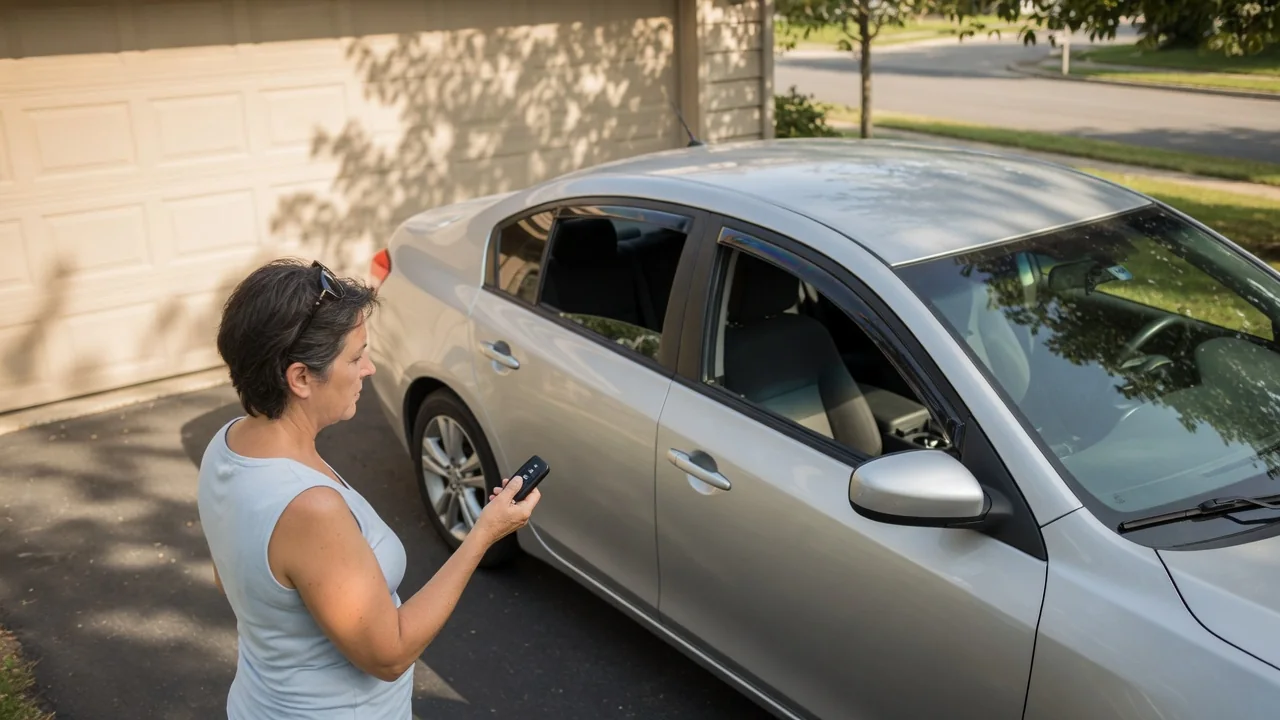
Anyone asking what is a remote window open feature is usually describing a key-fob command that lowers the side glass, and sometimes opens the sunroof, before the driver reaches the vehicle. It is meant to release trapped heat from a parked cabin. The function is convenient, but it works differently across brands and carries a few cautions worth understanding.
Control behavior
On many vehicles that offer it, the command is triggered by a specific press pattern on the unlock button, often a press followed by a longer hold. The body control module receives the fob signal, unlocks the doors, and then energizes the window motors. Drivers typically see all the glass drop together, and some models also tilt or slide the sunroof. The exact button sequence, the hold time, and which openings respond depend on the manufacturer, so the owner's manual is the reliable reference for any particular car.
Behavior during the movement also varies. Some systems lower the glass only while the button remains held and stop the moment it is released, which gives the driver control over how far the windows travel. Others run the windows fully down once the command is recognized. A matching close function exists on certain vehicles, sometimes through the lock button and sometimes only through the door key cylinder or door handle sensor. Working range is generally limited by the fob's radio signal, so obstructions and distance affect whether the command registers.
Weather exposure
The main purpose is ventilation. A cabin parked in direct sun can become far hotter than the outside air, and dropping the glass a minute before entry lets that heat escape so the air conditioning has less work to do. The same opening that vents heat also admits whatever the weather is doing. If the command is sent by accident, rain, snow, dust, or pollen can reach seats, door switches, and carpet before anyone notices, particularly when the vehicle is parked out of sight.
Accidental activation is the most common complaint. A fob squeezed in a pocket or bag can hold the unlock button long enough to trigger the function, and the owner may return hours later to open windows and a wet interior. Soaked carpet padding dries slowly and can lead to musty odors or fogged glass, while moisture around door-mounted electronics is never welcome. Vehicles parked outdoors, under trees, or in areas with sudden storms are the most exposed, and an open cabin also leaves belongings visible and reachable.
Disable options
Many manufacturers allow the function to be switched off, though the method differs widely. On vehicles with a touchscreen, the setting often lives in a vehicle, lock, or convenience menu, sometimes labeled as remote window operation or comfort opening. Other models use a menu in the instrument cluster controlled from the steering wheel. Where no owner-accessible setting exists, a dealer or qualified shop may be able to change the configuration with a scan tool, but whether that is possible has to be confirmed for the specific vehicle.
Before changing anything, it helps to check whether the setting is tied to a driver profile or to an individual key, since some vehicles store preferences separately for each fob. Turning off the opening command may or may not affect remote closing, and the two are occasionally listed as separate items. Owners who want to keep the feature but avoid pocket activation sometimes use a fob cover that makes the buttons harder to press unintentionally. If the manual does not mention the function, the vehicle may simply not be equipped with it.
Everyday Use and Observations
Used deliberately, the feature fits a simple routine. Approaching a car that has sat in a hot lot, the driver sends the command from several yards away, the windows drop, and the hottest air spills out before the doors open. Once underway, the glass can be raised and the climate control takes over with a cooler starting point. Drivers will notice the exterior lights flash or hear the locks cycle first on many models, followed by the sound of the window motors running.
A few observations help confirm normal behavior. All windows should move at a similar pace, and any that lag, stop short, or fail to respond may point to a separate issue with that door's motor, regulator, or switch rather than the remote function itself. If windows are found open with no memory of sending the command, an accidental button hold is the usual explanation, though a sticking fob button is worth ruling out. Cold weather can slow window movement, and frozen glass may not move at all.
Limits and Next Steps
The function has built-in boundaries. It ventilates the cabin but does not cool it the way remote start with air conditioning can, and it generally requires the driver to be within fob range. Some vehicles restrict it to the front windows, and others omit the sunroof. A weak fob battery shortens range and can make the hold command unreliable. After a vehicle battery disconnection, power windows on some models need their automatic up and down positions relearned before remote operation behaves normally again, following the manufacturer's procedure.
When the feature stops working or acts unpredictably, the sensible sequence starts with the simplest checks: confirm the setting is still enabled, try a second fob, and replace the fob battery if range has dropped. Persistent problems, such as windows opening repeatedly without input or a single window refusing remote commands, deserve a professional diagnosis, since the cause could lie in the fob, the receiver, a door module, or the wiring. Any stored fault codes should be read as clues to investigate rather than proof that a particular component has failed.