What Is a Portable Car Jump Starter?
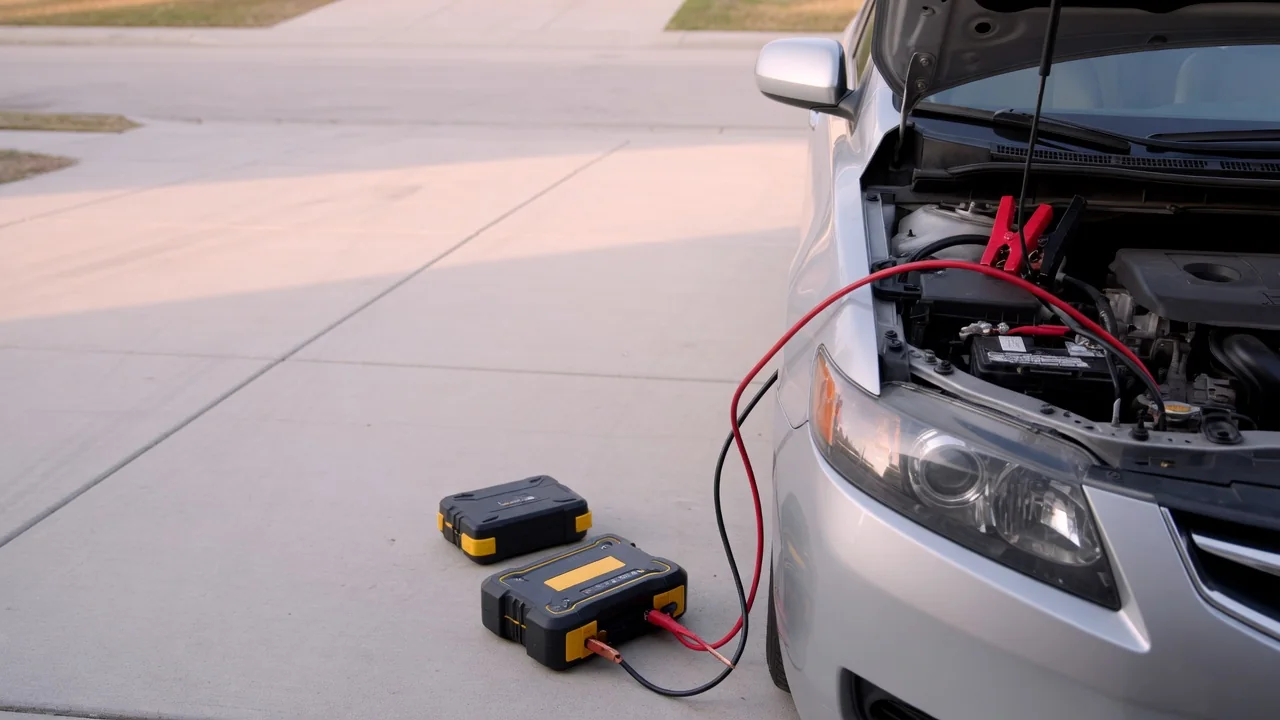
What is a portable car jump starter? It is a self-contained battery pack with cables and clamps that delivers a short burst of current to a vehicle whose own battery is too weak to crank the engine. Unlike jumper cables, it needs no second vehicle. Understanding how it stores energy, and where that energy runs out, helps drivers use one with realistic expectations.
Battery pack
At the heart of the device is an internal battery, most often a lithium-based pack in compact units or a sealed lead-acid battery in larger, heavier boxes. The pack stores a modest amount of energy but is built to release it quickly, because a starter motor demands a very high current for only a few seconds. That difference matters: a jump starter is designed for brief, intense discharge, not for slowly refilling a depleted vehicle battery the way a charger does.
Readers can usually find two kinds of numbers on the housing or packaging: a capacity figure describing how much energy is stored, and a current rating describing how hard the pack can push during cranking. Peak current claims are measured differently across brands, so they are best treated as rough guides. A small four-cylinder gasoline engine generally asks less of a pack than a large-displacement V8 or a diesel with high compression, so the manufacturer's stated engine-size guidance deserves more attention than headline numbers.
Clamp connection
The pack reaches the vehicle through short, heavy cables ending in spring-loaded clamps, typically colored red for positive and black for negative. Short cables are deliberate, since less length means less resistance and less voltage lost before current reaches the starter. Clean, firm metal contact matters just as much; a clamp biting through corrosion or resting on a painted surface can leave the engine clicking or cranking slowly even when the pack itself is fully charged.
Many modern units place a small control module in the cable that checks for reversed polarity or a short circuit and shows a light or sounds a tone before allowing current to flow. Where the clamps attach varies by vehicle. Some cars have the battery under the hood with exposed terminals, while others hide it in the trunk or under a seat and provide remote jump posts in the engine bay. The owner's manual identifies the approved connection points and the manufacturer's preferred sequence.
Charging and storage
A jump starter only helps if it holds charge when needed, and every pack slowly loses energy while sitting unused. Most recharge from a wall adapter, a USB port, or a vehicle power outlet, and display remaining charge through indicator lights or a small screen. Checking that display periodically, and topping the pack up after each use, is the habit that keeps the tool useful. The product instructions state how often the maker recommends recharging during storage.
Temperature shapes both lifespan and performance. A pack left in a hot cabin through summer may age faster, and lithium cells in particular have stated storage temperature limits printed in their documentation. Cold reduces the current any battery can deliver, which is unfortunate because cold mornings are also when weak vehicle batteries fail. Some owners keep the pack indoors in severe weather and carry it out when driving. Swelling, cracked housing, or damaged cables are reasons to stop using a unit.
Everyday Use and Observations
In ordinary use, the device suits the familiar scenario of an interior light left on overnight or a car parked for several weeks. The typical signs are dim dash lights, a rapid clicking from the starter, or slow, labored cranking. With the pack connected according to its instructions and the vehicle's manual, a healthy engine usually fires within a few seconds. Makers generally advise short cranking attempts with rest periods between them, protecting both the pack and the starter motor from overheating.
What happens afterward is informative. If the engine starts and the car behaves normally for weeks, the discharge was probably a one-time drain. If the battery is flat again the next morning, the pack has revealed a pattern rather than solved a problem. Many units also include a flashlight and USB outputs for charging phones, which draw from the same stored energy, so heavy accessory use can leave less in reserve for the next start. Start-stop and hybrid vehicles may have specific procedures worth confirming.
Limits and Next Steps
A jump starter supplies cranking current; it does not diagnose or repair anything. It cannot revive a battery with an internal failure, compensate for an alternator that is not charging, or overcome a seized starter, a fuel delivery fault, or an immobilizer issue. An engine that cranks strongly yet refuses to start is not short of electrical energy, and repeated attempts simply drain the pack. Some units also refuse to activate when the vehicle battery's voltage is extremely low, depending on their protective design.
After a successful jump, the sensible next step is finding out why the battery went flat. A shop or parts store can test the battery, the charging system, and any parasitic draw that drains power while the car is parked. A warning light or stored fault code that appears after a low-voltage event is evidence to interpret, not proof that a component has failed, and its meaning can depend on the manufacturer. A short drive rarely restores a deeply discharged battery, so a proper charger may be needed.