How to Store a Portable Jump Starter in a Car
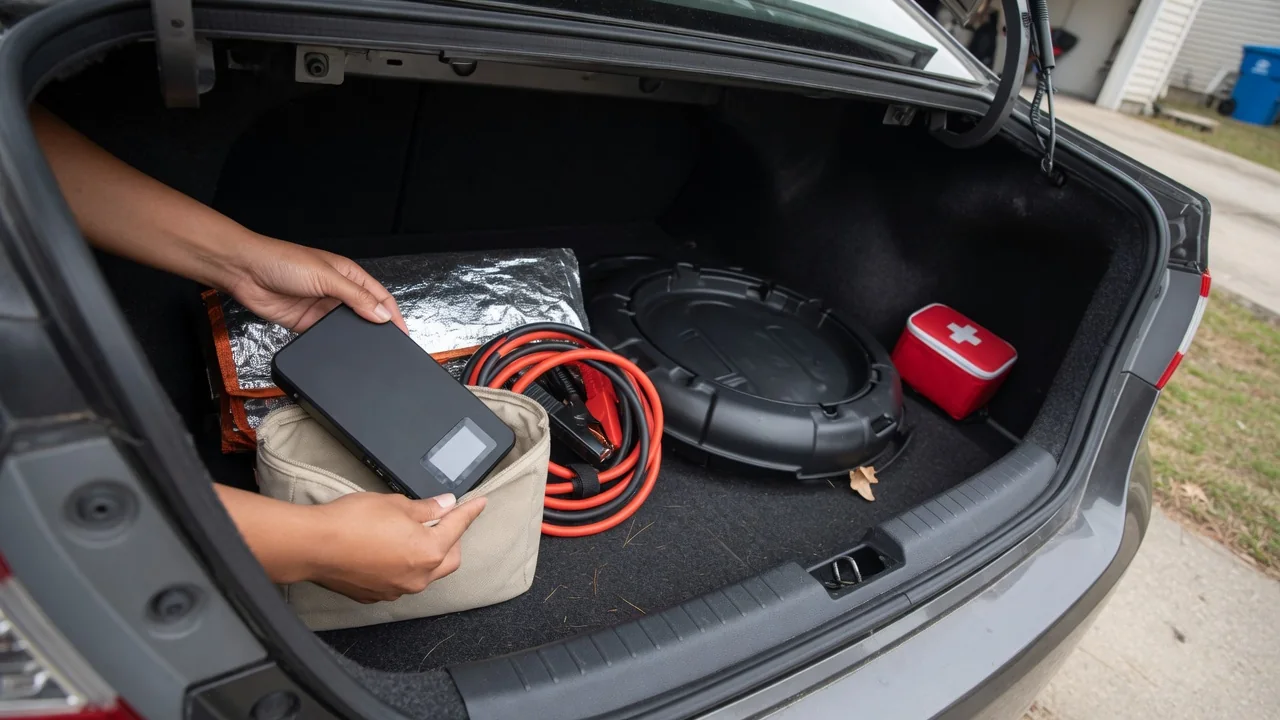
Knowing how to store a portable jump starter in a car comes down to three things: the temperatures the pack will face, the charge it holds while it waits, and how quickly you can reach it when the engine will not crank. A booster that sits forgotten under cargo for a year may be flat or damaged exactly when it is needed most.
Read device guidance
The manual that came with the jump starter is the best starting point, because storage limits depend on the battery chemistry inside the case. Many compact units use lithium-based cells, while larger, heavier boosters often contain a sealed lead-acid battery, and the two types tolerate heat, cold and long idle periods differently. The manufacturer normally states a storage temperature range, a recommended charge level for storage, and how often the pack should be topped up. Those figures apply to that device only and should not be assumed from another brand.
Check the label on the unit itself as well, since it often repeats the temperature limits and any warnings about direct sunlight or enclosed spaces. A parked vehicle can become far hotter inside than the outside air on a sunny day, and a dark dashboard or rear shelf is hotter still. If the guidance says the pack should not be left in a hot cabin, take that seriously and plan to carry it indoors during summer. The vehicle owner's manual is also worth reading for the approved jump-starting points on your particular model.
Check charge
A stored jump starter slowly loses charge even when nothing is plugged into it, and both heat and cold speed up or mask that loss. Most packs have indicator lights or a small display showing the remaining level, so pressing the status button takes only a few seconds. Make the check part of a routine you already follow, such as checking tire pressures or topping up washer fluid. A pack that reads low after a short period of storage may be aging, or it may have been exposed to temperatures outside its comfort range.
Recharge the pack according to the maker's instructions rather than leaving it permanently connected to a cabin power outlet, unless the manual specifically allows that. Some vehicles keep their accessory sockets live with the ignition off, while others shut them down, so the same habit behaves differently from car to car. Charging at home on the supplied charger is usually more predictable. After any actual jump start, recharge the unit soon, because cranking an engine draws heavily on the cells and leaving them depleted for long periods tends to shorten their useful life.
Keep accessible
A jump starter is only useful if you can reach it when the vehicle battery is dead, and that changes where it should live. On many cars with a power tailgate or electronic trunk release, a flat battery can make the cargo area awkward to open, so a pack buried in the spare wheel well may be out of reach. A spot under a front seat, in a seat-back pocket or in a door-accessible storage bin is often more practical. Check how your own vehicle unlocks and opens with no power before deciding.
Accessibility should not come at the expense of safety in a collision or hard stop. A loose pack weighing even a small amount can become a projectile, so secure it in its case, a closed compartment or a strapped storage organizer rather than leaving it on a seat or the rear shelf. Keep the clamps in their holders or covers so they cannot touch each other or bare metal. Storing the cables, any adapter and the instructions together in the same case means nothing has to be hunted for on a dark roadside.
Everyday Use and Observations
In daily driving, the conditions inside the car are worth noticing because they tell you how the pack is being treated. A glovebox or center console in a vehicle parked in full sun can feel hot to the touch, while a space low in the cabin and shaded from glass usually stays more moderate. In winter the opposite problem appears: a very cold pack may deliver less cranking power or refuse to operate until it warms up. Bringing it indoors overnight during a cold snap keeps it ready for a morning no-start.
The pack itself gives useful signals over time. Look at the case occasionally for swelling, cracks, a bulging seam, corrosion on the clamps or cable insulation that has gone stiff or split. Any unusual smell, heat while idle or a charge level that drops quickly between checks suggests the battery inside is deteriorating. Moisture matters too, so avoid spots where water collects, such as a damp trunk floor or a leaking spare wheel well. A dry, padded case protects against the vibration and knocks that come with ordinary driving.
Limits and Next Steps
Careful storage keeps a jump starter ready, but it does not change what the device can do. A pack sized for a small gasoline engine may struggle with a large diesel, and a booster cannot revive a vehicle battery that is internally failed or fix a starter, alternator or wiring fault. If the engine needs a jump repeatedly, have the battery and charging system tested rather than relying on the pack. Hybrids and electric vehicles often have specific low-voltage jump procedures, so confirm the correct method in the owner's manual before connecting anything.
A jump starter that shows swelling, damage or overheating should be taken out of the car and no longer used or charged; local recycling or hazardous waste facilities can advise on disposal. When storage conditions in your climate regularly exceed the stated limits, the simplest answer is to carry the pack with you and keep it indoors between trips. Replace an older unit that no longer holds charge instead of trusting it for an emergency. Reviewing the placement each season keeps temperature, charge and access working together year-round.