What Is a Portable Car Vacuum Useful For?
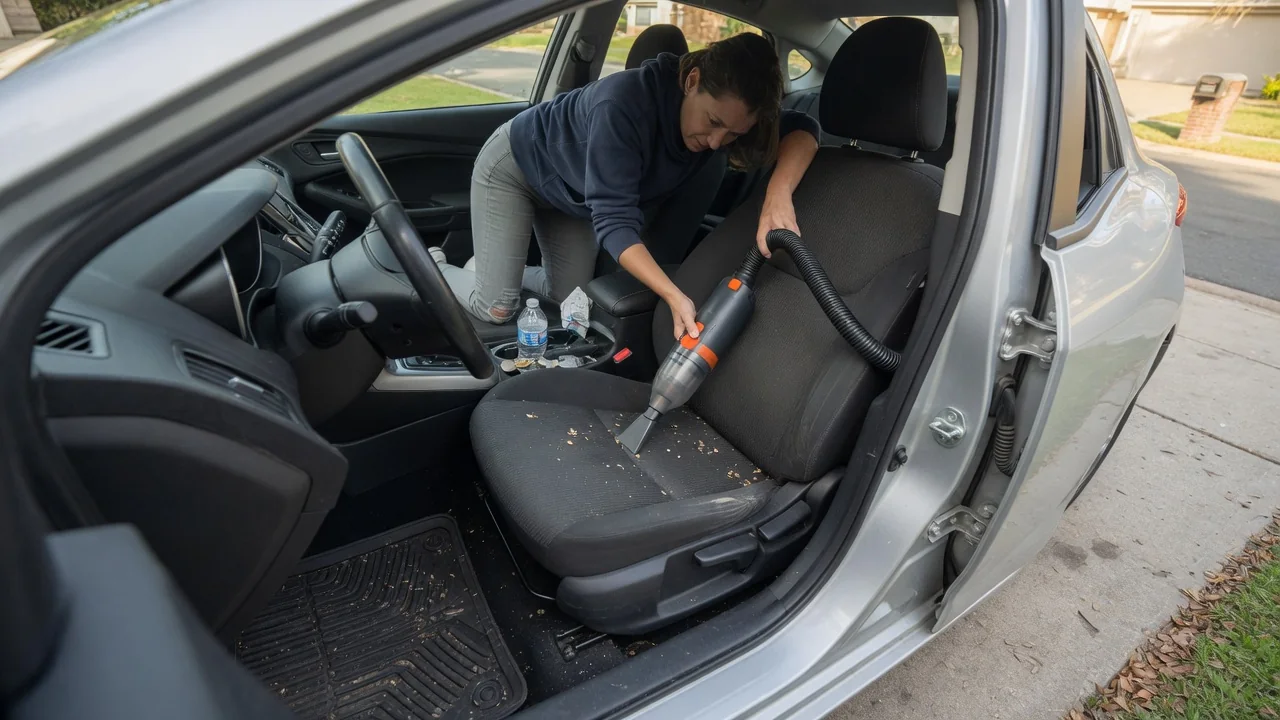
What is a portable car vacuum useful for? Mostly the small, frequent messes that build up between full details: crumbs in seat seams, grit on floor mats, dust in cup holders and pet hair on upholstery. A compact handheld unit trades raw suction for convenience, so understanding where it works well, and where it falls short, helps set realistic expectations.
Crevices
Car interiors are full of narrow gaps that a household vacuum hose struggles to reach. The space between the seat cushion and center console collects coins, crumbs and grit, while seat tracks, door pockets and the seams around the shifter trap fine debris. A portable vacuum with a slim crevice nozzle can get into these spots because the whole tool fits inside the cabin, letting you angle the tip without wrestling a long hose or stretching a cord across the driveway.
Results depend on the interior layout. Some vehicles have wide gaps beside the seats that a nozzle slips into easily, while others use tight trim or gap fillers that leave little room. Air vents, stitched seams and the folds of a child seat usually respond better to a soft brush attachment that loosens dust before suction pulls it away. Look for debris that stays visible after a pass; it is often wedged in place and needs gentle agitation rather than more suction.
Power and filter
Portable car vacuums are generally powered either by a rechargeable battery or by the vehicle's 12-volt accessory socket. Both designs deliver modest suction compared with a shop vacuum or a corded household machine, which is why they suit loose, dry debris rather than sand ground deep into carpet pile. Cordless models tend to lose strength as the battery runs down, and corded ones rely on the socket staying live, which on some vehicles requires the ignition to be on.
The filter matters as much as the motor. A small dust cup fills quickly, and fine dust clogs the filter surface, restricting airflow long before the cup looks full. If pickup weakens or the motor pitch rises, a blocked filter is a likely explanation worth checking before blaming the battery. Many units use washable filters, but the maker's instructions should confirm that, and a filter must be completely dry before reuse, because damp filter media clogs faster and can develop odor.
Cleaning sequence
Order makes a small vacuum more effective. Start by removing trash, loose items and floor mats, since shaking the mats outside takes the bulk of the dirt away before the vacuum has to deal with it. Then work from the top down: dashboard, vents and console first, seats next, carpet last. Dust dislodged from higher surfaces falls to the floor, so finishing with the carpet prevents cleaning the same area twice and saves limited battery runtime.
Within each area, brushing before vacuuming helps. Running a soft detailing brush along seams, switch surrounds and carpet edges lifts debris the airflow alone cannot pull free. Sliding the front seats fully forward and then fully back exposes the rails and the carpet beneath, where much of the hidden grit sits. Slow, overlapping passes work better than quick sweeps, because a low-powered vacuum needs time over each spot. Emptying the dust cup midway keeps airflow steady for the remaining sections.
Everyday Use and Observations
In daily life, the value lies in catching messes while they are still small. Crumbs after a drive-through meal, dried mud flakes from boots, gravel tracked in from a parking lot, and leaves blown in through an open door all lift easily when fresh. Left alone, the same debris gets pressed into carpet fibers and seat fabric by feet and body weight, becoming much harder to remove. A vacuum stored in the trunk or cargo area makes a two-minute cleanup realistic.
Regular use also reveals how a particular interior behaves. Looped carpet tends to grip sand and pet hair more stubbornly than rubber or all-weather mats, which usually release dirt with a single pass. Leather and vinyl seats shed crumbs readily, while cloth weaves hold onto lint and hair. Pet hair often needs a rubber-edged tool or a rubbing motion to ball it up first. Noticing which surfaces resist pickup tells you where the vacuum is enough and where another method is needed.
Limits and Next Steps
A portable vacuum is a maintenance tool, not a substitute for deep cleaning. It will not extract embedded sand from thick carpet, remove stains, or cure odors that come from spills soaked into padding. Unless the product is specifically rated for wet pickup, liquids should be kept away from it, since moisture can damage the motor and ruin the filter. Broken glass, sharp metal fragments, and hot or smoldering material such as ash are also poor candidates for a small handheld unit.
When the handheld reaches its limit, the next step depends on the mess. Heavily soiled carpet responds better to a stronger corded or shop vacuum, while stains and lingering smells call for upholstery cleaner, extraction equipment or a professional detail. Damp carpet with no obvious spill deserves attention beyond cleaning, because it can indicate a water leak that should be diagnosed. Used within those boundaries, a compact vacuum keeps the cabin tidy between thorough cleanings and makes those bigger jobs quicker.