What Is a Parts Warranty on a Car Repair?
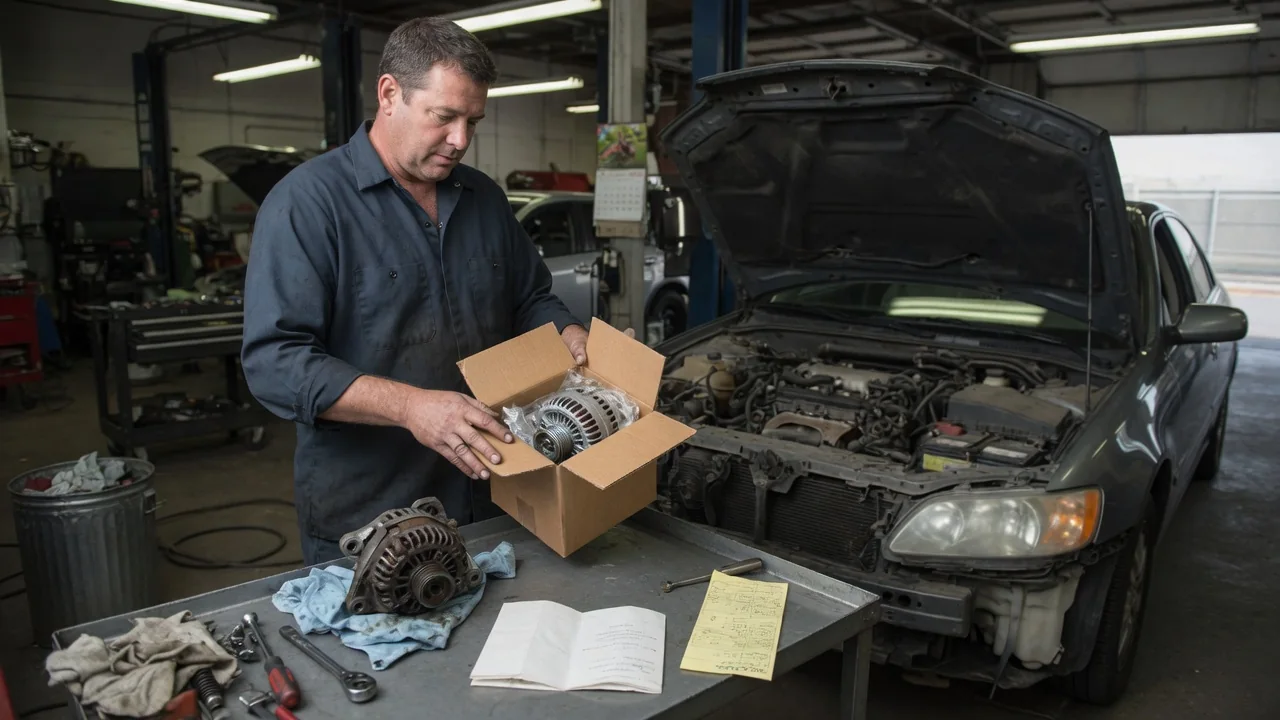
A parts warranty on a car repair is a written promise from the part's manufacturer, the seller, or the repair shop that a replaced component will be free of defects for a stated time or mileage. Understanding what is a parts warranty on a car repair helps you know what the promise includes, what it leaves out, and which records make a later claim go smoothly.
Covered part
The covered part is the specific component named on the repair order, not the system around it. If a shop installs a new alternator, the warranty typically attaches to that alternator: its bearings, internal regulator, and windings. The drive belt that spins it, the battery it charges, and the wiring that connects it are separate items unless they were also replaced and listed. Reading the line items tells you exactly which pieces carry coverage and which were simply reused during the job.
Coverage usually addresses defects in materials or workmanship of the part itself, rather than wear from normal use. Friction items such as brake pads or clutch discs are often treated differently from a water pump or starter motor because they are designed to wear away. Terms also vary by source: an original equipment part, an aftermarket part, and a remanufactured unit may each carry different conditions. The part number and brand printed on the invoice or box let you check which terms apply to your vehicle.
Labor terms
A parts warranty and a labor warranty are two different promises, even though they often appear on the same piece of paper. The part's coverage may provide a replacement component, while the work of removing the failed one and installing the new one is a separate question. Some shops back their own labor for a stated period, some part suppliers reimburse labor under certain conditions, and some arrangements cover the part alone. The written terms, not assumptions, decide which situation you are in.
The difference matters most on jobs where labor outweighs the part. A rear main seal or a heater core may be a modest component buried behind hours of disassembly, so a replacement part alone leaves most of the expense unanswered. Labor terms may also depend on who installed the part; a component you bought yourself and had fitted elsewhere, or installed at home, may be handled differently than one supplied and installed by the same shop. Asking before the repair begins avoids surprises.
Keep invoice
The invoice is the working proof of a parts warranty. It normally shows the date of the repair, the odometer reading, the part description and number, and the shop that did the work. Because coverage is commonly measured by time, mileage, or both, those two figures establish where the clock started. Without them, a shop or supplier has little way to confirm that the failed component is the one they sold, or that it is still within its stated period.
Keep the original in a folder at home rather than in the glovebox alone, and save a photo or scanned copy as a backup, since thermal-printed receipts fade. Related paperwork helps too: a separate warranty card that came in the part's box, or later maintenance records showing that fluids were changed and the vehicle was looked after. If the car is sold, check whether the coverage transfers to a new owner, because some terms follow the vehicle and others stay with the original purchaser.
Everyday Use and Observations
In daily driving, a warranty question usually starts with a symptom returning. A battery light that reappears weeks after an alternator replacement, a coolant drip under a new water pump, or a grinding noise from a recently replaced wheel bearing are all worth noting. Write down when the symptom began, the mileage, and the conditions, such as cold starts or highway speed. Those observations give the shop a clear starting point and show the concern was reported promptly.
A returning symptom does not prove the new part is defective. The same warning light can come from a loose connector, a worn belt, or an unrelated component in the same system, and a stored fault code points to a circuit or condition to investigate rather than a confirmed failed part. Some codes are manufacturer-specific and need to be interpreted for the exact vehicle. Diagnosis comes first, and its result determines whether the warranty applies or a different repair is needed.
Limits and Next Steps
Every parts warranty has boundaries. Common exclusions include damage from collisions, overheating, contamination, improper installation, modifications, or use the part was not designed for, such as racing or heavy towing beyond the vehicle's ratings. Many also leave out consequential expenses like towing, a rental car, or damage to neighboring components, though some programs include limited help with these. Coverage may also be honored only at the original shop or within a particular network, which matters if a failure happens far from home.
If you suspect a covered part has failed, contact the shop that performed the repair before authorizing work elsewhere, since having another facility remove the part may complicate the claim. Bring the invoice, describe the symptoms, and let them inspect the vehicle; if a warning suggests overheating or loss of oil pressure, stop driving rather than risk more damage. For future repairs, ask for the warranty terms in writing beforehand, and read the actual document, because the specifics differ between shops, brands, and vehicles.