What Is a Diagnostic Fee at a Repair Shop?
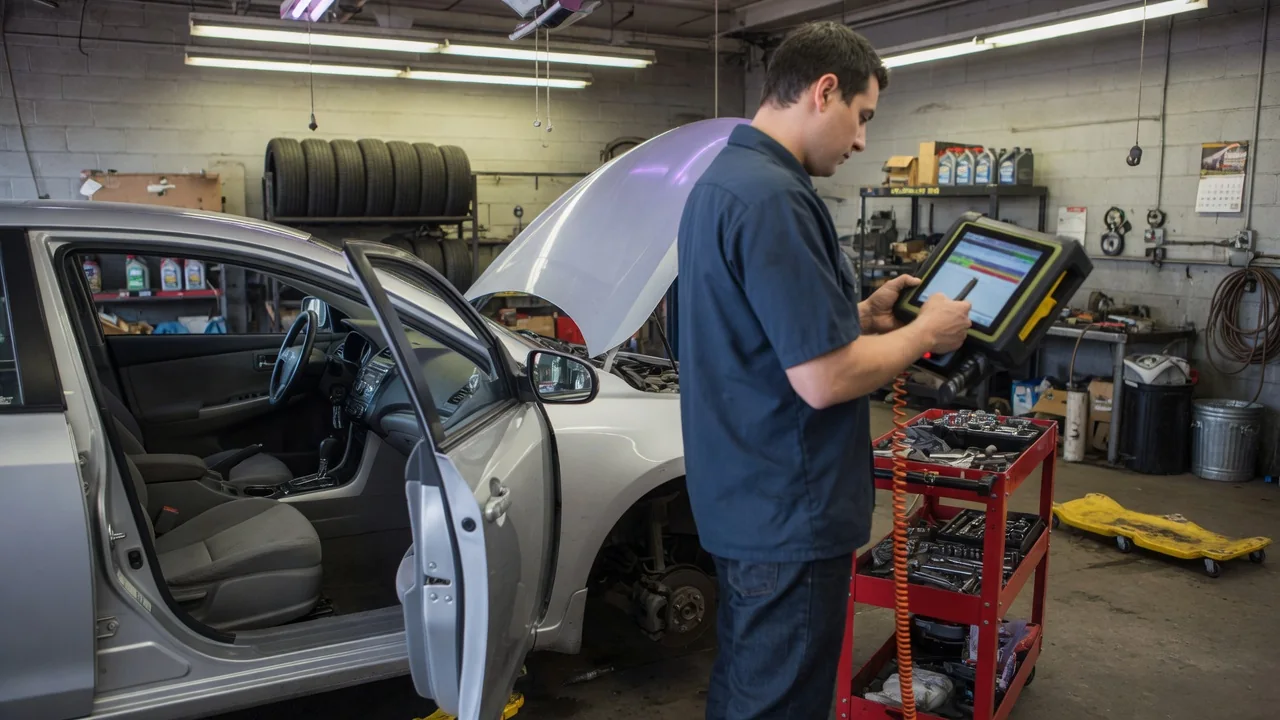
Drivers often ask what is a diagnostic fee at a repair shop when a warning light or strange noise sends them to the service counter. In plain terms, it is a charge for the technician's time, equipment, and training used to find the cause of a problem before any repair begins. Understanding what that time covers makes the conversation with a service advisor much easier.
Testing work
Diagnosis is skilled labor, not a quick plug-in. A technician usually starts by confirming the complaint, then connects a scan tool to read stored fault codes and live sensor data. A code points toward a circuit or system, but it does not prove a specific part has failed. A reading that suggests a lean fuel mixture, for instance, could trace back to a vacuum leak, a weak fuel pump, a dirty airflow sensor, or an exhaust leak, and each possibility needs its own test.
That follow-up testing is where most of the time goes. The technician may check wiring with a multimeter, run a smoke test on the intake, measure fuel pressure, or view sensor signals on an oscilloscope. Intermittent faults can require a road test under the same conditions that trigger the symptom. How long this takes depends on the vehicle, since component access, system design, and the meaning of some manufacturer-specific codes differ between makes, and those codes need vehicle-specific service information to interpret correctly.
Estimate policy
Shops handle the diagnostic charge in different ways, so it helps to ask about the policy before authorizing anything. Some bill a set amount of testing time up front and call for approval if more is needed. Others quote by the type of concern, treating an electrical drain differently from a brake noise. A written work order should describe the complaint being investigated and how much testing time has been approved, so nobody is surprised when the vehicle is ready.
Another common question is whether the fee is credited toward the repair if the work is done at the same shop. Some shops apply part or all of it, while others keep diagnosis and repair as separate labor lines. Neither approach is unusual, but the answer should be clear in advance. It is also worth asking what happens if the first block of time does not locate the fault, because a corroded connector buried in a harness can take far longer to find than a failed bulb.
Outcome discussion
When testing is finished, the shop should explain what was found in terms a driver can follow. A useful report names the fault, describes the evidence behind it, and separates what is confirmed from what is suspected. Instead of simply saying a sensor is bad, a technician might explain that the sensor's signal dropped out while its power and ground were verified good. That kind of detail shows the conclusion came from testing rather than from replacing parts on a guess.
The repair estimate comes after this explanation, and the customer decides whether to proceed. The diagnostic fee is typically owed even if the repair is declined, since the testing work has already been performed. Asking for the stored codes, test results, and the technician's notes in writing is reasonable, and that record stays useful if a second opinion is wanted. Sometimes the honest outcome is that more than one issue exists, and the shop should say which one best matches the original complaint.
Everyday Use and Observations
What a driver notices before the visit can shorten the testing time considerably. Details such as whether the problem happens on a cold start, at highway speed, in wet weather, or only with the air conditioning running give the technician a starting point. A check engine light that flashes under acceleration tells a different story than one that stays on steadily. Noting sounds, smells, vibrations, and how recently fuel was added or service was performed turns a vague complaint into a workable lead.
Recent history matters as well. A battery replacement, an aftermarket accessory, a minor collision, or a previous repair in the same area can all be relevant, and mentioning them prevents the technician from rediscovering known facts. Photos or short videos of a dashboard message or a noise are helpful when the symptom comes and goes. Because warning displays and messages vary from one vehicle to another, sharing exactly what appeared on the instrument cluster is better than paraphrasing it from memory.
Limits and Next Steps
A diagnostic fee buys a professional investigation, not a guarantee that every fault is found on the first visit. Intermittent problems may not act up while the vehicle is in the bay, and a technician cannot measure a failure that is not occurring. In those cases the shop may recommend driving the vehicle until the symptom returns, leaving it overnight for a cold-start check, or authorizing additional time. A free code read from a parts store has similar limits, since it supplies a code without the testing behind it.
After receiving the findings, the sensible next step is to weigh the evidence and the urgency. Safety-related concerns involving brakes, steering, or overheating deserve prompt attention, while some faults can be monitored for a short time if the shop agrees. Keeping the diagnostic report with the vehicle's records helps any future technician pick up where the last one left off. If the explanation seems thin, asking how the conclusion was reached is fair, and a good shop will walk through its reasoning.