How to Compare a Repair Estimate With the Final Invoice
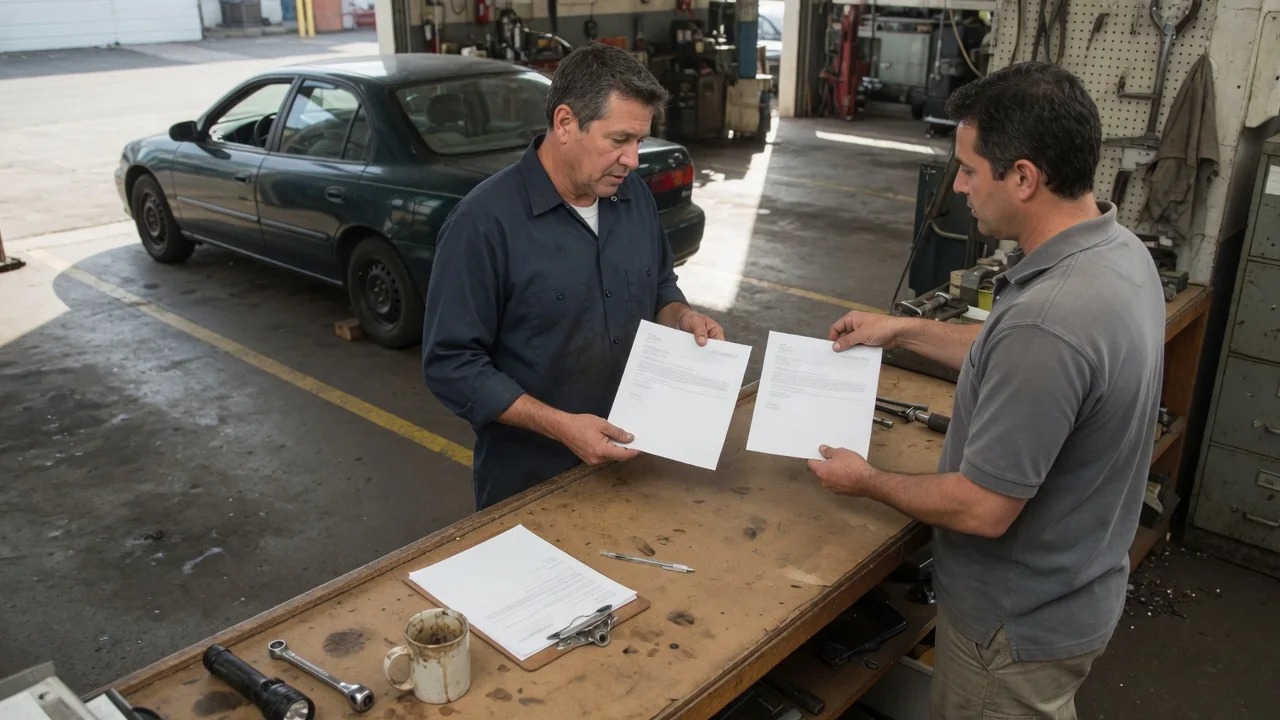
Knowing how to compare a repair estimate with the final invoice turns a confusing stack of paperwork into a clear record of what was done to your vehicle. The estimate describes the work a shop expected to perform, while the invoice documents what actually happened. Reading the two side by side, line by line, shows where they match and where they parted ways.
Scope and labor
Start with the scope of work, which is the description of each job the shop planned to complete. An estimate for a brake service, for instance, might list front pad replacement, rotor resurfacing or replacement, and a brake fluid check as separate operations. On the invoice, look for the same operations described in similar wording. If the estimate named rotor resurfacing and the invoice shows new rotors instead, the scope changed, and that difference deserves an explanation even before you look at any dollar figure.
Labor is usually shown as hours multiplied by a shop rate, or as a flat charge per operation. Many shops bill from a labor time guide rather than the clock, so the hours listed may not equal the time your car spent in the bay. Compare the hours for each operation on both documents rather than only the labor total. Times differ by vehicle because engine layout, drivetrain and trim level change how much must be removed to reach a part, so the same job can legitimately carry different labor on different cars.
Added work
Added work is anything on the invoice that never appeared on the estimate. It often arises honestly: a technician removes a wheel to replace pads and finds a seized caliper slide or a torn boot, or opens a cooling system for a water pump and discovers a brittle hose. Hidden conditions like corrosion, broken fasteners and leaking seals frequently cannot be seen until components come apart, and older or high-mileage vehicles in harsh climates tend to produce more of these surprises.
What matters is how the addition was handled. A well-documented invoice shows the extra item as its own line, with separate parts and labor, and often a note recording when you were contacted and approved it. Check your call log, texts or email against that note. Authorization requirements vary by state and by shop policy, so the paperwork may look different from place to place, but an added line with no record of your approval is the first thing to raise at the counter.
Ask about discrepancies
When a line does not match, ask about it calmly and specifically before you pay, while the service advisor has the repair order in front of them. Point to the exact line and ask what changed between the estimate and the invoice. Useful questions include why a part number or brand differs from what was quoted, why labor hours rose for an operation, and whether a diagnostic charge was meant to be credited toward the repair. Specific questions get specific answers that general complaints rarely do.
Some differences have ordinary explanations. A quoted aftermarket part may have been unavailable and replaced with an original equipment one, or a core charge may appear because the old component had not yet been returned. Shop supply fees, hazardous waste disposal and taxes are sometimes left off preliminary estimates and added at checkout. Ask the advisor to show how each is calculated. If the explanation is reasonable but was never communicated, say so; shops generally want to know when their approval process missed a step.
Everyday Use and Observations
Your own observations of the car help verify what the paperwork claims. New components are often visibly cleaner than their surroundings, so fresh brake rotors behind the wheel spokes, a new belt, or a bright battery terminal can confirm that a listed part was installed. Asking to see the replaced parts is a common request, and many shops will show or return them when asked in advance, though items subject to a core return or warranty claim may have to go back to the supplier.
How the vehicle behaves afterward is equally informative. If the invoice lists a wheel alignment, the steering wheel should sit centered on a straight road. If it lists a fluid service, the level and condition should look right when checked as your owner's manual describes. Compare the odometer reading on the invoice with your dash as well, since road test mileage should be modest and the recorded reading anchors any warranty. Keep in mind that many repairs are buried where an owner cannot easily see them.
Limits and Next Steps
A paper comparison has limits. It can show that a line was added, changed or removed, but it cannot prove whether a part truly needed replacing or whether the labor time was fair for your particular vehicle. An estimate is also a forecast, not a fixed contract in every case, and how far a final bill may exceed it without fresh approval depends on local consumer rules and the terms you signed. Reading the authorization language on the original work order clarifies what you agreed to.
If questions remain after talking with the advisor, ask for the service manager and request a written explanation on the invoice itself. Keep the estimate, the final invoice, any approval messages and the warranty terms together, because that file supports future warranty claims and helps another shop understand the car's history. For disputes that cannot be settled directly, a second opinion from an independent technician or your state's consumer protection or automotive repair agency can review the documents with you.