What Is a Mid-Engine Car?
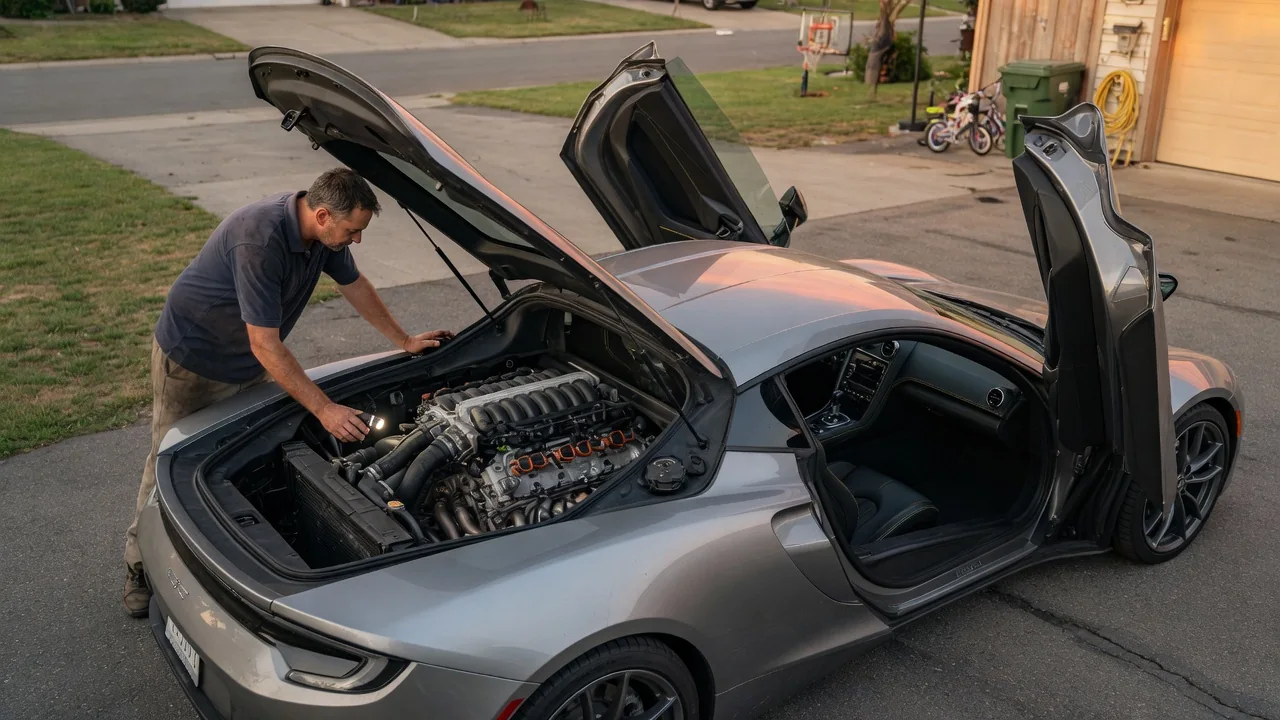
So what is a mid engine car? The term describes where the engine sits, not how powerful it is or what the vehicle costs. In a mid-engine layout, the engine's mass is located between the front and rear axles rather than hanging ahead of or behind them. This guide explains the definition, the cabin and cooling consequences, and what owners notice day to day.
Layout definition
A mid-engine car carries its engine inside the wheelbase, meaning between the front axle line and the rear axle line. The most familiar version places the engine behind the seats and ahead of the rear wheels, usually driving the rear axle through a transaxle that combines the gearbox and differential. Engineers often call this a rear mid-engine layout. The engine may sit lengthwise or sideways depending on the design, and that choice affects how long the engine bay needs to be.
The definition is broader than many people expect. A car with its engine in front of the cabin but pushed entirely behind the front axle line is often described as front mid-engine, even though it looks conventional from outside. By contrast, a rear-engine car carries its engine behind the rear axle. A quick visual clue is the distance between the door and the rear wheel arch: a long section of bodywork there, often with vents, usually suggests an engine behind the seats.
Passenger packaging
Placing an engine behind the occupants uses the space where a rear seat would normally go. That is why most cars with this layout are two-seaters, with a firewall or bulkhead directly behind the seatbacks. A few designs squeeze in small rear seats or use a longer wheelbase, but those are exceptions. The cabin itself tends to sit farther forward, so the driver's feet may be closer to the front wheels and the pedals may be offset slightly toward the center.
Cargo space is typically split. With no engine up front, many of these cars have a front trunk, sometimes called a frunk, and some add a second compartment behind the engine. Capacity and shape vary widely by model, and a rear compartment near the exhaust can get warm, which matters for groceries or electronics. Rearward visibility is another packaging consequence, because the engine cover, bulkhead and intake ducting sit where a conventional car has a rear window and open sight line.
Cooling needs
An engine at the front of a car sits directly behind the grille, where oncoming air reaches the radiator naturally. An engine tucked behind the cabin does not have that advantage, so designers must bring air to it. Some cars keep the radiators in the nose and run long coolant pipes through the floor or sills to the engine. Others mount radiators at the sides, fed by intakes in the doors or rear fenders. Both approaches are visible if you know where to look.
The enclosed engine bay also has to shed heat after the car stops. Vents in the engine cover, louvers, mesh panels and electric fans help hot air escape, and some cars run fans briefly after shutdown. Long coolant runs mean more hoses, joints and volume of coolant, so bleeding trapped air out of the system can be more involved than on a conventional car. The correct coolant type, fill procedure and inspection schedule depend on the manufacturer, so the owner's manual is the reference.
Everyday Use and Observations
Living with this layout involves a few noticeable differences. Engine sound comes from behind your shoulders rather than ahead of the dashboard, and some mechanical noise and warmth can pass through the bulkhead. The hood line is often low because nothing tall sits beneath it, which gives a clear forward view, while the view over your shoulder may rely on mirrors and cameras. Low noses and long overhangs on some models call for care at driveways and parking curbs.
Routine checks can also feel different. The oil dipstick, coolant reservoir and washer fluid filler may be in separate places, some under the front lid and others under the rear cover or behind a removable panel. Access to items such as spark plugs, belts or the battery varies greatly, and on some cars a technician must remove trim or panels to reach them. Looking through the manual's under-hood diagrams before a fluid check saves guesswork and helps avoid opening the wrong cap.
Limits and Next Steps
Knowing the layout tells you where the engine is, but not much else. It does not indicate engine size, drivetrain type, fuel economy or how any particular car behaves on the road. Mid-engine vehicles have included small economy-minded roadsters, exotic coupes and even some vans with the engine under the floor. Electric vehicles complicate the label further, since compact motors and a floor-mounted battery do not map neatly onto terms created for combustion engines.
If you are trying to confirm a specific vehicle's layout, start with the owner's manual or the manufacturer's published description rather than assumptions based on styling. Opening the front and rear lids, with the engine off and cool, shows what is actually housed where. For anyone considering ownership, it is worth asking a qualified shop about service access, and sitting in the car to judge seating, storage and visibility firsthand, since those details differ from one model to the next.