What Is a Hydrophobic Glass Coating?
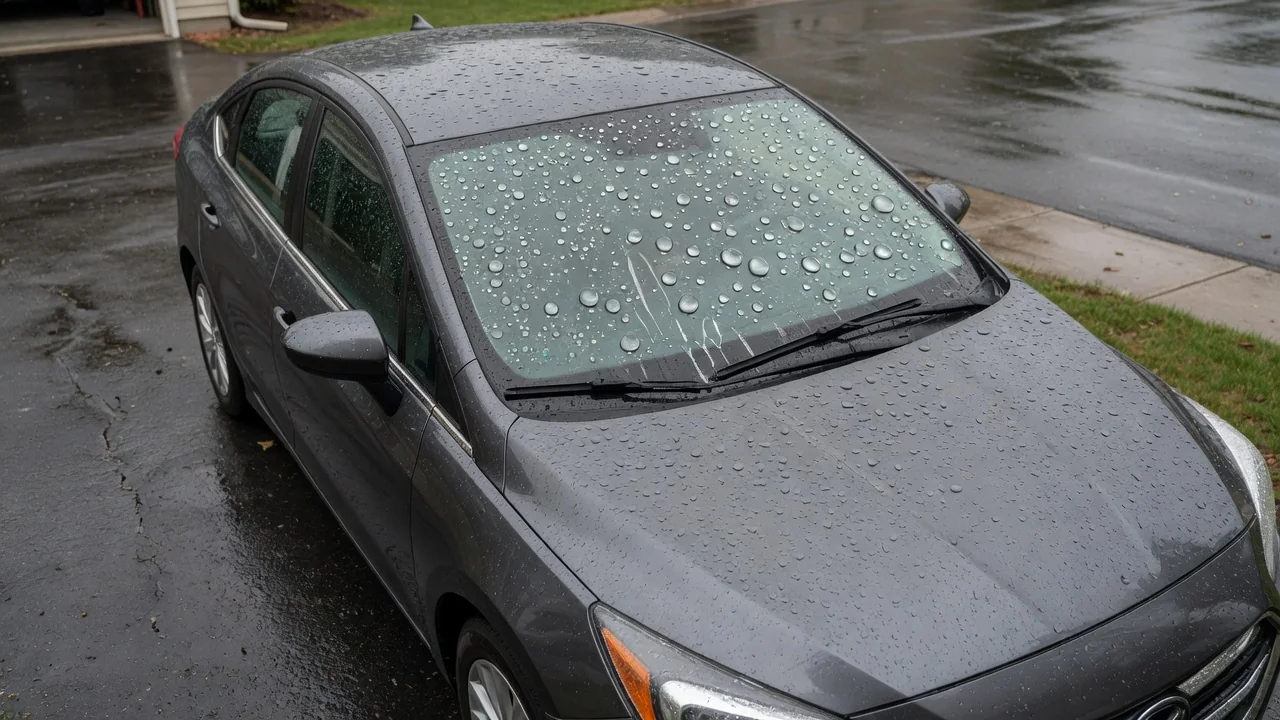
What is a hydrophobic glass coating? In simple terms, it is a thin treatment applied to automotive glass that changes how water sits on the surface. Instead of spreading into a film, rain tends to gather into rounded droplets. This article explains the chemistry behind that beading, how the treatment is applied and maintained, and what it realistically can and cannot do.
Surface behavior
Bare automotive glass looks perfectly smooth, yet it is relatively high in surface energy, which means water is attracted to it and spreads out. A hydrophobic coating bonds a layer of low-surface-energy molecules, commonly silicon-based or fluorinated compounds, to the glass. Water is then more attracted to itself than to the treated surface, so it pulls into beads with a steeper contact angle. The glass itself is unchanged; only the outermost layer that water touches behaves differently.
On a treated windshield, a driver may notice rain forming distinct round droplets rather than a blurry sheet. At road speed, airflow over the glass can push those beads upward and off, though how readily that happens depends on windshield rake, vehicle shape, speed, and droplet size. A steeply raked sports car windshield and an upright truck or van windshield can behave quite differently. Side windows and mirrors sit in more turbulent air, so beads there may linger or move unpredictably.
Application
Application starts with the condition of the glass, because the coating has to bond to the glass rather than to whatever is sitting on it. Road film, old wiper residue, mineral deposits from hard water, and leftover wax can all interfere. Products therefore generally call for thorough cleaning and decontamination first, sometimes with a glass polish. Formats vary widely, from spray-on liquids and wipe-on fluids to more concentrated coatings, and each manufacturer's instructions for preparation, temperature, and curing differ.
Most consumer products are spread across the glass in a thin, even layer, allowed to haze or flash, and then buffed clear with a clean towel. Uneven coverage tends to show up later as patches where water sheets flat next to areas where it beads. Vehicle details matter here as well: some windshields carry factory treatments, camera or rain sensor zones behind the glass, or aftermarket films, so checking the owner's manual and product label before treating a particular vehicle is sensible.
Maintenance
A hydrophobic layer is thin and it wears. Wiper blades sweep the same arc thousands of times, abrasive road grit is dragged across the glass, and strong cleaners can gradually strip the treatment. How long beading lasts is not something to state as a fixed figure, since it depends on the product chemistry, climate, mileage, washing habits, and how often the wipers run. The wiper sweep area usually shows wear first, while the untouched upper corners keep beading longer.
Routine care is mostly about gentle cleaning. A mild car wash soap or a dedicated glass cleaner and a clean microfiber towel remove film without being needlessly harsh, whereas abrasive pads or polishing compounds can take the coating off along with the dirt. Wiper blade condition deserves attention too, because a hardened or contaminated rubber edge may chatter or smear on treated glass. When water starts lying flat across sections of the windshield, that is the usual visual cue that reapplication is due.
Everyday Use and Observations
In daily driving, the most visible effect appears in steady rain at moderate to highway speeds, when beads on the windshield slide upward in the airflow. In stop-and-go traffic or a parking lot there is little air movement, so droplets simply sit on the glass until the wipers clear them. A coating does not replace wipers, and drivers should continue to use them whenever visibility calls for it. Light mist can behave differently again, forming many tiny beads that scatter light.
Other observations are less dramatic. Some owners find that bugs, frost, or road grime release from treated glass with less scrubbing, although results vary with the product and conditions. At night, fine droplets can catch oncoming headlights, and a worn or uneven coating may leave a faint haze in the wiper path. Rear windows without a wiper, side glass, and exterior mirrors are common places to watch how beads form and run off after a wash or a rainstorm.
Limits and Next Steps
A hydrophobic coating changes how water behaves; it does not repair glass. Chips, cracks, pitting from sand, and wiper scratches remain exactly as they were, and heavy pitting can still scatter light regardless of any treatment. It also has no effect on fogging inside the cabin, which is a humidity and ventilation matter handled by the defroster and air conditioning. Exterior water repellents and interior anti-fog products work on opposite principles and are not interchangeable.
For anyone considering a treatment, a reasonable next step is to inspect the glass and wiper blades first, then read the product directions and the vehicle's owner's manual for any cautions about coated glass, sensors, or driver assistance cameras. Trying the product on a side window before the windshield shows how it applies and how it looks in rain. If smearing, chatter, or glare appears afterward, a detailer or glass specialist can assess whether the coating, the blades, or the glass itself is responsible.