What Is a Ceramic Coating on a Car?
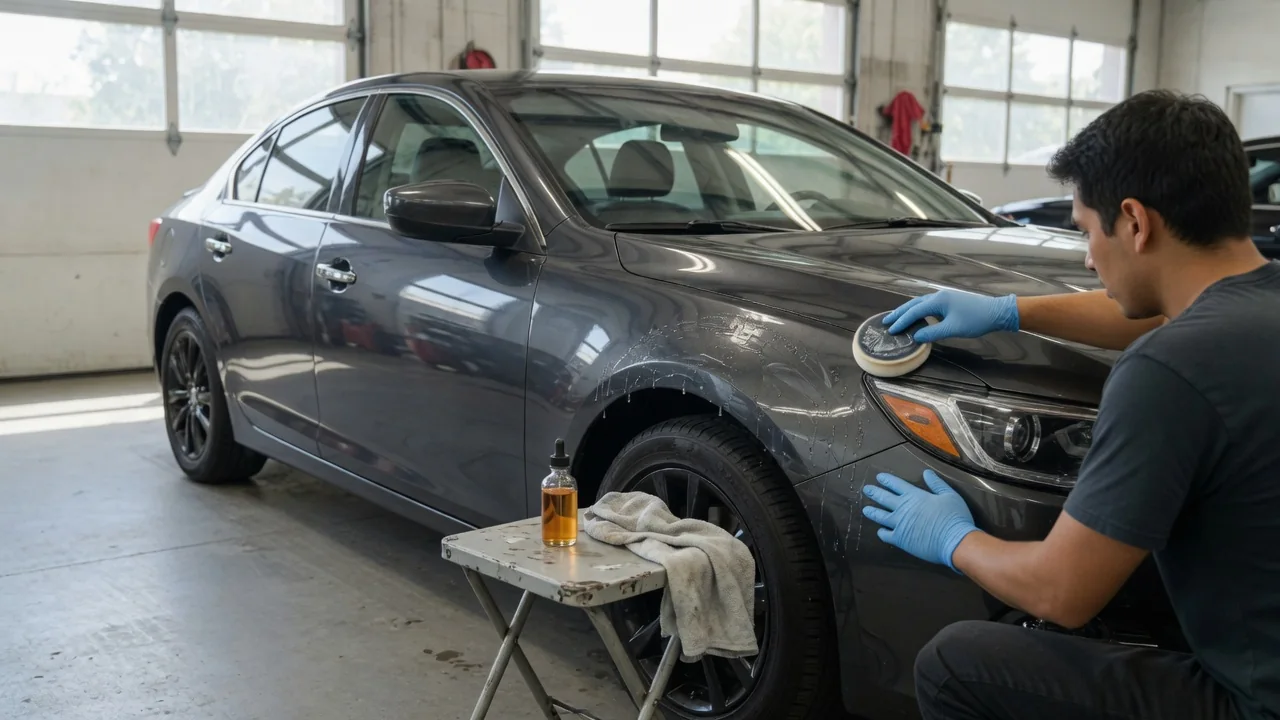
Anyone asking what is a ceramic coating on a car is usually weighing it against wax or sealant. In simple terms, it is a liquid protective product, typically built on silica-based chemistry, that cures into a thin, hard, transparent film over the paint. It is a maintenance choice rather than a repair, and understanding how it behaves helps set realistic expectations before committing.
Bonded layer
A ceramic coating differs from wax mainly in how it attaches. Wax sits on top of the clear coat and gradually washes or evaporates away, while a coating chemically bonds to the clear coat as it cures, forming a semi-permanent layer that cannot be removed with ordinary car shampoo. That bond is why preparation matters so much: whatever is under the coating, including swirl marks, water spots, or embedded contamination, gets locked beneath it until the layer is abraded off.
What an owner can observe is subtle. The layer is far thinner than the clear coat itself, so it does not change panel texture or hide defects, but it often adds a glassy depth, especially on dark colors. Results vary with the surface. Factory paint, repainted panels, matte finishes, paint protection film, wheels, and plastic trim all accept coatings differently, and some require formulas made for that material. Fresh paintwork may also need time to cure before anything is applied, so a body shop's guidance matters.
Cleaning behavior
The most noticeable change after coating is how the surface responds to water and dirt. A cured coating is hydrophobic, meaning water forms tight beads or sheets off the panel instead of lying flat. Because the surface is slicker and less porous than bare clear coat, road film, bug residue, and brake dust have a harder time gripping it. During a wash, grime tends to release with less scrubbing, which reduces the amount of contact needed to get the paint clean.
That behavior does not make a car self-cleaning. Dust still settles, and beads of water that dry on a hot hood can leave mineral deposits, particularly in areas with hard water. Drivers often notice that lower doors and the rear hatch, which collect the most road spray, lose their beading sooner than the roof. Often that is a film of contamination masking the coating rather than the coating failing, and a thorough wash with a suitable cleaner can bring the water behavior back.
Maintenance expectations
A coated car still needs regular washing; the coating changes how easy the job is, not whether it is needed. Gentle methods suit it best: a pH-neutral shampoo, clean wash mitts, a pre-rinse to float away grit, and soft drying towels or a blower. Automatic washes with stiff brushes and strong chemicals can wear the layer faster and still inflict swirl marks. Many coating makers also offer maintenance sprays intended to refresh slickness, though the right product depends on the specific coating applied.
How long protection lasts depends on product chemistry, application quality, climate, mileage, and storage, so durability claims on a label should be read as possibilities under good conditions rather than guarantees. A garaged weekend car and a daily commuter parked under trees through salted winters will age very differently. Professional installations sometimes come with inspection or upkeep conditions attached to a warranty, and consumer-applied versions generally trade some longevity for easier application. Reading those terms beforehand avoids surprises later.
Everyday Use and Observations
In daily driving, the benefit shows up in small moments. Bird droppings, tree sap, and bug splatter are acidic or sticky enough to etch unprotected clear coat, and a coating gives a sacrificial barrier that buys time to remove them, though prompt cleaning still matters. After rain, a coated car often looks cleaner because water carries loose dirt off as it runs away at speed. Many coatings also resist ultraviolet exposure, which helps slow the oxidation and fading that dull older paint.
Owners can watch a few signals to judge condition. Fresh coatings produce small, round beads and water that evacuates quickly from horizontal panels; as the layer ages, beads flatten and water lingers. The paint may feel less slick under a clean microfiber towel, and dirt may cling more stubbornly at wash time. These changes rarely happen evenly. Hoods, roofs, and front bumpers face the most sun and debris, so they usually show wear before sheltered areas such as upper door panels.
Limits and Next Steps
A ceramic coating is not armor. It will not stop rock chips, deep scratches, parking-lot dings, or damage from an abrasive wash, and scratch-resistance claims refer to light marring rather than real impacts. Paint protection film is the product designed for physical impact, and the two are often combined. A coating also cannot fix existing flaws; applied over dull or swirled paint, it simply preserves that appearance. For that reason, decontamination and paint correction usually come before application, and that preparation accounts for much of a professional job's labor.
Deciding whether it is worthwhile comes down to how the vehicle is used and cared for. Someone who washes carefully and plans to keep the car for years tends to gain the most, while an owner who rarely washes may see little difference from a simpler sealant. Sensible next steps include assessing the paint's current condition, asking a detailer exactly what preparation and aftercare are included, and checking the vehicle manufacturer's guidance for special finishes such as matte paint before choosing any product.