What is a Level 2 EV charger for home use?
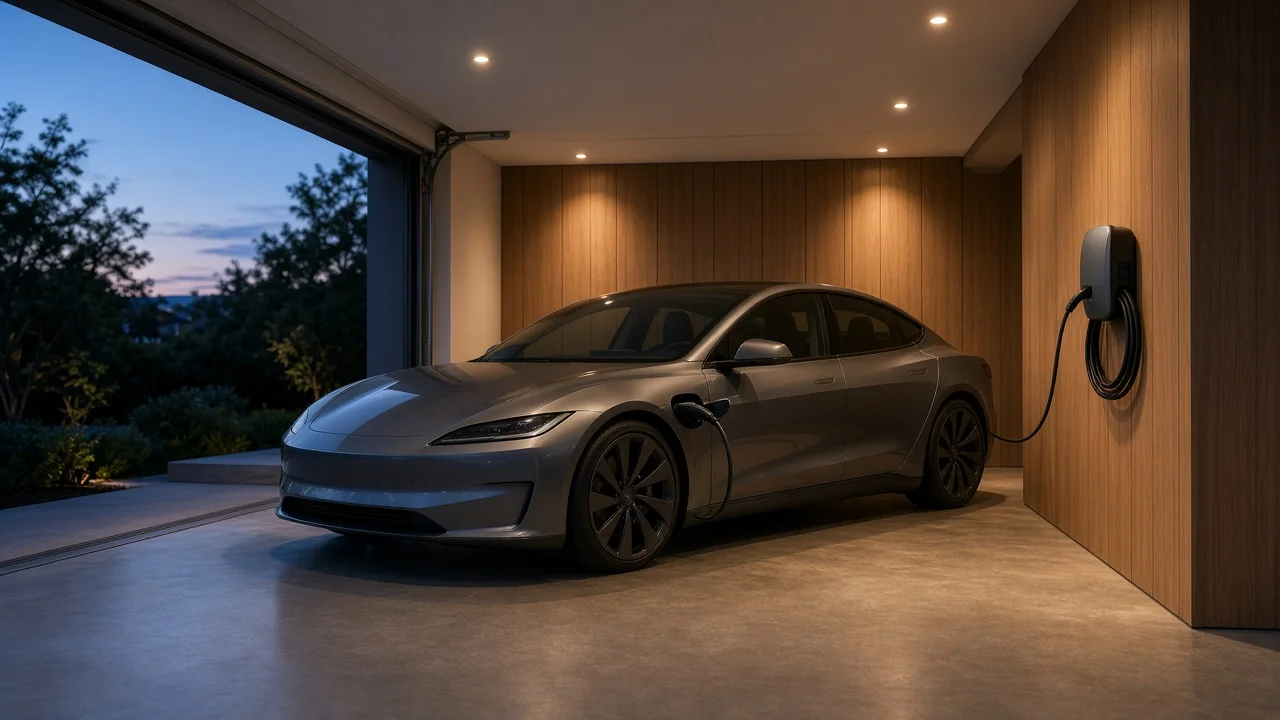
A Level 2 EV charger is charging equipment that supplies an electric vehicle (EV) with alternating current (AC) power at 240 volts, the same higher-voltage supply that runs appliances such as electric dryers and ranges in US homes. It charges a car considerably faster than plugging into an ordinary 120-volt household outlet, which is why it is the most common choice for drivers who want dedicated charging at home.
What "Level 2" means
In North America, EV charging is grouped into levels based on the type and amount of power delivered. Level 1 uses a standard 120-volt outlet. Level 2 uses a 240-volt circuit (or 208 volts in many commercial buildings). Both are AC charging. Direct current (DC) fast charging, sometimes called Level 3 in everyday speech, is a separate category used mainly at public stations.
The practical significance of Level 2 is that it can typically restore a full day of driving overnight for many drivers, making home charging convenient enough to replace most trips to public chargers. Level 2 units are also widely installed at workplaces, parking garages and shopping centers, so the same term applies outside the home.
A note on the word "charger"
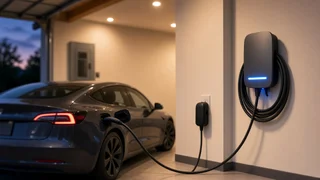
The wall-mounted box most people call a Level 2 charger is technically electric vehicle supply equipment (EVSE). It does not convert power itself. Instead, it safely delivers AC electricity to the car and communicates with it. The actual charger, called the onboard charger, is built into the vehicle and converts AC power into the DC power the battery stores. This distinction matters when estimating charging speed, because the car's onboard charger can be the limiting factor.
How a Level 2 charger works
When the connector is plugged into the vehicle, the EVSE and the car exchange signals to confirm a secure connection and agree on how much current the equipment can supply. Only then does the EVSE energize the cable. The onboard charger draws power up to whichever is lower: the EVSE's rated output or the vehicle's own maximum AC charging rate. The car's battery management system then controls how quickly the battery accepts that energy, often slowing charging as the battery approaches full.
Several factors determine how fast a particular car charges on Level 2:
The power rating of the EVSE and the electrical circuit supplying it; The maximum AC charging rate of the vehicle's onboard charger; The size of the battery and how depleted it is; Battery temperature and the vehicle's own charging management
Because these factors vary widely by vehicle and installation, no single charging-time figure applies to every Level 2 setup. Check the vehicle's owner documentation for its maximum AC charging rate before choosing equipment.
Connectors used in the US
Most Level 2 equipment in the US uses one of two connectors. The SAE J1772 connector has long been the standard for most non-Tesla EVs. The North American Charging Standard (NACS) connector, standardized as SAE J3400, originated with Tesla and is being adopted by many other automakers. Adapters exist between the two for AC charging, but it is simplest to choose equipment whose connector matches the vehicle.
Level 1 vs Level 2 vs DC fast charging
Feature | Level 1 | Level 2 | DC fast charging; Power type | AC | AC | DC; Typical US supply | 120-volt household outlet | 240-volt circuit (208 volts in many commercial sites) | High-power commercial equipment; Where conversion to DC happens | Vehicle's onboard charger | Vehicle's onboard charger | Inside the station; Relative speed | Slowest | Considerably faster than Level 1 | Fastest; Typical location | Home | Home, workplace, public parking | Public highway and commercial stations; Home installation | Usually none beyond an existing outlet | Usually requires a 240-volt circuit | Not practical for homes
In practice, Level 1 can be enough for drivers who travel short distances and park for long periods, while Level 2 suits drivers who need to recover more range overnight. DC fast charging is designed for road trips and quick top-ups rather than routine home use. Exact speed differences depend on the specific vehicle and equipment, so comparisons should use the same car and battery conditions.
What home installation involves
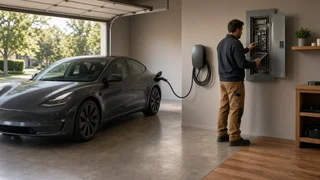
Because Level 2 equipment draws substantial power for hours at a time, it needs a properly sized, dedicated 240-volt circuit. Home Level 2 units come in two main forms: hardwired units connected directly to the circuit, and plug-in units that use a 240-volt receptacle. Either way, the installation should meet the National Electrical Code and local requirements.
Electrical panel capacity: the home's service and panel must be able to support the added load; some homes need an upgrade or a load-management solution. Circuit and wiring: a licensed electrician sizes the breaker and wire for continuous charging loads according to code. Permits and inspection: many US jurisdictions require an electrical permit and inspection for EVSE installation. Location: the unit should be placed where the cable reaches the vehicle's charging port, and outdoor units need an appropriate weather rating. Certification: look for equipment listed by a nationally recognized testing laboratory for safety.
Installation cost, equipment prices, available utility rebates and tax incentives vary by location, home wiring and over time. No confirmed figures were available for this entry, so check current details with a licensed electrician, the local permitting office and the electric utility.
Summary
A Level 2 EV charger for home use is 240-volt AC charging equipment that delivers power to the car's onboard charger, offering much faster charging than a standard outlet. Its real-world speed depends on both the equipment and the vehicle, and installing one typically requires a dedicated circuit, attention to panel capacity and work by a qualified electrician.