Choose a Home EV Charger
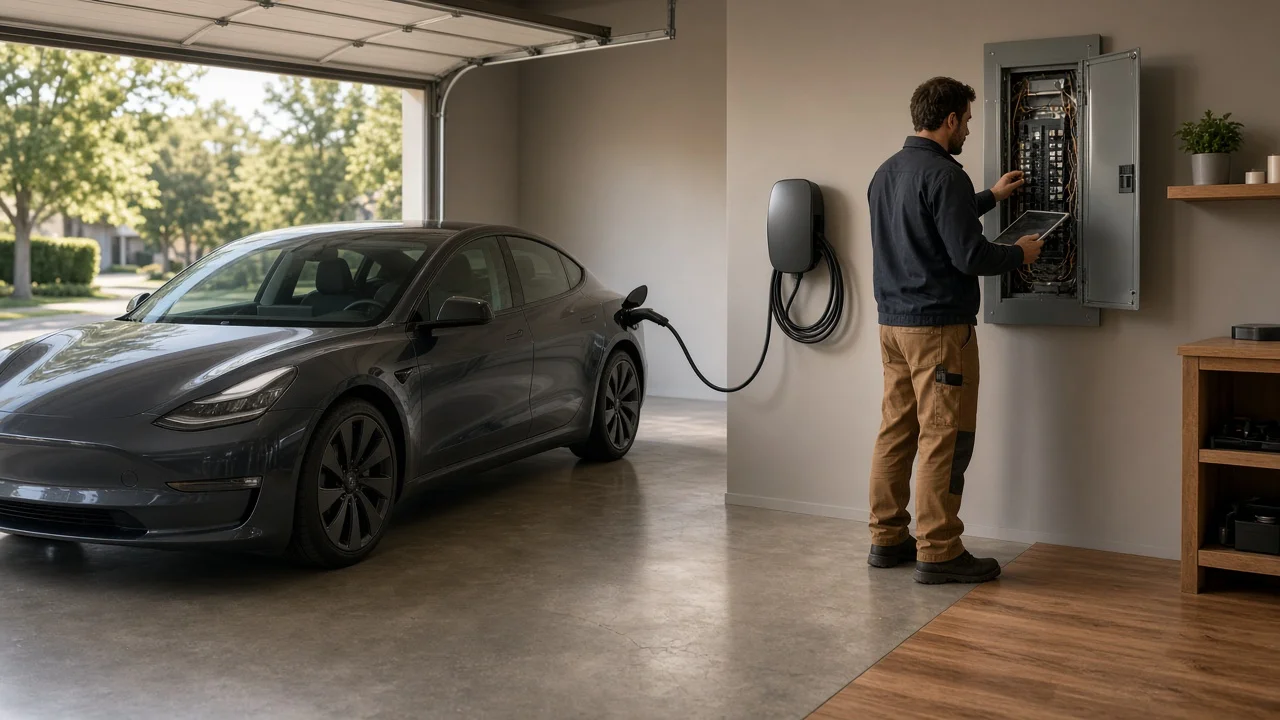
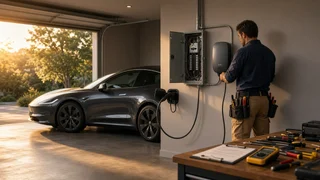
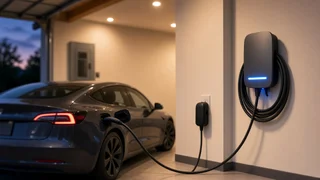
For most electric vehicle owners who drive daily and can install a dedicated 240-volt circuit, a Level 2 home charger is the practical choice. The right unit is the one that matches your vehicle's charging port and onboard charger, fits the spare capacity of your home's electrical service, and is installed to code by a licensed electrician. Three things can change that answer: your daily mileage, your panel's available capacity, and whether you can install equipment where you park.
The Short Answer
Start with how you drive, not with the charger. If your daily driving is light and your car sits parked for long periods, the portable cord that came with many EVs, plugged into a standard 120-volt household outlet (Level 1 charging), may be enough. If you drive more, own a vehicle with a large battery, or want a full charge overnight with room to spare, a Level 2 charger on a 240-volt circuit is the usual upgrade.
Before buying a Level 2 unit, confirm three things: your home's electrical panel can support the new circuit, the charger's connector fits your vehicle (or a suitable adapter is approved for it), and the location where you park allows a safe installation.
Level 1 vs Level 2 at Home
Level 1 charging uses a standard 120-volt outlet. It needs little or no electrical work but adds range slowly. It suits plug-in hybrids, low-mileage drivers and households that cannot add a new circuit.
Level 2 charging uses a 240-volt circuit, the same type of supply used by many electric dryers and ranges. It charges substantially faster than Level 1 and is what most people mean by a home EV charger. It usually requires a new dedicated circuit, and possibly a panel upgrade, which adds to the total cost.
DC fast charging, the type found at highway stations, is not a typical residential option, so it is not covered here.
What to Check Before You Buy
1) Your vehicle's connector
In the US, home chargers use one of two connectors: the J1772 plug long used by most non-Tesla EVs, or the North American Charging Standard (NACS) connector, standardized as SAE J3400, which many automakers are adopting. Check which port your specific model year and trim has. If you expect to own a vehicle with a different port later, consider whether an adapter rated for Level 2 use and approved by your vehicle's manufacturer would cover you, or whether a charger with the other connector is the better long-term fit.
2) Your vehicle's onboard charger limit
With Level 2 charging, the alternating current from the wall is converted to battery power by a component inside the car called the onboard charger. The car will only draw as much power as that onboard charger accepts. A higher-output wall unit will not charge faster than your vehicle's limit, so look up that rating for your exact model year and trim before paying for extra capacity. Buying some headroom can make sense if you plan to replace the vehicle, but it is a choice, not a requirement.
3) Your electrical panel and circuit size
An EV charger is treated as a continuous load. Under the National Electrical Code, the circuit must be rated for 125 percent of the charger's continuous current; put another way, the charger may draw no more than 80 percent of the circuit's rating. For example, a charger set to draw 40 amps needs a circuit rated for at least 50 amps. An electrician should do a load calculation to confirm your service has room for that circuit alongside your existing appliances.
If the panel is near capacity, options include a lower-output charger setting, a load-management device or a charger with built-in load sharing, or a service or panel upgrade. Each option changes the total project cost, so get this assessment before settling on a charger.
4) Hardwired or plug-in
Plug-in Level 2 chargers connect to a 240-volt receptacle, commonly a NEMA 14-50 outlet. They are easier to remove or replace, but the receptacle must be suitable for repeated heavy, continuous use and correctly protected. Hardwired units connect directly to the circuit, which avoids the receptacle as a wear point and is often required for higher-output chargers. Some local codes and manufacturers' instructions specify one approach, so check both before buying.
5) Safety certification
Choose a charger listed by a nationally recognized testing laboratory, such as a UL or ETL listing, for the use you intend. Inspectors may require it, and it confirms the unit was tested against recognized safety standards. If you plan to install outdoors, check the enclosure's weather rating and the cable's suitability for cold temperatures.
6) Location and cable length
Measure from the planned mounting spot to your vehicle's charging port, accounting for which side of the car the port is on and how you park. Choose a cable long enough to reach comfortably without stretching across walkways. Indoor garage, outdoor wall and detached-structure installations each carry different wiring and weatherproofing needs.
7) Smart features you will actually use
Connected chargers can schedule charging, track energy use and, in some cases, take part in utility programs. Scheduling is useful if your utility offers time-of-use rates, though many EVs can also schedule charging from the car itself. Some utility rebates or rates require a specific networked charger, so check your utility's program terms before deciding whether you need these features.
Understanding the Real Cost
No verified price data was available for this guide, so it does not quote charger or installation figures. When you compare quotes, the charger itself is often only part of the total. Ask what each estimate includes:
The charger unit and any mounting hardware; Electrician labor and materials, including wire, conduit and breaker; Distance from the panel to the charger location, which affects materials and labor; Panel or service upgrades, if the load calculation calls for them; Permit and inspection fees; Trenching or drywall repair for difficult routes; Utility, state or local rebates, and any federal tax credit you may qualify for
Incentive programs change often, and federal tax credit availability depends on current law and the date the equipment is placed in service. Confirm eligibility with your utility, your state energy office and a tax professional rather than relying on older figures. When comparing quotes, make sure each covers the same scope of work and note the date and whether permit fees and taxes are included.
Installation, Permits and Renting
Adding a 240-volt circuit is electrical work that many jurisdictions require to be permitted and inspected. Use a licensed electrician, ask whether the quote includes the permit, and keep the inspection records, which may be needed for rebates, insurance or a future home sale. Installing without the required permit can create problems with insurance claims or inspections later.
If you rent, or live in a condo or a home with a homeowners association, get written approval before buying anything. Some states have laws covering a resident's right to install charging equipment, but conditions and procedures vary, so check the rules that apply where you live.
A Quick Decision Path
Estimate your typical daily driving and decide whether Level 1 can keep up overnight; Identify your vehicle's connector type and onboard charger rating for its model year and trim; Have an electrician assess panel capacity and the route to your parking spot; Choose the charger output that fits both the vehicle limit and the circuit the electrician recommends; Decide between a hardwired and plug-in unit based on code, manufacturer guidance and output; Confirm safety listing, weather rating and cable length; Check utility rates, rebates and any required charger models before ordering; Get itemized, dated installation quotes that include permits
What This Guide Could Not Confirm
This guide does not include current prices, specific product recommendations, independent test results or reliability data, because no verified sources were available for those. For a final shortlist, check each charger's specification sheet and safety listing, your vehicle's documented charging limits, and current local incentive and permit rules.