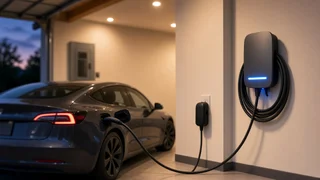
Choose a Hardwired Home EV Charger
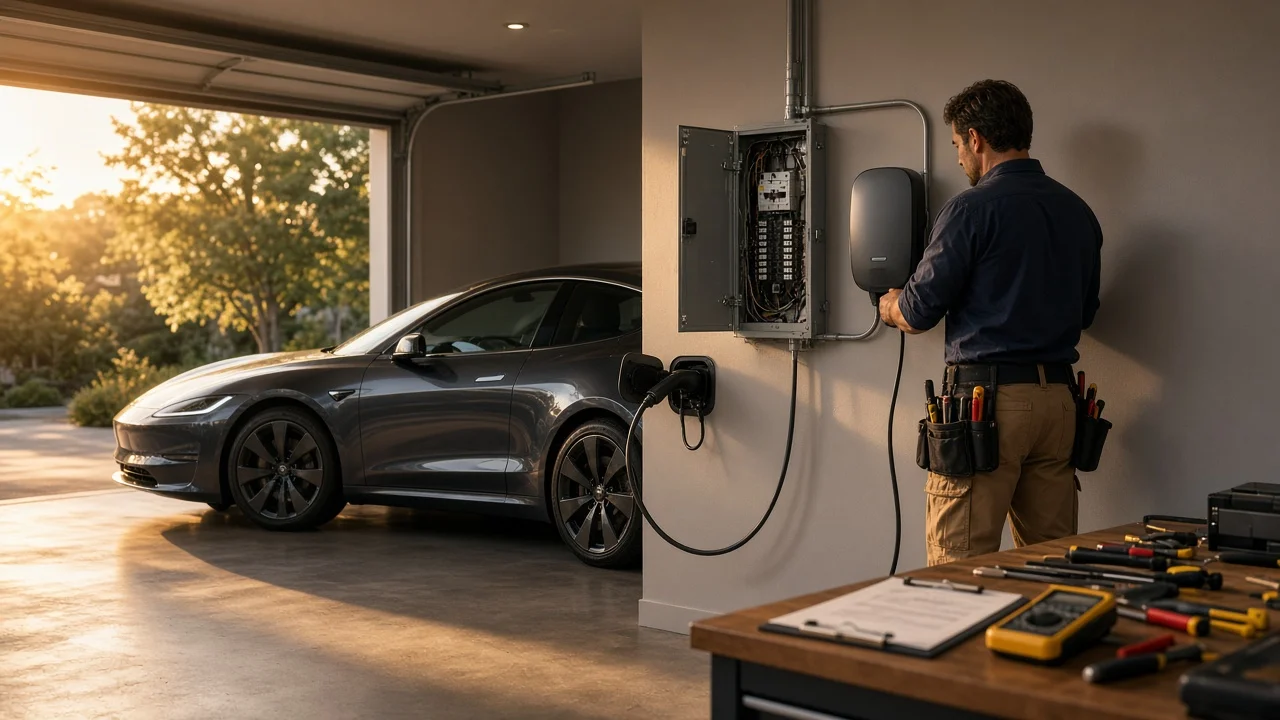
The short answer
A hardwired EV charger is a Level 2 charging unit wired permanently into a dedicated 240-volt circuit instead of plugging into a wall outlet. It is usually the stronger choice if you want the highest charging rate your vehicle and home electrical service can support, if the charger will be mounted outdoors, or if you want to avoid the wear and heat issues that can develop at a plug and receptacle used for long, heavy loads.
The right hardwired unit depends on three things: how much power your vehicle's onboard charger can accept, how much spare capacity your electrical panel has, and which connector your vehicle uses. Two conditions change the answer. If your panel cannot support a larger circuit, or your vehicle cannot accept more current than a plug-in charger already delivers, a hardwired unit may add installation cost without shortening charging time. In that case, a plug-in Level 2 charger on a properly installed outlet can be a reasonable alternative.
Hardwiring also makes the charger harder to take with you if you move, and replacing it later requires an electrician rather than simply unplugging it.
What to check before you buy
Your vehicle's maximum charging rate
Every EV has an onboard charger that limits how much alternating current (AC) power it can accept from a Level 2 unit. A wall charger capable of more power than your car can accept will not charge it any faster. Look up the AC charging limit for your vehicle's exact model year, trim and market, because the onboard charger can differ between versions of the same model. If you expect to replace the vehicle within the charger's service life, consider whether a future vehicle might accept more power, and whether your electrical system could support that.
Connector type
In the US, home Level 2 chargers mainly use one of two connectors: SAE J1772, long used by most non-Tesla EVs, and the North American Charging Standard (NACS), now standardized as SAE J3400. Many automakers have announced or begun moving to J3400 ports, so the correct connector depends on your vehicle's make and model year. Adapters exist between the two standards, but confirm that any adapter is approved by your vehicle's manufacturer and rated for the charger's current before relying on one. If a household has vehicles with different ports, check whether a charger is offered with interchangeable or dual cable options.
Electrical panel capacity and circuit sizing
The National Electrical Code treats EV charging as a continuous load, which means the circuit and breaker must be rated for at least 125 percent of the charger's maximum current. Put the other way, the charger may draw no more than 80 percent of the breaker rating. For example, a charger set to draw 48 amps needs a circuit rated for at least 60 amps. Local jurisdictions adopt different editions of the code and may add their own requirements, so the final circuit size should be confirmed by a licensed electrician.
Before choosing a charger's power level, have an electrician perform a load calculation on your home's electrical service. This shows whether your panel can take a new dedicated circuit of the size you want. If it cannot, the options typically include setting the charger to a lower current, using a charger or separate device with load management that reduces charging when other appliances are running, or upgrading the electrical service. A service upgrade can change the total project cost substantially, so this check belongs before purchase, not after.
Adjustable current setting
Many hardwired chargers let the installer set the maximum current to match the circuit. This is useful if your current panel only supports a modest circuit but you may upgrade later, or if you move the charger to a home with different capacity. Confirm the available settings and how they are configured, since some units require the setting to be made during installation.
Safety certification and enclosure rating
Choose a charger listed by a nationally recognized testing laboratory, such as a UL or ETL listing, to the applicable EV charging equipment standards. Electrical inspectors and some insurers may expect listed equipment. For outdoor or exposed garage locations, check the enclosure rating; NEMA ratings such as Type 3R or Type 4 indicate different levels of protection against rain, dust and hose-directed water. Also confirm the charger's stated operating temperature range suits your climate.
Cable length and mounting location
Measure the distance from the planned mounting point to your vehicle's charging port, accounting for how you park and whether a second vehicle might need to reach the same charger. A cable that is too short forces awkward parking; a longer cable adds weight and may need a holster or hook to keep it off the floor. The mounting location also affects installation cost, because the electrician must run wire from the panel to that spot.
Connected features and utility programs
Wi-Fi or app-connected chargers can schedule charging for off-peak hours, track energy use and receive firmware updates. These features matter most if your utility offers time-of-use rates or EV charging programs, some of which require a specific certified or networked charger to qualify. Check with your utility before buying so the charger you choose is eligible. If you do not need these features, a non-networked unit avoids reliance on an app or account, but your vehicle's own charging schedule may cover basic timing needs.
Warranty and installation terms
Read the warranty terms before buying. Some manufacturers require installation by a licensed electrician for the warranty to remain valid, and coverage length and what it includes vary by brand. Note whether the warranty covers the cable and connector, which take the most physical wear.
Understanding the full cost
The charger's advertised price is only part of the cost. A hardwired installation typically involves several separate items, and quotes vary with your home's layout and local labor rates.
Charger hardware; Electrician labor; Wire, conduit and breaker, which scale with circuit size and the distance from the panel; Wall repair or trenching if the run passes through finished walls or to a detached garage or driveway; Permit and inspection fees; Panel or service upgrade, or a load management device, if the load calculation shows insufficient capacity
When comparing quotes, get them in writing and confirm which of these items each one includes. A low headline figure may exclude permits, materials or panel work. Treat advertised installation packages as estimates until an electrician has inspected your panel and the planned route.
Permits, inspection and incentives
Adding a dedicated 240-volt circuit generally requires an electrical permit and inspection in the US, though rules vary by jurisdiction. A licensed electrician usually handles the permit. Skipping it can create problems with insurance claims, home sales and utility incentive eligibility.
Federal, state and utility incentives for home charging equipment and installation have changed over time and differ by location. Check current eligibility with your utility and state energy office, and with a tax professional for any federal credit, before assuming a rebate or credit will offset the cost. Many programs require the purchase, installation date or charger model to meet specific conditions.
A practical order of steps
Confirm your vehicle's AC charging limit and connector type for its exact model year and trim; Have a licensed electrician assess your panel capacity and the route to the mounting location; Decide the circuit size based on the vehicle limit, panel capacity and any planned future vehicle; Check utility programs and incentives for charger eligibility requirements; Choose a listed charger with the right connector, enclosure rating, cable length and adjustable current range; Compare itemized written installation quotes, including permit costs
What this guide does not cover
No verified data on specific charger models, prices, installation costs, incentive amounts or vehicle charging specifications was available for this guide, so it does not rank products or quote figures. Use manufacturer specifications for your vehicle and charger, itemized quotes from licensed electricians, and current information from your utility to fill those gaps.