Hardwired EV Charger vs Plug-In: Which Home Setup Fits Your Situation
Choosing a Level 2 home charger means deciding how it connects to your home's electrical system. A plug-in charger uses a 240-volt wall outlet. A hardwired charger is wired directly into a dedicated circuit with no plug or outlet. Both can charge an electric vehicle well at home. The right choice depends on how much power you want, where the charger will be mounted, whether you plan to move it, and what your electrical panel can support.
The Short Answer
Choose a hardwired charger if you want the highest charging power your car and panel can use, a permanent or outdoor installation, and the fewest failure points. Choose a plug-in charger if you want flexibility: you can take it with you when you move, swap it easily, or unplug it for service. For many drivers who charge overnight, a plug-in unit on a properly installed circuit provides more than enough speed.
One qualification matters. A plug-in charger is only as safe and reliable as the outlet and circuit behind it. A plug-in setup still usually needs a licensed electrician, a dedicated circuit, and often a permit. It is not automatically the cheaper or simpler option.
How Each Type Connects
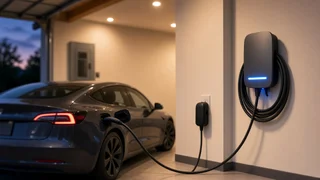
A plug-in Level 2 charger, also called EVSE (electric vehicle supply equipment), has a power cord ending in a 240-volt plug. The most common plug styles are NEMA 14-50, which is the same type used for many RVs and electric ranges, and NEMA 6-50. The charger plugs into a matching receptacle on a dedicated circuit.
A hardwired charger has no plug. An electrician connects the circuit conductors directly to terminals inside the charger or its mounting bracket. The charger becomes a fixed part of the home's electrical system, much like a water heater or central air conditioner.
Side-by-Side Comparison
Factor | Hardwired | Plug-In; Maximum charging power | Can support higher-amperage circuits, so it can deliver more power if the vehicle accepts it | Limited by the outlet; 50-amp receptacles typically cap continuous charging at 40 amps; Portability | Fixed; removing it requires an electrician | Can be unplugged and moved or taken to a new home; Points of failure | Fewer; no plug or receptacle to wear or loosen | Receptacle and plug connection can heat up if worn, loose or low quality; Outdoor installation | Generally well suited | Possible, but outlet needs a proper weather-rated in-use cover; GFCI requirements | Charger typically has built-in ground-fault protection | Current electrical code generally requires GFCI protection on the receptacle, which can cause nuisance trips with some chargers; Replacing or upgrading the charger | Requires disconnecting wiring | Unplug the old unit and plug in the new one if the plug type matches; Other uses for the circuit | Dedicated to the charger | Outlet could also serve other 240-volt equipment when not charging
Charging Speed and Amperage
Electrical code treats EV charging as a continuous load, which means the charger may draw no more than 80 percent of the circuit breaker's rating. This rule shapes the difference between the two types.
Standard 240-volt residential receptacles used for EV charging top out at 50 amps. Under the 80 percent rule, that allows a plug-in charger to draw up to 40 amps. Many plug-in chargers are designed around this limit, and some run lower, such as 32 amps.
A hardwired charger can be connected to a larger circuit, such as a 60-amp breaker, which allows continuous charging at 48 amps. That extra power only helps if your vehicle's onboard charger can accept it. Many EVs cap their AC charging rate below 48 amps, in which case a hardwired unit will not charge faster than a 40-amp plug-in unit. Check your specific vehicle's maximum AC charging rate, which can vary by model year, trim and market, before paying for a higher-capacity installation.
Hardwiring also lets an electrician set the charger to a lower amperage on a smaller circuit when the panel has limited spare capacity. Many hardwired chargers have adjustable current settings for this purpose.
Safety and Reliability
EV charging draws high current for hours at a time, which is harder on a connection than most household appliances. The plug-and-receptacle junction is the main weak point of a plug-in setup. A low-quality, worn or loosely fitted receptacle can overheat. Electricians commonly recommend an industrial or heavy-duty grade receptacle for EV use rather than a basic builder-grade one, and advise against frequent plugging and unplugging.
Hardwiring removes that junction entirely, so there is one less connection that can loosen or degrade. That is a major reason many electricians prefer hardwired installations for permanent use.
Ground-fault protection is another consideration. Recent editions of the National Electrical Code require GFCI protection for receptacles used for EV charging. Most Level 2 chargers already contain their own ground-fault detection, and the two protective devices can sometimes interfere with each other and cause nuisance tripping. A hardwired charger typically avoids this issue. Code adoption varies by state and municipality, so local requirements may differ.
Installation and Cost Factors
Installation cost depends far more on the electrical work than on the connection type. The biggest variables are:
Distance from the electrical panel to the charger location; Whether the panel has enough spare capacity, or needs a load calculation, load management device or upgrade; Wire size required for the circuit amperage; Whether the run is through finished walls, an attic, a crawlspace or underground; Local permit and inspection requirements
A plug-in setup adds the cost of a quality receptacle and possibly a GFCI breaker. A hardwired setup at higher amperage may need heavier wire and a larger breaker. In many homes the difference in labor between the two is modest. If you already have a suitable, properly installed 240-volt outlet in your garage, a plug-in charger may need little or no new electrical work, though it is still worth having an electrician confirm the outlet and circuit are in good condition and rated for continuous EV charging.
Portability and Future Flexibility
Plug-in chargers are the more flexible option. Renters and people who expect to move can take the charger with them and leave a standard outlet behind. Replacing a failed or outdated charger is also simpler, since there is no rewiring involved.
A hardwired charger stays with the house unless an electrician removes it. Some owners see that as a selling point for a future buyer who drives an EV. If you think you may later add a second EV or want higher power, discussing circuit sizing with an electrician during the initial installation can avoid paying for the work twice.
Which One Should You Choose?
Match the setup to your situation:
Choose hardwired if your vehicle can accept more than 40 amps of AC charging and you want to use it; Choose hardwired if the charger will be mounted outdoors or exposed to weather; Choose hardwired if you want a permanent installation with the fewest connection points; Choose hardwired if GFCI nuisance tripping is a concern or local code makes a receptacle setup complicated; Choose plug-in if you rent or expect to move and want to take the charger with you; Choose plug-in if you already have a suitable 240-volt outlet in good condition near your parking spot; Choose plug-in if your daily driving is moderate and overnight charging at 40 amps or less is more than enough; Choose plug-in if you want to easily swap chargers or use the outlet for other equipment
Next Steps
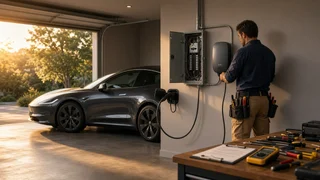
Start by confirming your vehicle's maximum AC charging rate and estimating how many miles you typically drive per day. Then have a licensed electrician assess your panel capacity, recommend a circuit size, and explain local permit and GFCI requirements. Choose a charger that is safety-certified by a nationally recognized testing laboratory, such as one carrying a UL or ETL listing, and make sure its plug type or hardwiring rating matches the circuit being installed. With those details settled, the choice between hardwired and plug-in usually becomes clear.