Can You Install a Level 3 EV Charger at Home?
The Short Answer
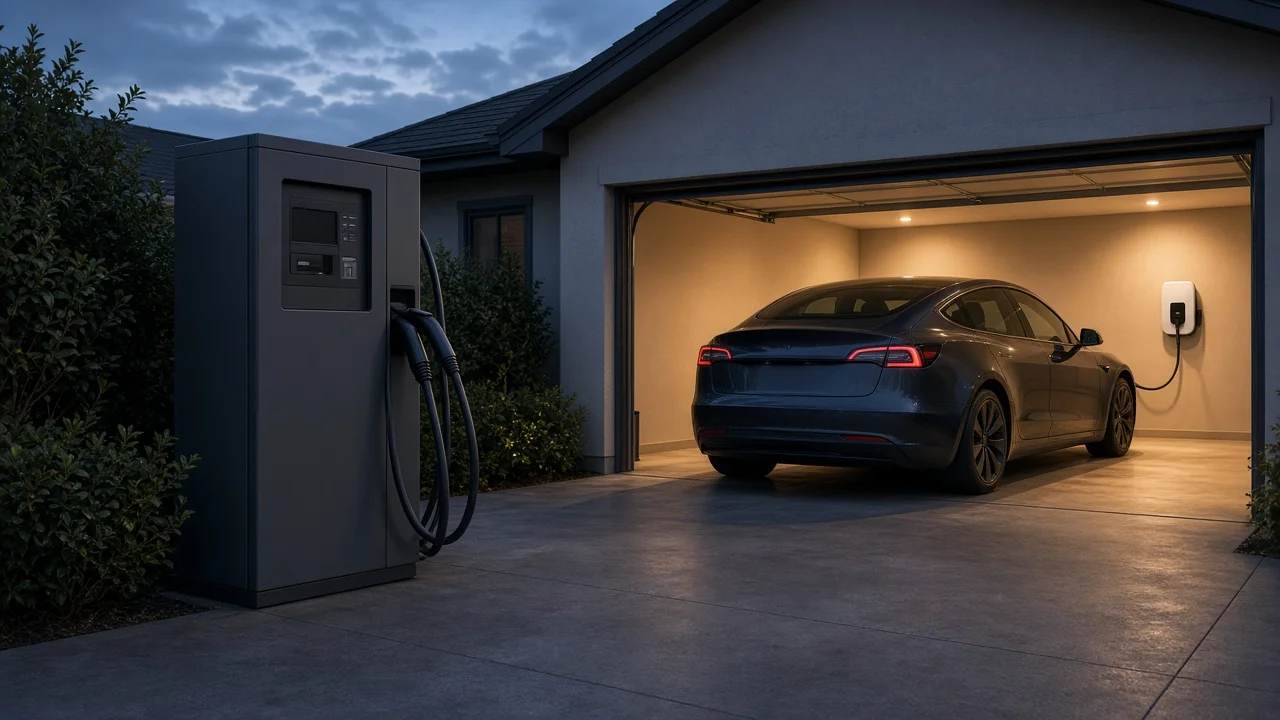
In most US homes, installing a Level 3 charger isn't realistic. It may not be strictly impossible, but the electrical service, equipment and utility involvement it needs are built for commercial sites, not houses. Almost every home EV owner who wants faster charging installs a Level 2 charger instead.
One point changes the answer for a small number of properties. If a building already has commercial-grade electrical service, or the utility is willing to provide it, a DC fast charger becomes technically possible. Even then, it is a commercial-scale project and not a typical home upgrade.
What "Level 3" Means
"Level 3" is the common name for DC fast charging. Level 1 and Level 2 chargers supply alternating current (AC), which the car's onboard charger converts into direct current (DC) to fill the battery. A Level 3 charger does that conversion inside the charging unit and sends DC straight to the battery. This bypasses the limits of the car's onboard charger and allows much higher charging power.
That conversion hardware is large, and it needs a heavy-duty power supply. In the US, DC fast chargers are generally designed for three-phase commercial electrical service. Most single-family homes have single-phase residential service.
How the Charging Levels Compare
Level | Current delivered to car | Typical US power source | Usual setting; Level 1 | AC | Standard 120-volt household outlet | Home; Level 2 | AC | 240-volt circuit, like those used for large appliances | Home, workplace, public; Level 3 (DC fast charging) | DC | Three-phase commercial electrical service | Public stations and commercial sites
Why Level 3 Is Impractical for Most Homes
Electrical service: Residential single-phase service is generally not suited to DC fast chargers, so the property would probably need a service upgrade arranged with the utility. Utility approval: Bringing commercial-grade service to a home depends on the local utility, and the utility may not offer it. Equipment and installation: DC fast charging units are commercial equipment. Installing them is a larger electrical project than putting in a Level 2 charger. Permits and codes: Local permitting and electrical code requirements apply. A high-power installation needs a licensed electrician and usually an inspection.
The source material for this article had no confirmed prices, power ratings, installation timelines or utility policies. For any specific property, get a site assessment from a licensed electrician and check service options directly with the local utility.
What Most Owners Install Instead
A Level 2 charger on a dedicated 240-volt circuit is the standard choice for faster home charging. It runs on residential electrical service. Many homes can support one, although some need a panel or service upgrade first. Since most charging happens overnight while the car is parked, Level 2 speeds usually cover daily driving. DC fast charging is mostly useful on road trips, where public stations already provide it.
How fast a car actually charges on Level 2 depends on the vehicle's onboard charger, the charger's rating and the circuit it uses. These figures differ by model, model year and trim, so check the specifications for your vehicle before choosing equipment.