What a Glow Plug Control Module Does
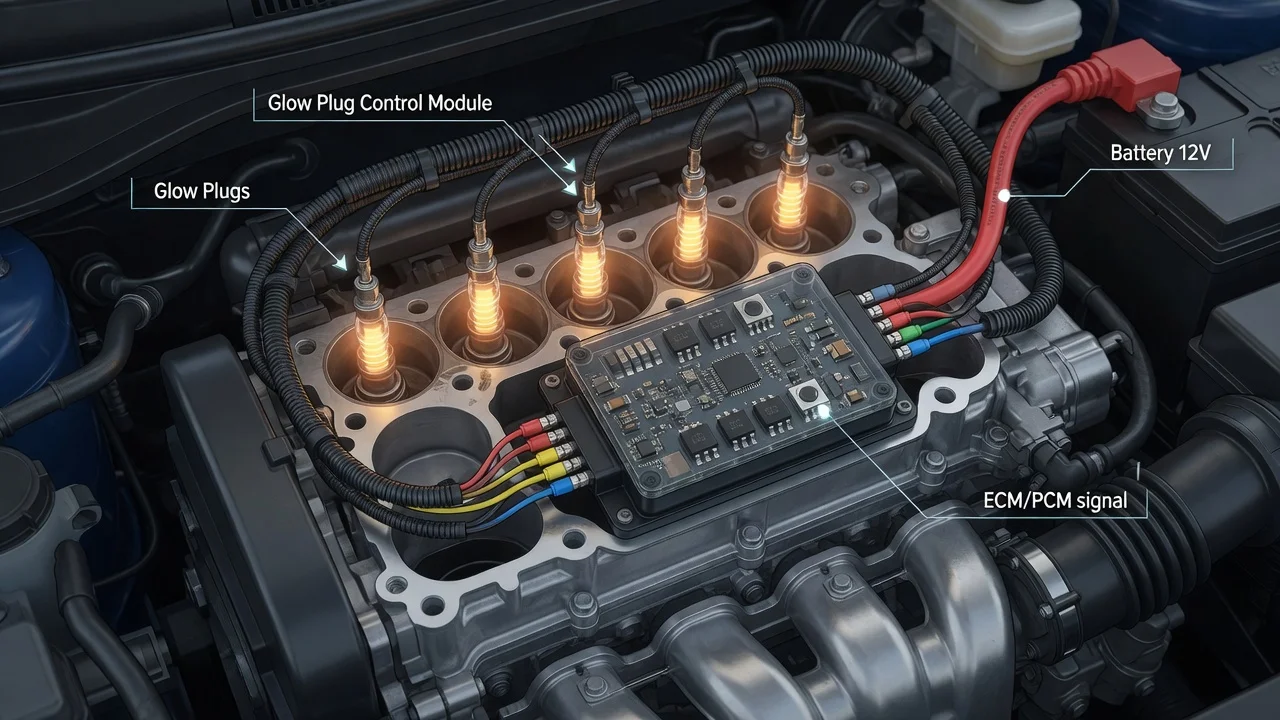
A glow plug control module is the part of a diesel engine's cold-start system that decides when the glow plugs receive power, how much they receive and for how long. If your diesel cranks for a long time in cold weather, smokes white after starting or shows a flashing glow plug lamp, this module is one of the parts worth understanding. This guide explains what it does, how it works and where its role ends.
The short answer
Diesel engines ignite fuel through compression heat rather than a spark. In a cold engine, the cylinder walls and head absorb that heat, so the injected fuel may not light reliably. Glow plugs are small electric heaters, one per cylinder on most designs, that warm the combustion chamber to help ignition. The glow plug control module, sometimes called a glow plug controller or, on older vehicles, a glow plug relay, is the switch and timer that feeds them current.
In plain terms, the module turns the glow plugs on before and during starting, keeps them on for a while after the engine fires, and turns them off once they are no longer needed. On many modern vehicles it also watches each glow plug circuit and reports faults to the engine computer. It does not control fuel delivery, fuel pressure or injector timing; those belong to the engine control module and the fuel system.
How the module controls the glow plugs
Most systems work in up to three phases. Pre-glow happens when you switch the ignition on, before cranking, and the glow plug lamp on the dash usually stays lit during this time. Start glow continues while the engine cranks. Post-glow, also called after-glow, can keep the plugs heated for seconds or minutes after starting to steady combustion, reduce white smoke and knock, and lower cold-start emissions.
How long each phase lasts depends mainly on engine temperature, typically read from the coolant temperature sensor, and on system voltage. A warm engine may need little or no glow time, while a very cold one may need much more. Simple older systems used a heavy-duty relay with a basic timer. Newer modules use solid-state switching and pulse the current rapidly, a method known as pulse-width modulation, to hold each plug at a target temperature instead of simply switching full battery voltage on and off.
Many current modules can sense whether each glow plug draws the expected current. When a plug, wire or connector fails, the module or engine computer can store a diagnostic trouble code, often in the P0670 to P0684 range or the P0380 family, and may flash the glow plug lamp or turn on the check engine light.
What changes the answer for your vehicle
Fuel type comes first. Glow plugs and their control modules are a diesel feature. Gasoline engines use spark plugs and have no glow plug system, so a gasoline vehicle's cold-start problem points elsewhere, such as fuel pressure, the fuel pump, fuel trim or ignition. Some diesels do not use glow plugs at all and instead warm incoming air with an intake air heater, often called a grid heater, which has its own relay or controller and different diagnostics.
Engine configuration matters too. Some vehicles have a separate module mounted near the battery, on the fender or on the engine, while others build the glow plug control into the engine control module or a combined controller. The type of glow plug also changes things. Many modern systems use low-voltage plugs, sometimes ceramic, that are designed to be driven by a pulsed module and can be damaged if they receive steady battery voltage. Installing the wrong plug type for a given controller can cause early failure or fault codes.
Operating conditions shape how noticeable a fault is. In mild weather, a diesel with a failed module or several dead plugs may start almost normally. In freezing weather, the same fault can mean long cranking, rough running and heavy white smoke. A weak battery or poor charging system also shortens or weakens the glow cycle, so low voltage can mimic a control module fault.
Glow system symptoms versus fuel system problems
Hard cold starts are not proof of a glow system fault. A clogged fuel filter, air in the fuel lines, a weak lift or high-pressure fuel pump, low rail pressure, a leaking or sticking injector, or fuel that has gelled in cold weather can all cause long cranking or a no-start. The clues differ, though. Glow system faults usually affect cold starts far more than warm starts and often come with a glow-related code or lamp behavior. Fuel delivery and fuel pressure problems are more likely to affect warm starts as well, cause power loss under load or stalling, and set fuel pressure or injector codes.
Fuel additives, including cold-flow treatments and cleaners, may have a place in winter fuel handling, but they do not repair a failed glow plug, wiring fault or control module. Treat them as fuel management, not as a fix for an electrical cold-start fault.
What the owner can safely do
Start by observing. Note whether the glow plug lamp lights at key-on, how long it stays on, and whether it flashes or stays on after the engine is running. Record the outside temperature, how long the engine cranks, and whether white smoke or rough running fades as the engine warms. These details help separate a glow system fault from a fuel or battery problem.
Read stored codes with a scan tool if you have one, and write down the exact codes before clearing anything. Check that the battery is healthy and fully charged and that the charging system works, because low voltage undermines the whole cold-start process. With the engine off and cool, you can visually inspect the module's connectors, the main power cable and the glow plug harness for corrosion, melting, chafing or loose terminals. If your vehicle uses a block heater, using it in cold weather reduces how hard the engine depends on the glow system.
Avoid shortcuts. Do not power glow plugs directly from the battery to test them, since many modern plugs are not designed for steady full voltage. Do not open fuel lines to bleed or depressurize a modern diesel fuel system yourself; high-pressure common-rail systems operate at pressures that can cause serious injury, and fuel can remain under pressure after shutdown. A leak check by an owner should be limited to looking for wet spots or fuel odor with the engine off, never feeling along lines with your hands.
Limitations and when to get help
Glow plug control varies widely by manufacturer, engine and model year, including module location, phase timing, glow plug type, test procedures and the meaning of specific codes. General information cannot tell you whether your module, a single plug or a wire is at fault. Proper diagnosis usually requires the vehicle's service information, current measurements on each circuit, and sometimes a scan tool that can command the glow system and read module data.
Removing glow plugs can also be risky on some engines, because seized plugs may break in the cylinder head and require specialized extraction. If you have glow-related codes, a lamp that flashes or stays on, or cold-start trouble that a healthy battery does not explain, the sensible next step is a diesel-qualified technician who can test the circuits for your specific engine. If symptoms also appear on warm starts or under load, ask them to evaluate the fuel system as well.