How to Locate a Glow Plug Control Module on a Diesel Engine
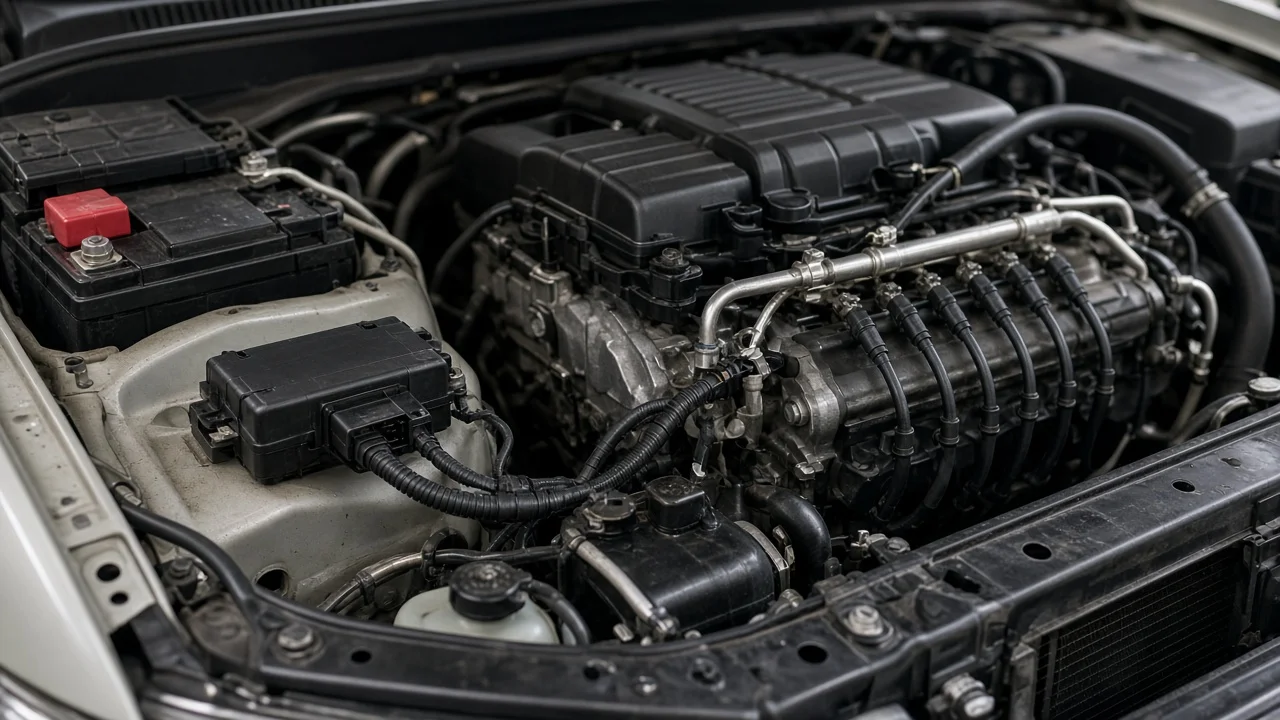
If your diesel cranks for a long time on cold mornings, smokes white at startup or shows a glow plug warning, the glow plug control module is often the next part to examine. There is no single universal location. It depends on the manufacturer, engine configuration and model year. This guide explains where the module usually sits, how to recognize it, and how to tell glow plug faults apart from fuel delivery problems without opening the high-pressure fuel system.
Where the Glow Plug Control Module Is Usually Located
On most diesel cars and trucks, the glow plug control module is mounted in the engine bay, fairly close to the glow plugs it feeds so the heavy-current wiring stays short. Common spots include the inner fender or strut tower, the firewall, the area around or beneath the battery tray, near the intake manifold, and on or beside the cylinder head or valve cover. On some vehicles it sits inside the underhood fuse and relay box. On others it is tucked behind a headlight assembly or under the air intake ducting, so you may need to remove a cover or duct before you can see it.
The most reliable way to find it is to follow the glow plug wiring. Each glow plug typically has a single terminal at the top, usually close to its injector. Those wires gather into a harness that leads back to the module or relay. Where that harness ends at a component that also has a thick power feed from the battery, you have found it. Gasoline engines do not use glow plugs, so if your vehicle runs on gasoline, there is no such module to look for.
How the Glow Plug System Works
A diesel engine ignites fuel with compression heat rather than a spark. When the engine is cold, the metal around the combustion chambers absorbs much of that heat, so glow plugs warm the chambers to help the first injections of fuel ignite. The control module, or a simpler relay on older designs, switches battery current to the plugs for a set time based on coolant temperature and other inputs from the engine computer.
Because glow plugs draw substantial current, the module handles a heavy load and is often mounted on a metal surface that helps shed heat. Many newer systems keep the plugs heating for a short period after startup, called after-glow, to reduce white smoke, rough idle and emissions while the engine warms. Some modules also monitor each plug individually and report a failed circuit to the engine computer, which can set a diagnostic trouble code and turn on a warning lamp.
The glow system is purely electrical and separate from fuel delivery. The fuel pump, fuel filter, high-pressure pump and injectors supply fuel, while the glow system only supplies heat. Hard cold starts can come from either side, which is why finding the module and diagnosing the symptom go together.
What Changes the Location
Engine configuration matters most. On inline four- and six-cylinder diesels, the glow plugs run along one side of the head, so the module is often on that side of the engine bay or near the firewall. On V-type engines, plugs sit on both banks, and the controller may be on top of the engine between the banks, on one valve cover, or on a frame rail or fender with harnesses running to each side. Transverse installations in front-wheel-drive cars often place it near the battery or under intake plumbing because space is tight.
Age and design also change what you are looking for. Older diesels typically use a plain glow plug relay, while newer ones use an electronic glow control unit that communicates with the engine computer and may drive lower-voltage, fast-heating plugs. On some vehicles, glow control is built into the engine computer or another control module, so there is no stand-alone box at all. The same model with a different engine, or sold in a different market, can place the part elsewhere, so a location seen on one vehicle is not proof for another.
What the Owner Can Do
Work with the engine off, the key removed and the engine bay cooled down if the vehicle was recently driven. Remove the plastic engine cover if one is fitted, then work outward from the glow plugs as described above. The module is usually a small metal or plastic box, often with a ribbed housing or heat sink, a multi-pin connector and one or more heavy-gauge cables. The legend on the fuse box lid may list a glow plug relay or fuse, which can point you toward the right area.
Once you find it, inspect rather than disassemble. Look for corroded or loose connectors, melted insulation, chafed harnesses and a broken or loose ground. If you plan to unplug the module or the glow plug harness, disconnect the negative battery cable first and follow the vehicle's procedure, because these circuits carry high current. A scan tool that reads diesel codes can show whether the computer has flagged the glow circuit or a specific cylinder, which is far more useful than guessing.
Locating the module never requires opening the fuel system. Do not loosen injector lines, fuel rail fittings or the fuel filter to gain access or to check for fuel. Modern common-rail diesels hold fuel at extremely high pressure, and a pinhole spray can penetrate skin. If the symptoms point to fuel delivery instead, such as hard starting even when warm, loss of power or a fuel pressure code, a leak check and fuel pressure test belong in a shop with proper equipment. Anti-gel and other additives may help with fuel waxing in cold weather, but they do not repair a failed module or glow plug.
Limitations and Next Step
This guide describes common patterns, not the exact position on your vehicle. Manufacturers move components between model years, and service updates can change parts or wiring. For the precise location, connector views and test values, use the factory service manual or a reputable repair database for your exact engine code and model year. A dealer parts department can also identify the part and where it is mounted from your vehicle identification number.
Get professional help if the warning lamp stays on after basic checks, if any glow plug wire shows signs of burning, if the module is buried under the intake or requires removing other components, or if hard starting continues while the glow system tests healthy. A diesel technician can measure current draw at each plug, confirm module commands with a scan tool, and safely test fuel pressure and injector performance, so you replace only the part that has actually failed.