Choosing a Compatible Glow Plug Control Module
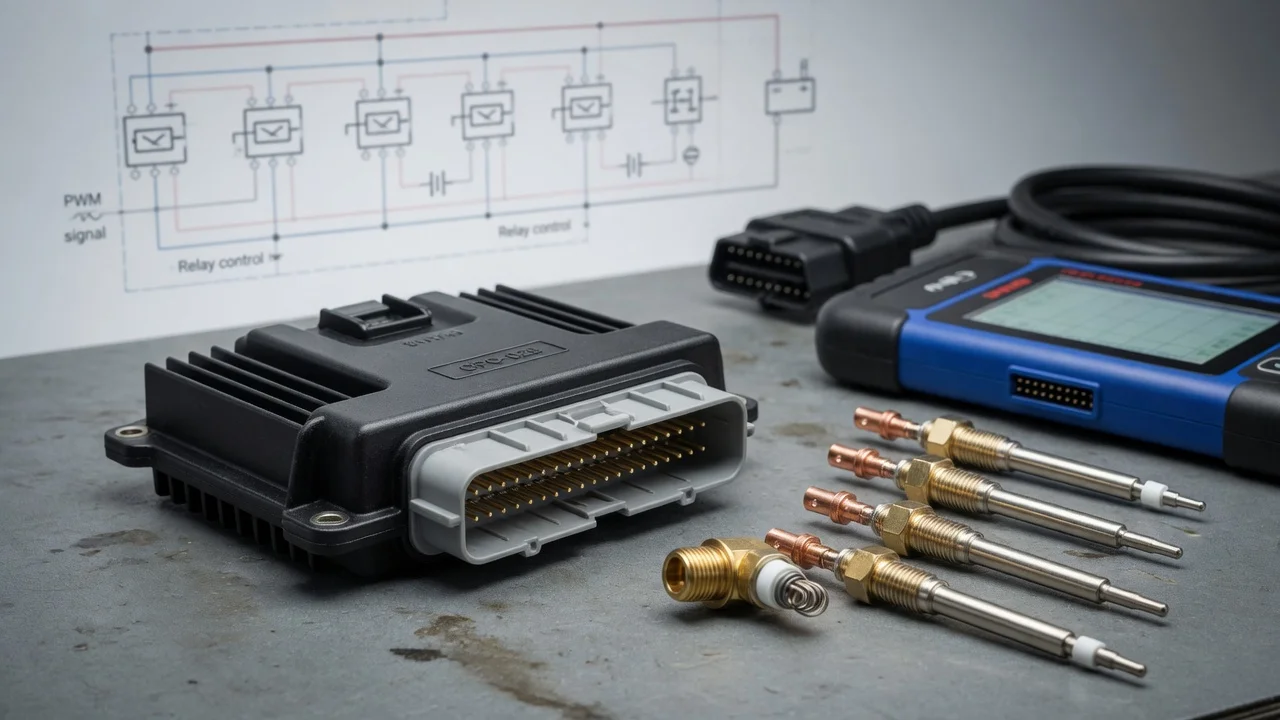
A glow plug control module decides how long and how hard a diesel engine's glow plugs heat before, during and after a cold start. When it fails, the symptoms can look a lot like fuel trouble: long cranking, rough idle and white smoke on cold mornings. Buying a replacement is straightforward only if you confirm the fault first and match the unit to your engine, glow plug type and wiring.
Define the job the product must do
Start with fuel type, because it settles the question quickly. Glow plugs and their controller exist only on compression-ignition diesel engines. Gasoline engines use spark plugs and have no use for this part. On a diesel, the module takes a command from the engine computer, which weighs inputs such as coolant temperature, intake air temperature and battery voltage, then switches heavy current to the plugs. Older systems use a simple relay with a fixed or temperature-based timer. Newer designs drive each plug through its own switched circuit, often with pulsed control, and keep heating after start-up to reduce smoke, noise and rough running while the combustion chambers warm.
Next, think about how you use the vehicle. A truck that sits outside through northern winters depends far more on reliable glow plug operation than one kept in a heated garage in a mild climate. Towing, fleet duty, frequent short trips and long idling periods all add to the time the system spends heating. Note your practical constraints as well: budget, whether you plan to install the part yourself, how accessible the module is on your engine configuration, and whether you own a scan tool that can read glow plug codes and live data.
Finally, confirm that the module is actually the problem. Hard cold starts also come from weak batteries, failed plugs, corroded connectors, a waxed or clogged fuel filter, air in the supply side, a tired lift pump, low rail fuel pressure or leaking injectors. Trouble codes in the P0380 and P0670 to P0684 groups point toward the glow circuit, but a cylinder-specific code more often means a bad plug or wire than a bad controller. Measuring plug resistance and checking for voltage at the plugs during a commanded glow cycle tells you far more than replacing parts in sequence.
Check compatibility
The most reliable fitment key is the original part number printed on the old module's label, cross-referenced with your VIN, engine code and model year. Two engines offered in the same vehicle line can use different controllers, and a mid-year production change can split fitment even within one model. Matching by vehicle name alone is where many wrong orders begin, so record the number and photograph the label before you shop.
Glow plug type is the next hard constraint. Many modern diesels use low-voltage fast-heat plugs, either steel or ceramic, designed to receive a regulated, pulsed supply rather than full battery voltage. A module built for traditional 12-volt plugs can overheat and quickly destroy low-voltage plugs, while a module that expects low-voltage plugs may leave older plugs too cool to start the engine. Confirm the plug specification your engine calls for and choose a controller designed around it. The number of output circuits must also match the cylinder count.
Then check the physical and electronic interfaces: connector shape and pin count, mounting bracket, main power terminal and the way the module reports to the engine computer. Some units only accept an on/off signal, while others exchange data over a dedicated communication line so the engine computer can monitor each plug. A module that does not use the expected signalling may switch the plugs yet still set a communication code or warning light. Some vehicles may also need the new unit recognized or configured with a capable scan tool after installation, so check the service information for your model before buying.
Features that affect the choice
Original-equipment, new aftermarket and remanufactured modules differ mainly in how closely they replicate the factory control logic and diagnostics. An original unit is the safest match for software and communication requirements. A quality aftermarket unit can be a sound choice when the supplier lists your exact original part number, not just a broad vehicle range. Remanufactured units vary widely, so ask what was replaced and tested, and whether a core return is required.
Look for evidence rather than labels. Phrases such as heavy duty, OEM quality or plug and play are marketing claims unless backed by a published cross-reference, a clear warranty and a return policy that covers electrical parts. Useful details include individual circuit diagnostics, afterglow support where the factory system had it, a sealed housing and connector seals suited to underhood heat, road salt and water, and terminal design appropriate for the main current feed. Customer reviews can reveal fitment problems but rarely say much about long-term durability.
Limitations and ownership costs
A new controller cannot revive burned-out plugs, repair a chafed harness, restore a corroded connector or make up for a weak battery. It also does nothing for fuel delivery faults. If the engine still starts poorly once the glow circuit tests good, the diagnosis moves to the fuel filter, water separator, lift pump, rail fuel pressure, injector return flow and any leak check the service manual specifies. Fuel additives may help prevent winter gelling in some conditions, but they are not a repair for an electrical fault or a failing injector.
Installation is usually simpler than fuel system work, but it involves a high-current circuit. Disconnect the battery before unplugging the module, keep the main terminal from touching ground and tighten power connections to specification. Replacing the controller should not require opening the fuel system. Common-rail injection operates at extremely high pressure, so do not loosen injector lines, crack fittings or feel for leaks with your hand. If reaching the plugs or module on your engine means disturbing high-pressure components, follow the manufacturer's procedure or leave that step to a qualified diesel shop.
Budget beyond the module itself. Plugs are commonly replaced as a set when several have aged, and seized plugs can break off in the cylinder head, turning a modest job into a costly extraction. Allow for a possible core charge, connector or harness repair, shop time for configuration if your vehicle needs it, and the hassle of returning a part that does not fit. Once installed, the module needs no routine maintenance, though keeping its connectors clean and dry helps it last.
Build a practical shortlist
Narrow the field by applying the same checks to every candidate. Does the listing name your original part number, engine code and model years? Is it designed for your glow plug type and voltage, and for the correct number of cylinders? Do the connector, pin count, mounting and power terminal match the old unit? Does it support the same signalling to the engine computer, including per-cylinder diagnostics and afterglow if your factory system used them?
Then compare ownership terms: warranty length, return rules for installed electrical parts, any core requirement and whether scan tool setup is needed. Drop any option that fails a hard fitment check, however attractive the price. Among those that remain, the original-equipment unit carries the lowest risk, and a well-documented aftermarket alternative is reasonable when its cross-reference is exact. Before ordering, make sure testing has ruled out the plugs, wiring, battery and fuel supply, so the new module solves the problem you actually have.