What Is a Fold-Down Rear Seat Good For?
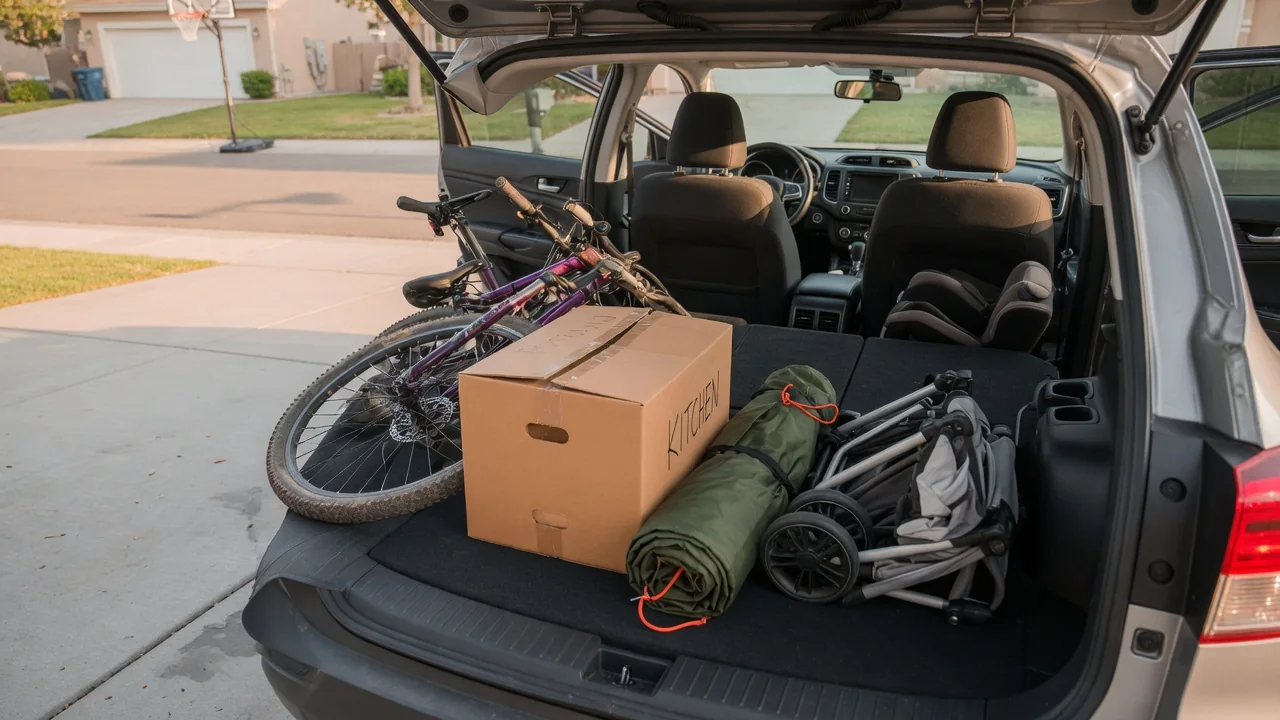
Drivers who ask what is a fold down rear seat good for usually have a specific item in mind: a bicycle, a flat-pack bookcase, a pair of skis. The feature turns passenger space into cargo space on demand, and using it well means knowing how to open the area, restrain the load, and return the seat to safe passenger duty afterward.
Open the space
Folding the rear seatback joins the trunk or cargo area to the cabin, creating a longer load floor than either space offers alone. In a sedan, that pass-through lets lumber, curtain rods, or a rolled rug extend forward from the trunk. In a hatchback, wagon, or SUV, the folded seat forms a wide platform suited to boxes, luggage, camping gear, or a bicycle with its front wheel removed. Length is the main gain, although height and width at the opening still decide what actually fits.
Many vehicles split the seatback into sections, often described as 60/40 or 40/20/40, so one portion can fold while another still carries a passenger. That arrangement suits a trip with three people and a set of skis, or a child seat on one side with a stroller and groceries on the other. Release mechanisms vary: some use levers or straps on the seatback, others have pulls inside the trunk or buttons near the tailgate. The owner's manual shows which type applies and whether the head restraints must be lowered first.
Secure objects
A bigger cargo area also gives loose objects more room to move. With the seatback down, nothing separates the load from the occupants, so anything unrestrained can slide forward under hard braking or shift sideways in a sudden lane change. Heavy items belong low and as far forward as practical, resting against the folded seat or the front seatbacks, with lighter goods on top. Keeping the load below the level of the front seatbacks reduces the chance of it reaching the people ahead.
Most cargo floors include tie-down rings or hooks, and these are the right anchor points for ratchet straps, cargo nets, or bungee cords. Long items that reach between the front seats deserve particular care, because they can interfere with the shifter, the parking brake, or the driver's elbow room. Padding sharp corners protects upholstery and trim. Some vehicles offer cargo barriers, dividers, or retractable covers as accessories, and their presence, location, and rated capacity differ by model, so it pays to look over the cargo area before loading.
Restore seat correctly
Returning the seatback to its upright position is a safety step, not just tidying up. The seatback has to latch firmly because it supports a passenger in a collision and also holds trunk contents out of the cabin. A back that merely rests upright without engaging can swing forward when it matters most. After raising it, push and pull firmly at the top to confirm it is locked. Many vehicles show a colored indicator near the release that disappears when the latch has fully engaged.
Seat belts are the most common thing to go wrong during this step. A belt can become trapped behind the seatback or pinched in the latch, which can damage the webbing and leave it unusable for the next passenger. Guide each belt clear as the seat goes up, then check that the buckles sit on top of the cushion rather than buried beneath it. Raise any head restraints that were lowered, and reinstall and retighten any child seat that was removed, following its own instructions and the vehicle manual.
Everyday Use and Observations
In daily driving, the feature earns its keep in small ways. A weekly grocery run rarely needs it, but a trip to the garden center, a move to a college dorm, or a weekend with sports equipment often does. Dog owners fold one section to give a pet more room while keeping a seat available. Some drivers leave a narrow section down permanently for a long item like a fishing rod case. The flexibility lets one vehicle cover tasks that might otherwise call for a larger one or a roof rack.
A few things become apparent with regular use. The folded seat may not lie completely flat, leaving a slope or a step where it meets the cargo floor, which affects how boxes stack and how easily heavy items slide in. Road and exhaust noise can seem louder with the cabin open to the trunk. Fabric or carpet on the seatback picks up dirt and scuffs, so a cargo liner or an old blanket is worthwhile. Rear visibility through the mirror also changes once the load rises toward window height.
Limits and Next Steps
A folded seat adds volume, but it does not raise the weight the vehicle can carry. Payload, which covers passengers and cargo together, is set by the manufacturer and usually printed on a label inside the driver's door opening. Dense loads such as bagged concrete, paving stones, or tile can reach that figure long before the space looks full, and an overloaded vehicle takes longer to stop and handles less predictably. The seatback itself is also not designed to bear concentrated heavy weight the way a truck bed is.
Other limits are physical. A sedan's pass-through opening can be much smaller than the trunk it connects to, and some vehicles have a fixed rear seat or only a narrow ski hatch. Items too long to fit with the trunk or hatch closed raise a separate concern, since driving with it open can draw exhaust fumes into the cabin. When a load exceeds what the interior handles safely, a roof rack, a trailer, a rental truck, or delivery is the better choice. The owner's manual remains the authority for a specific vehicle.