Why Do Rear Seats Have Different Cushion Angles?
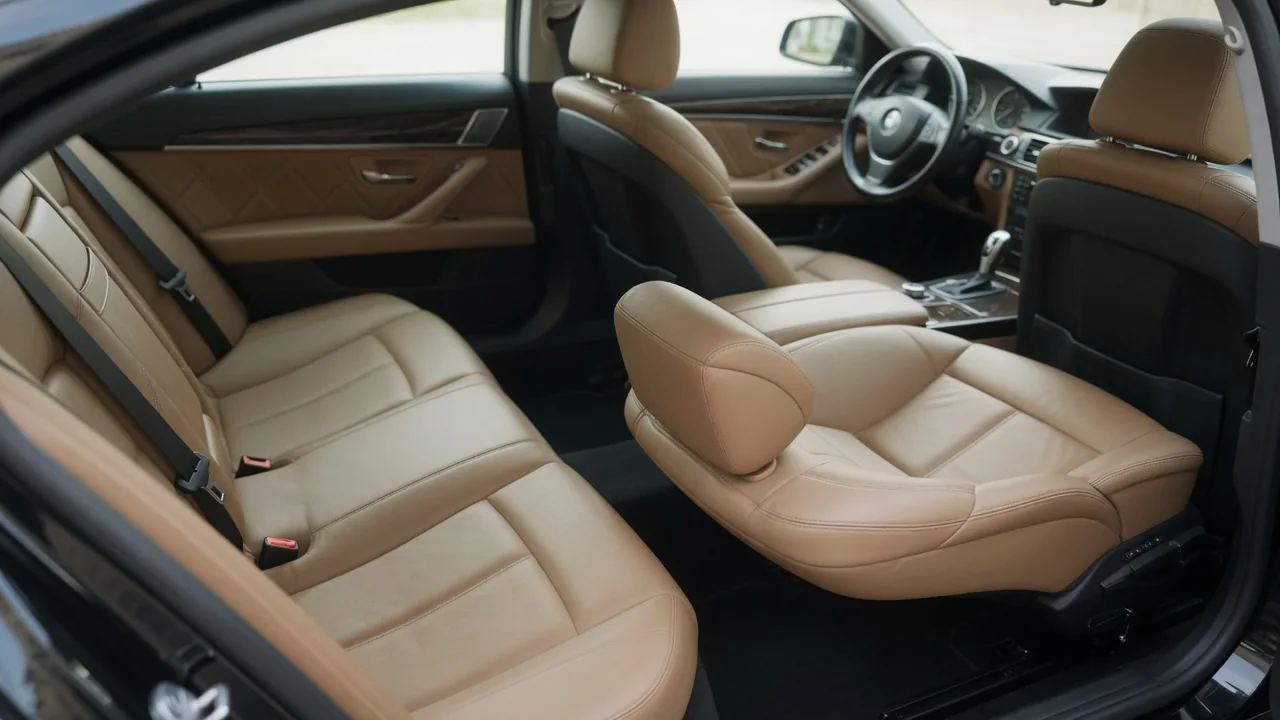
Sit in the back of a few different vehicles and you will notice that the rear seat cushion rarely has the same tilt. Some cushions slope steeply toward the backrest. Others are nearly flat, and some sit so low that your knees rise toward your chest. So why do rear seats have different cushion angles? The rear car seat cushion angle is not an arbitrary styling choice. It is a compromise between packaging, passenger comfort, and the way the seat folds for cargo.
Packaging: What Lives Under and Around the Rear Seat
The space beneath a rear seat is some of the most contested real estate in a vehicle. Depending on the design, it may need to hold the fuel tank, rear suspension mounts, the axle or subframe, exhaust routing, and wiring. In electrified vehicles, it may also hold a battery pack or related hardware. The floor under the rear seat often rises in a step, commonly called a kick-up, to clear these components. Engineers then shape the seat cushion and its supporting frame around the height and contour of that floor, which directly limits how much the cushion can tilt.
The body shell above the seat matters just as much. A roofline that slopes down toward the rear limits headroom. Designers may respond by lowering the passenger's hip point and tilting the cushion further back to keep heads clear of the headliner. Wheel arches can intrude into the outboard seating area, and a center tunnel or console can push the middle position higher and flatter than the outer ones. Because each vehicle balances these constraints differently, two vehicles of similar size can end up with noticeably different rear cushion angles.
When the floor is raised to make room for components underneath, the gap between the floor and the cushion shrinks. If the cushion cannot be raised by the same amount without costing headroom, passengers sit with their knees elevated and less of their thighs resting on the seat. Changing the cushion angle is one of the few tools engineers have to recover some of that lost support within a fixed space.
Comfort: How the Angle Supports Passengers
A cushion that tilts slightly downward toward the backrest keeps the pelvis settled in the seat instead of sliding forward. This matters especially in the rear, where passengers cannot brace against pedals and often ride for long stretches without adjusting their posture. The tilt works together with the backrest angle. A more upright backrest generally pairs with a modest cushion tilt. A more reclined backrest usually needs more tilt so the occupant does not gradually slump toward the front edge.
Thigh support is the other half of the comfort equation. Ideally, the cushion supports the thighs along most of their length without pressing hard behind the knees. The cushion angle, the height of the seat above the floor, and the cushion length all affect how weight is distributed. A cushion that is too flat for its height can leave the thighs unsupported. One that rises too sharply at the front edge can press behind the knees and restrict circulation on long trips.
Cushion geometry also affects occupant restraint. A seat that holds the pelvis in place helps keep the lap portion of the seat belt low across the hips instead of riding up toward the abdomen during a sudden stop. Seat designs may reinforce this with shaping in the cushion frame or in the foam beneath the front of the seat. That is one reason the visible angle of the upholstery does not tell the whole story.
Cargo Folding: Why the Seat Has to Move
Most modern rear seats are expected to fold, and the folding method strongly influences cushion design. In the simplest arrangement, the backrest folds forward onto a fixed cushion. The cushion's angle and thickness then determine whether the folded backrest ends up level with the cargo floor or sits at an incline. A steeply tilted cushion tends to leave the folded backrest angled upward, which makes sliding long items into the vehicle more awkward.
Other designs move the cushion itself. A flip-forward cushion pivots up and toward the front seats so the backrest can fold down into the space it vacated. In a dive-down arrangement, linkages drop the cushion lower as the backrest folds, tucking everything closer to the floor. Seats that stow entirely into floor wells, often used for occasional rear rows, need thin cushions and simple frames that collapse neatly. Each of these mechanisms limits how thick, how long, and how steeply angled the cushion can be.
Split-folding seats add another layer. When one section folds and the other stays upright, both sections must line up with shared hinges, latches, and seat belt anchors. Designers often choose a cushion angle that works acceptably in every folding position rather than one that is ideal for sitting alone. The result may be a seat that feels flatter or firmer than a fixed bench, in exchange for a more usable cargo area.
Practical Implications and Limits
For shoppers, the most reliable way to judge a rear seat is to sit in it for several minutes in a normal posture, ideally behind a front seat set for a typical driver. Notice whether your thighs rest on the cushion, whether you feel yourself sliding forward, and whether your knees rise uncomfortably. If you plan to fold the seats often, try the folding sequence and check whether the resulting load surface is flat enough for what you carry. These impressions show a particular vehicle's trade-offs better than general descriptions can.
Owners who install child restraints should follow both the vehicle owner's manual and the child seat instructions. A sloped rear cushion can affect how a child seat sits, and some child seats include recline adjustments or level indicators for this reason. The vehicle manual is also the place to confirm which seating positions are approved for each installation method. Be cautious with aftermarket wedges or thick seat cushions. Changing how an occupant sits can alter seat belt fit and may interfere with occupant sensing systems in vehicles that use them.
For upholstery and repair work, remember that the cushion's angle comes from the frame, springs, and foam working together. Worn or compressed foam can change the effective angle and reduce support over time. Replacement foam that does not match the original contour may affect comfort, belt positioning, and how the seat folds. Without manufacturer data for a specific vehicle, its exact cushion geometry cannot be stated, so that model's service information remains the authoritative reference for any repair that changes the seat's shape.