How Does Seat Cushion Length Affect Comfort?
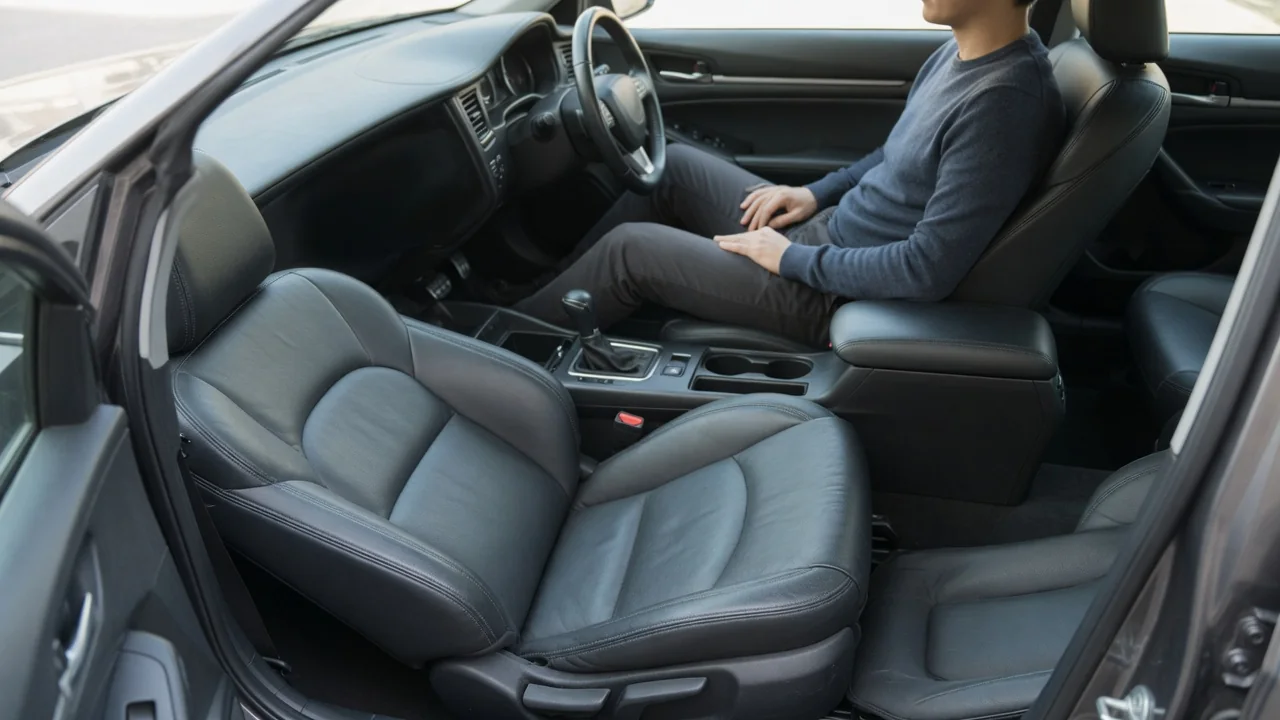
Seat cushion length is the distance from the seatback to the front edge of the seat bottom, and it affects driving comfort more than many drivers expect. If the cushion is too short, the thighs hang without support and pressure concentrates on a small area. If it is too long, the front edge presses into the backs of the knees and pushes the driver away from the backrest. This guide explains how car seat cushion length affects thigh support, how it relates to body size, and what adjustment can change.
Thigh Support: What Cushion Length Actually Does
When you sit, most of your upper body weight passes through the sit bones at the base of the pelvis. The underside of the thighs carries part of the load. Cushion length determines how much of each thigh rests on the seat. A cushion that supports a larger share of the thigh spreads the load over a wider area and lowers peak pressure under the sit bones. Lower peak pressure generally reduces the discomfort that builds on longer drives, including numbness, restlessness and the urge to keep shifting position.
A cushion that is too short leaves the part of the thigh nearest the knee unsupported. More of the body's weight then sits on the buttocks, and the legs need more muscular effort to hold their position. This is most noticeable in the right leg, which spends much of the drive hovering over or resting on the accelerator. A cushion that is too long creates the opposite problem. Its front edge presses into the area behind the knee, where nerves and blood vessels lie relatively close to the surface. Pressure there can be uncomfortable and may contribute to tingling or heaviness in the lower legs. To avoid that pressure, many drivers slide their hips forward, away from the backrest. This slouched posture removes the lower back from the lumbar support the seat is designed to provide.
Length works together with other features of the cushion. A rounded front edge reduces the pressure an edge creates behind the knee. The cushion's tilt changes how firmly the thighs meet the front of the seat. Foam firmness and side bolsters affect how evenly the load is shared. Cushion length is therefore an important factor in thigh support, but it is rarely the only one.
Driver Fit: Matching Cushion Length to the Body
The right cushion length depends mainly on the driver's thigh length, measured from the back of the buttocks to the back of the knee. This dimension varies widely among adults. A fixed seat cushion therefore has to be a compromise across a range of body sizes. Shorter drivers may find the front edge sits too close to their knees, while taller drivers may feel that much of their thigh extends past the end of the seat. A commonly used guideline is to sit fully back against the backrest and check for a small gap between the cushion edge and the back of the knee. This gap is often described as two or three finger-widths. It lets the thigh be supported along most of its length without the edge pressing into the knee.
Fit also depends on how the legs move while driving. Pressing the pedals lifts the thigh slightly and changes the knee angle. A cushion that feels right while you sit still can catch the calf or the back of the knee as you move your foot between the accelerator and the brake. In vehicles with a manual transmission, the left leg travels farther to fully depress the clutch, which makes front-edge interference easier to notice. Seat height and backrest angle matter as well. A low seat raises the knees relative to the hips and can lift the thighs off the front of the cushion. In that case even a long cushion provides little effective support. A higher seat position or more forward tilt can bring the thighs back into contact.
Adjustment: Using the Controls You Have
Some seats have an adjustable cushion length, usually a front section that slides forward to extend thigh support. Depending on the vehicle, this adjustment may be manual or powered. Its availability varies by vehicle and trim level, so the owner's manual is the most reliable guide to what a particular seat offers. Cushion tilt, which raises or lowers the front edge, is a separate control that is more widely available. Tilt does not change length, but it can partly compensate by changing how much of the thigh touches the cushion.
Adjust the seat in a logical order, because each setting affects the others. Set the seat height first. Then move the seat fore and aft so you can fully depress the brake pedal while your knee is still slightly bent, and set the backrest so your shoulders stay in contact as you reach the steering wheel. Next, adjust cushion tilt and any length extension. Bring the extension forward until the thigh feels evenly supported, check that a gap remains behind the knee, and then press each pedal through its full travel to make sure the edge does not catch the leg. Adjust the steering wheel last. Settings that feel correct when parked are worth rechecking after some time on the road, and adjustments should only be made while the vehicle is stopped.
If a seat has no length adjustment, you can still use height and tilt to shift how the thighs are loaded. Aftermarket seat cushions and wedges can change cushion length or angle. However, they also change where the occupant sits relative to the seat belt and airbags, and on some vehicles they can interfere with seat-based occupant sensing. Check the owner's manual for any guidance before adding one.
Practical Implications and Limits
Cushion length matters most when you will be sitting for a long time. A seat can feel acceptable for a few minutes in a showroom and still cause discomfort an hour into a highway trip, because pressure-related symptoms build gradually. When evaluating an unfamiliar vehicle, a longer test drive gives more useful information than a brief sit. On that drive, pay attention to the backs of the knees, the underside of the thighs and any tendency to slide forward. Comfort is also personal. Two drivers with similar measurements may prefer different settings because of flexibility, driving habits or existing aches.
Adjustment has limits. Every seat has a finite range of travel, and drivers at either end of the body-size range may not achieve an ideal fit in a given seat, even with every control used. In shared vehicles, settings that suit one driver rarely suit the next. Readjusting each time, or using a memory function where the vehicle has one, avoids driving in a position chosen for someone else. Finally, cushion length is not always the cause of discomfort. Persistent numbness, leg pain or back pain that continues after the seat has been set up carefully may have causes unrelated to the vehicle. In that case, consulting a healthcare professional is more appropriate than further changes to the seat.