What Is a Flat-Folding Passenger Seat?
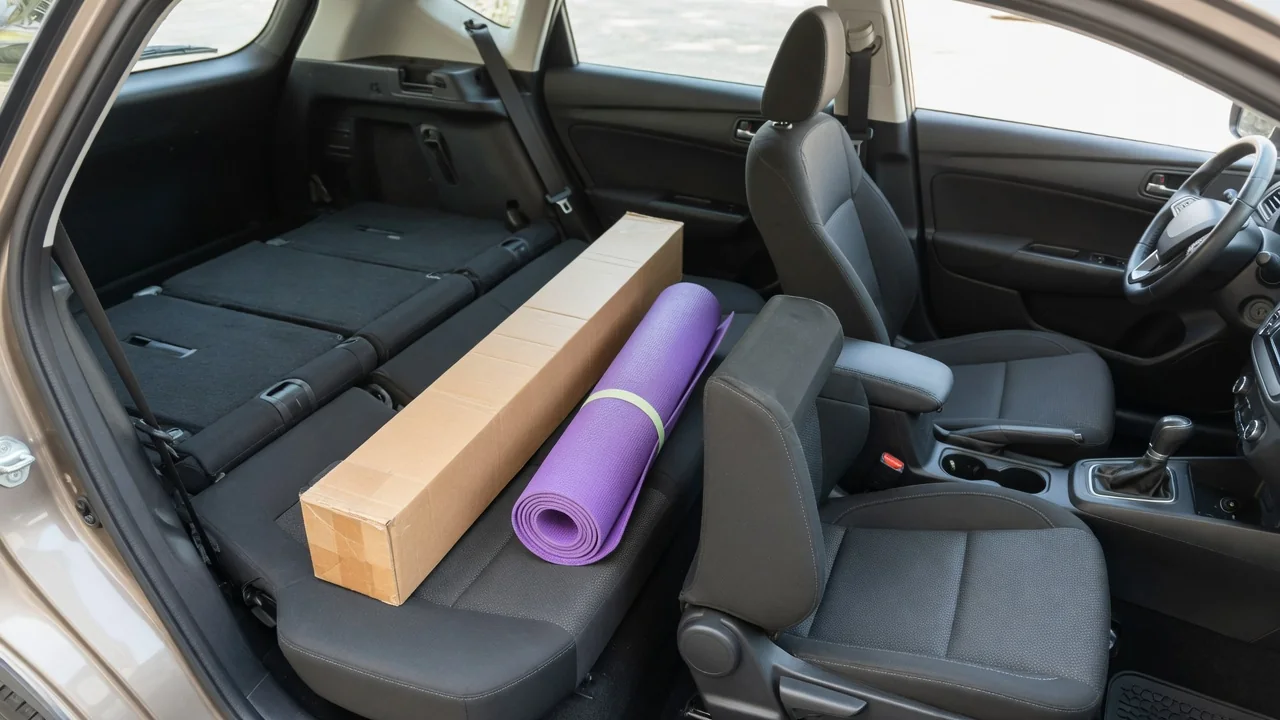
Anyone asking what is a flat folding passenger seat is usually trying to haul something longer than the cargo area allows. The term describes a front passenger seat whose backrest tips forward until it lies roughly level, extending the load floor from the tailgate toward the dashboard. Knowing how it moves, what it can carry, and how to secure cargo makes the feature far more useful.
Seat motion
A flat-folding front passenger seat differs from an ordinary reclining seat in the direction of travel. Instead of leaning rearward, the backrest pivots forward over the cushion until its rear surface faces upward and sits close to horizontal. The release is commonly a lever or strap on the side of the seat or the shoulder of the backrest, though some vehicles use a power control. Many designs carry a hard plastic or carpeted panel on the seatback so that the exposed surface can tolerate cargo sliding across it.
How flat the result is varies considerably between vehicles. Some seatbacks settle nearly level with a folded second row, creating one continuous surface, while others stop at a noticeable angle or leave a step between rows. The head restraint may need lowering or removing first, and the seat may have to be slid along its tracks to clear the dashboard. Watching the seat through its full motion, and feeling for a positive latch at the end, tells an owner more than a brochure description, and the owner's manual confirms the intended sequence.
Long items
The main reason this feature exists is length. With the rear seat on the same side folded as well, a wagon, crossover, minivan or pickup cab can accept items that would otherwise hang out of the tailgate or require a roof rack. Lumber, trim molding, a rolled rug, a ladder, skis, fishing rods or a boxed piece of flat-pack furniture can rest along the passenger side of the cabin with the liftgate fully closed, which keeps exhaust fumes out and keeps the load protected from weather and theft.
Long cargo inside the cabin behaves very differently from luggage behind a seat. In hard braking, an unrestrained board or pipe slides forward with nothing to stop it except the dashboard, windshield or center console. Tie-down points in the cargo area, straps around the load, and padding at the leading end help keep things in place. Heavy ends belong low and toward the rear where anchors are available. Usable length depends on the cabin, so measuring from the closed tailgate to the dash is more reliable than assuming a given item fits.
Driver visibility
Cargo lying on a folded front seat sits right beside the driver's sightlines. Anything stacked above the base of the side window can hide the right-hand door mirror, and a tall load can block the view across the cabin at junctions where the driver looks through the passenger window. Before setting off, it is worth sitting in the normal driving position and checking that both exterior mirrors, the interior mirror and the passenger-side glass remain clear, then rearranging the load if any of them is obscured.
Controls deserve the same attention as glass. A long item angled toward the center of the cabin can crowd the gear selector, parking brake, climate controls or the driver's elbow, and anything that shifts in a corner may end up against the steering wheel or pedals. Reflections matter too, since shiny metal or pale packaging resting near the dash can glare in the windshield on a sunny day. Covering the load with a dark blanket and strapping it so it cannot roll toward the driver addresses both problems.
Everyday Use and Observations
In daily use the folded seat often serves smaller purposes than hauling timber. Some seatbacks are shaped to work as a flat surface for a laptop bag, paperwork or a meal while parked, and a few include molded trays or cupholders. Owners who use the feature regularly tend to notice practical details quickly: how much effort the release takes, whether the seat belt buckle gets trapped under the backrest, whether the surface is slippery, and whether the seat rattles when folded and empty on rough pavement.
Electronics add another layer to observe. Many vehicles use a sensor in the passenger cushion to decide whether the front airbag should be active and whether to sound a belt reminder. Weight resting on a folded seat can sometimes trigger a chime or change the airbag status lamp, and the response differs by manufacturer. A warning light that stays on after the seat is returned upright and unloaded is worth having checked rather than ignored, because wiring and connectors beneath the seat can be disturbed by repeated folding or by cargo pushed underneath.
Limits and Next Steps
A folded seatback is not a structural cargo deck. Its hinges and latches are designed around occupant loads in the upright position, and the weight it can support when flat is set by the manufacturer, if it is published at all. Concentrated or sharp loads can dent the back panel, tear upholstery or strain the recliner mechanism. Seat-mounted side airbags, where fitted, also need space to deploy, so cargo wedged tightly against the outer bolster or the door is best avoided. Nobody should ride on or behind a load placed there.
Not every vehicle offers the feature, and it is sometimes limited to particular trim levels or seat types, with power-adjustable or ventilated seats occasionally excluded. Shoppers can confirm it by operating the seat in person rather than relying on a listing. Owners should read the seating and cargo sections of the manual for the folding steps, any weight guidance and airbag notes. If the seat will not latch upright again, moves under hand pressure or sets a persistent warning, a dealer or qualified technician should inspect it before a passenger uses that seat.