What Is a Rear Center Armrest?
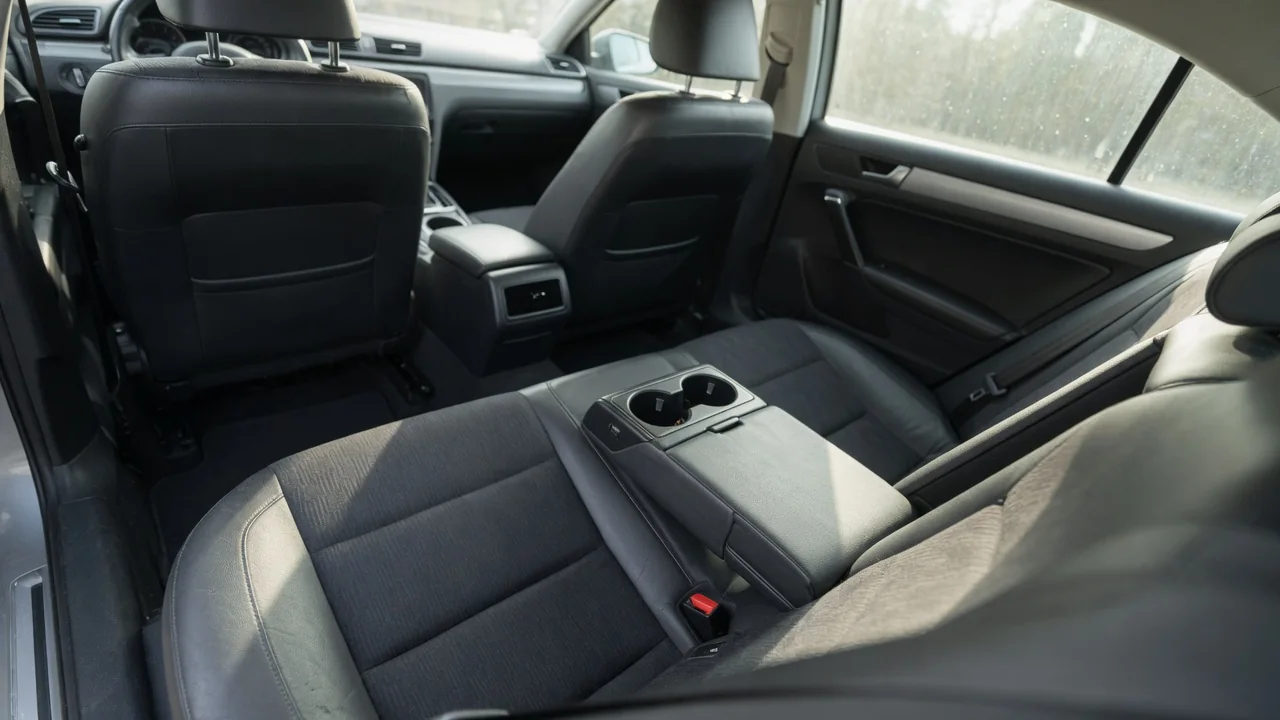
What is a rear center armrest? It is a padded panel built into the middle of a vehicle's back seat that folds down from the seatback to give outboard passengers a place to rest an arm. When raised, it becomes part of the backrest for a middle occupant. Many versions also carry cupholders, storage, or an opening to the trunk.
Support
The basic job of a rear center armrest is elbow and forearm support. Without one, passengers seated by the doors have only the door panel armrest on one side, which leaves the inboard arm hanging in the lap or resting on the seat cushion. Folding the center panel down creates a second resting surface at roughly the same height, so the shoulders sit level and the upper body stays relaxed. On a long highway drive, that balanced posture can noticeably reduce fatigue in the neck and upper back.
How well it supports depends on design details you can check by sitting in the seat. Width matters, because a narrow armrest forces two passengers to compete for the same strip of padding. Height and angle matter too, since some units settle flat while others slope toward the cushion. Padding thickness and upholstery vary by trim level, with cloth, vinyl, or leather-style coverings matched to the rest of the seat. Some vehicles have no folding armrest at all, particularly smaller cars and base trims.
Cupholders
Many rear center armrests include cupholders, which gives back seat passengers somewhere stable to put a drink other than the door pocket or the floor. The layout differs widely. Some armrests have two molded wells in the top surface, some use a tray that slides or pops out of the front edge, and others hide the holders under a hinged lid. Each approach trades convenience against comfort, because open wells reduce the padded area available for an arm while hidden designs keep the surface smooth.
When looking at a particular vehicle, check how deep the holders are and whether they have spring-loaded tabs or rubber inserts to grip different container sizes. Shallow wells may let tall bottles tip during cornering or braking. Pop-out mechanisms have small plastic hinges and latches that can wear or break if forced, so they deserve gentle handling. It also helps to remember that an armrest holder only works when the middle seat is empty, since the panel has to be folded down to reach it.
Pass-through variations
In some sedans, the area behind the rear center armrest contains a pass-through, a small door or opening in the seatback that leads into the trunk. With the armrest folded down, the hatch can be opened so long, narrow items such as skis, fishing rods, or lengths of trim can extend from the cargo area into the cabin. Two passengers can still ride in the outboard seats while the load rests between them, which is something a fully folded seatback cannot offer.
Pass-through designs are far from universal. Some vehicles have a rigid hinged door with a latch, some use a fabric or carpeted flap, and some lock from the trunk side for security. Others skip the feature and rely on split-folding seatbacks instead, and hatchbacks and SUVs often have no need for it because the cargo area is already open to the cabin. Structural bracing, a fuel tank position, or a hybrid battery pack behind the seat may also rule one out, so the owner's manual is the reliable place to confirm.
Everyday Use and Observations
Using the armrest is usually simple. Most fold down by pulling a fabric loop, a tab, or a recessed grip at the top of the center seatback, and they return by pushing the panel upward until it sits flush. A well-fitted unit should move smoothly, stay level when lowered, and hold firmly in place when raised without rattling over bumps. Looking at how neatly the stowed armrest blends with the surrounding upholstery is a quick way to judge fit and finish.
Day-to-day habits affect how it holds up. Spilled drinks can collect in cupholder wells and seep into seams, so wiping them out promptly keeps the surface from getting sticky or stained. Crumbs and small objects tend to gather in the gap where the panel pivots, and they can stop it from closing fully. Families should also notice how the armrest interacts with child seats, since a bulky restraint installed next to it may block the panel or the pass-through door from opening.
Limits and Next Steps
A rear center armrest has clear limits. It is a comfort feature, not a seat or a load-bearing shelf, so it should not be sat on, leaned on heavily, or used to hold heavy objects. With the panel lowered, the middle seating position is unavailable, which turns a five-seat cabin into a four-seat one for that trip. When someone does ride in the middle, the stowed armrest forms part of the backrest and can feel firmer or more contoured than the outboard seats.
If you want to know what your own vehicle offers, start with the owner's manual, which describes the seating features, any storage or pass-through functions, and how to operate them. When shopping, sit in the back seat and try the armrest rather than relying on a feature list, because equipment often differs between trim levels and model years. An armrest that droops, will not latch, or has a broken cupholder mechanism is worth showing to a dealer or upholstery shop, since hinge and latch designs are specific to each vehicle.