What Is a Rear-Seat Pass-Through?
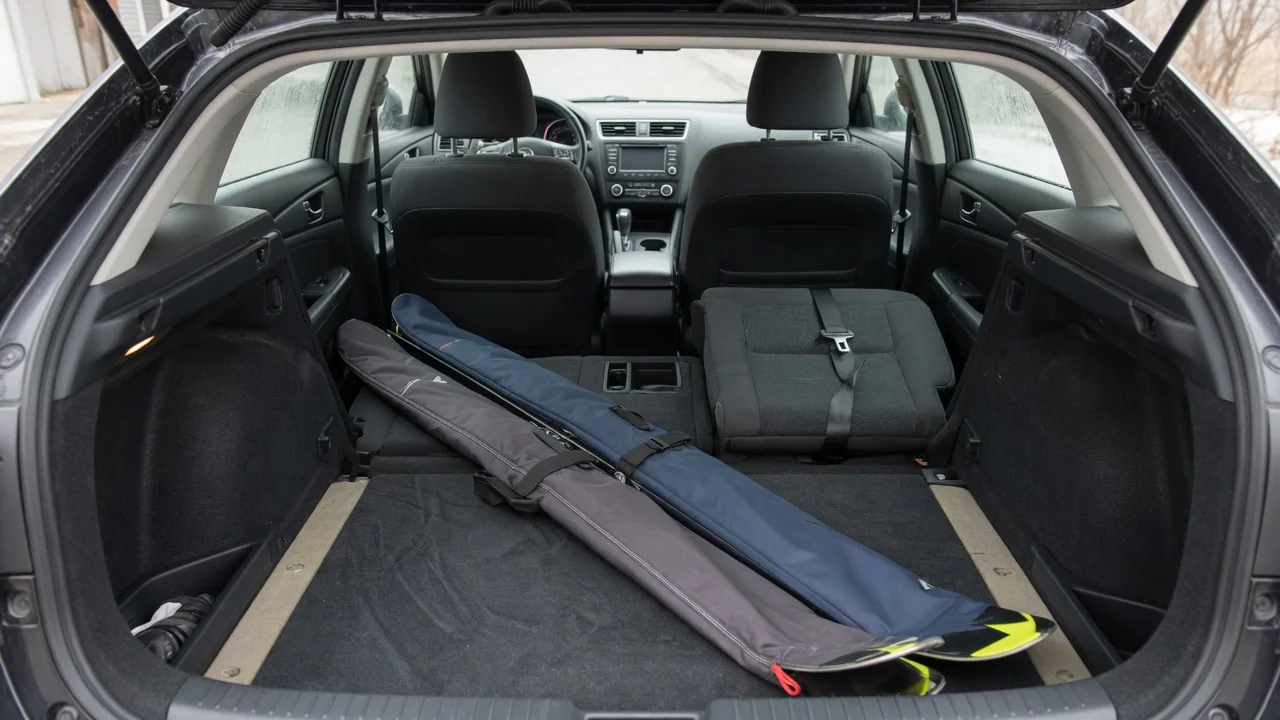
What is a rear seat pass through? It is a small opening between the trunk and the cabin, usually hidden behind the center armrest or a narrow folding section of the rear seatback. It lets long, slim items such as skis, lumber, or curtain rods extend forward from the cargo area while the outboard seats remain usable. Its usefulness depends on size, design, and careful loading.
Access
On many sedans, the opening sits behind the fold-down center armrest. Lowering the armrest reveals a small door or panel, which may open with a latch, a pull tab, or a lock operated from the trunk side. Other vehicles use a narrow center section of a split seatback, often described as a 40/20/40 layout, that folds forward on its own. Either way, the result is a tunnel connecting the cargo area to the passenger compartment without folding an entire seat.
The quickest way to find out what a particular vehicle offers is to look in two places: behind the rear armrest and at the forward wall of the trunk. Some release handles are mounted inside the trunk, some on the seatback, and a few doors can be locked with the key so the trunk stays sealed from the cabin. Opening dimensions differ widely, so the owner's manual is the reliable reference for how the panel operates and what it is intended to carry.
Secure cargo
Anything resting in a pass-through is only partly contained. Under hard braking, a bundle of skis or a length of trim molding can slide forward between the front seats, and in a collision an unrestrained object keeps moving at the vehicle's speed. Because of that, long items should be tied down rather than simply laid in place. Trunk tie-down hooks, where fitted, give straps an anchor point, and bundling loose pieces together keeps them from shifting individually.
Some manufacturers offer a ski bag or sleeve that attaches inside the opening, containing wet or sharp-edged equipment and keeping it off the upholstery. Where no such accessory exists, a blanket or padding protects the armrest, seat trim, and center console from scratches. Hard ends pointing toward the front deserve particular attention; padding them and positioning the load low and centered reduces the chance of contact with occupants, the shifter, or the dashboard. Available anchor points and accessories vary by vehicle, so check what yours provides.
Keep seating safe
The main appeal of this feature is that two rear passengers can still ride while cargo runs between them. That arrangement works only if the load stays clear of both people and their restraints. Items should not lie across seat belt buckles, pin the webbing, or press against a child seat or its anchor connections. If the center belt is routed through the folding section, as it is in some designs, the manual will explain how it must be positioned.
After use, the panel or seat section needs to be returned and fully latched. A seatback that looks upright but has not locked can fold forward in a sudden stop, letting trunk contents enter the cabin. Many vehicles show a visible indicator near the release when the latch is not engaged, and a firm push and pull on the seatback confirms it is secure. Passengers seated beside a loaded opening should also have enough room to sit upright with belts worn properly.
Everyday Use and Observations
Typical loads are long and slender: skis and poles, fishing rods, a few lengths of molding or pipe from the hardware store, curtain rods, or a rolled rug of modest diameter. The opening is far too small for wide or bulky things, which is where a full folding seatback serves better. Drivers often appreciate keeping damp or dirty gear mostly in the trunk while still fitting its length, rather than laying it across the rear seat cushions.
A few details become noticeable with regular use. An open pass-through may let more road and exhaust noise from the trunk into the cabin, and cold air can follow on winter trips. The trunk lid must still close completely; driving with it ajar to gain length can draw exhaust fumes inside. Measuring is also worthwhile, since usable length depends on trunk depth plus the distance to the front console or dashboard, and that figure differs considerably between a compact sedan and a larger one.
Limits and Next Steps
The opening has firm limits. Its width and height restrict what fits, and the surrounding trim, hinges, and latch are not built to bear heavy loads resting on them. Long cargo that reaches the front of the cabin must not interfere with the gear selector, parking brake, or the driver's view and movement. Heavy items such as dense lumber or metal stock also count toward the vehicle's payload rating, which appears on the door-jamb placard along with tire information.
Not every vehicle has one. Some sedans have a fixed rear seatback, sometimes because of structural bracing or equipment mounted behind it, and certain hybrid or electric models place components in that area. Anyone shopping for a car who needs this capability should confirm it in person rather than assuming from a trim name. When an item is too long, too heavy, or too awkward, a roof rack, a folded seat with proper restraint, or delivery is the more sensible choice.