What Is a Rear-Seat Reminder?
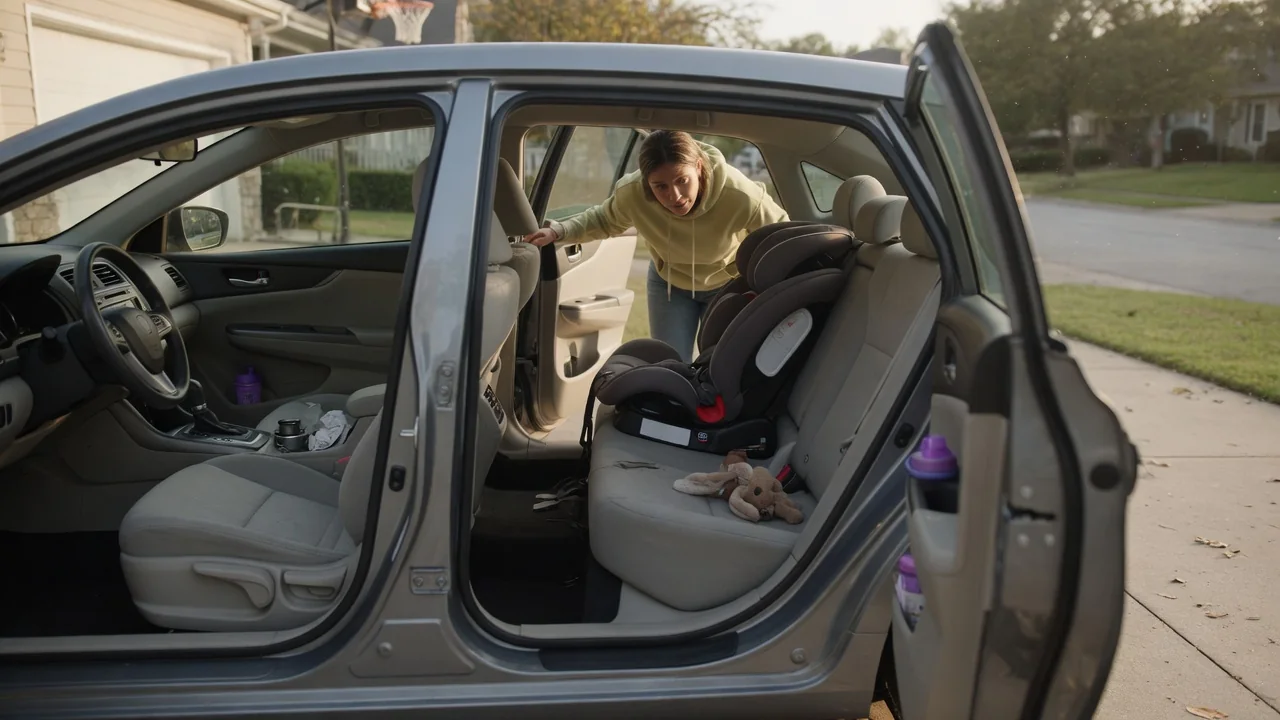
Drivers who notice a chime or a message about the back seat at the end of a trip often ask what is a rear seat reminder. It is a driver-alert feature that prompts a check of the rear seating area before leaving the vehicle. It supports attention, but it does not replace it, and the way it works differs from one vehicle to the next.
Trigger concepts
Many rear-seat reminders rely on door-sequence logic rather than on detecting an occupant. The vehicle notes whether a rear door was opened and closed shortly before the engine started or while it was running. If that pattern occurred, the system assumes something may have been placed in the back and arms the alert for the end of the drive. A child, a pet, a laptop bag, or a sack of groceries all look identical to this type of logic, because it tracks door activity, not what actually sits on the seat.
Other designs use different inputs. Some vehicles add ultrasonic or radar-based interior sensing that looks for movement after the doors are locked, while others consider rear seat belt buckle status or seat weight sensors. The trigger a driver experiences therefore depends on the make, model year, and trim. A practical way to learn which approach applies is to watch when the alert appears: one that follows any rear door opening is likely door-based, while one that responds after locking suggests cabin sensing. The owner's manual confirms the details.
Dashboard messages
When the reminder activates, the most common presentation is a text message in the instrument cluster or driver information display after the ignition is switched off. Wording varies, but it generally asks the driver to check the rear seat or look in the back before exiting. An audible chime usually accompanies the message so that it registers even if the driver is already gathering belongings or reaching for the door handle rather than looking at the gauges.
Some vehicles escalate beyond the cluster message. Depending on the design, a horn sound, flashing exterior lights, or a notification sent to a connected phone app may follow if the system believes something remains inside after the doors are locked. Others show only a brief message that clears on its own within seconds. Because the display time can be short, drivers who shut off the car and step out quickly may miss it entirely, which is worth knowing when judging how much the feature will actually catch.
Habit support
The reminder works best as a cue that reinforces a routine the driver already practices. Opening the rear door and glancing at the seat every time the car is parked, whether or not anything was placed there, builds a pattern that does not depend on electronics. When the chime sounds at the end of a trip, it acts as a second prompt for that same check, which is useful on days when a schedule change, fatigue, or a quiet sleeping passenger disrupts the normal sequence.
Simple supporting habits make the alert more meaningful. Placing a phone, work bag, or one shoe in the back seat gives a reason to open the rear door at the destination. Some caregivers keep an object from the child seat on the front passenger seat as a visual signal whenever the seat is occupied. These practices matter because a familiar chime can fade into background noise over time, and a driver who hears it daily may begin dismissing it without really processing what it is asking.
Everyday Use and Observations
In daily driving, owners often notice the alert appearing when the back seat is empty. With door-based logic, loading a jacket, dropping off a passenger partway through the trip, or simply opening the rear door to retrieve something before departure can all arm the reminder. That is expected behavior rather than a malfunction. The opposite case also deserves attention: if a rear door was never opened during that drive cycle, for instance after a brief stop where the engine was restarted, some systems may not issue any alert.
The feature can usually be switched on or off through the vehicle settings menu, and on some vehicles it may be turned off by a previous owner, a battery disconnect, or a settings reset. Checking that it is enabled takes only a moment in the driver information or infotainment menus. A simple observation test also helps: open and close a rear door, take a short drive, switch off, and watch for the message and chime. What happens shows how that particular vehicle behaves.
Limits and Next Steps
A rear-seat reminder is a prompt, not a guarantee. Systems based on door logic cannot tell whether anyone is present, and sensor-based systems can be affected by a motionless sleeping child, blankets, cargo, or sensor coverage that does not reach every seating position. A message can be missed, muted by loud audio, or dismissed by reflex. Interior temperatures in a closed vehicle rise quickly even on mild days, so the driver's own check of every seat remains the essential step each time the vehicle is parked.
Sensible next steps start with the owner's manual, which explains the trigger conditions, the alerts, and the settings for that specific vehicle. If the reminder never appears after a rear door has been used, or a related warning message stays on, a dealer or qualified technician can check door switches, sensors, and software settings rather than leaving the question to guesswork. For vehicles without the feature, the same check-the-back routine, supported by a physical cue in the cabin, provides the habit the technology is meant to reinforce.