What Is Compression Ratio?
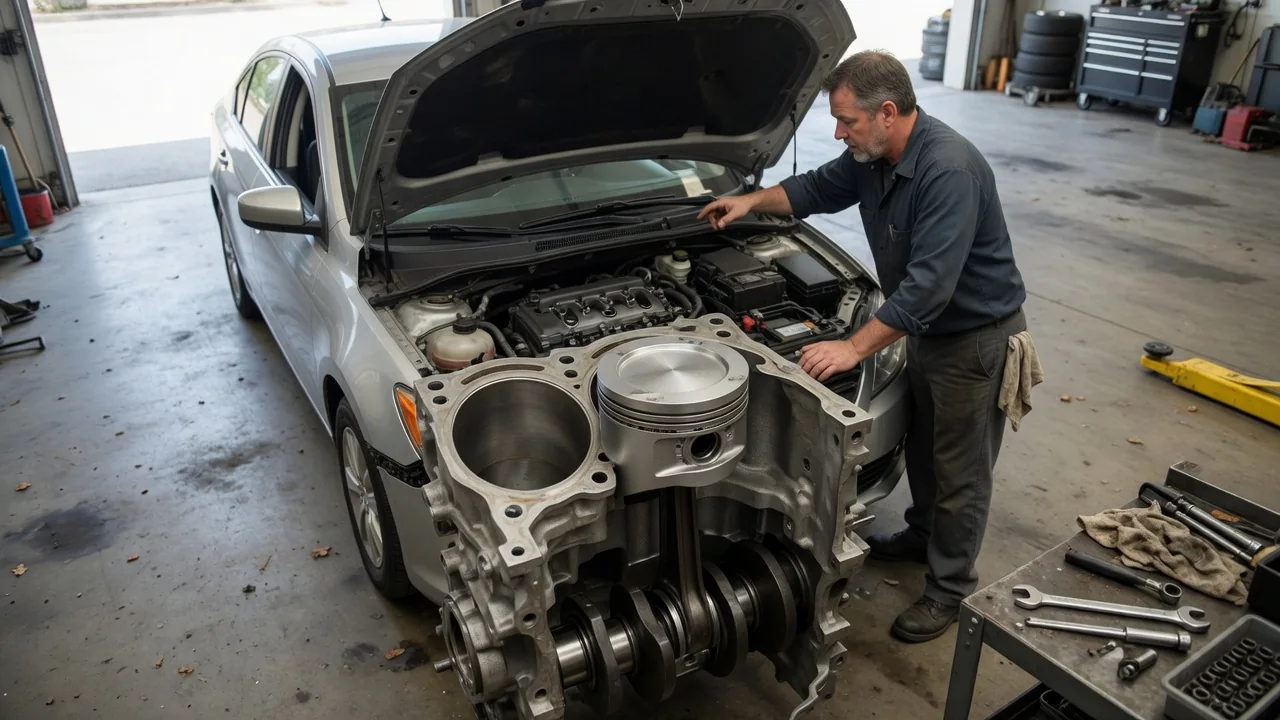
If you have ever wondered what is compression ratio, the short answer is that it compares the largest and smallest volumes inside an engine cylinder. The figure appears on specification sheets beside displacement and power, yet it describes geometry rather than output. Understanding it helps explain why engines differ in fuel needs, efficiency character and design, without promising any particular performance result.
Volume changes
Inside each cylinder, the piston travels between two limits. At bottom dead center, the space above the piston is at its largest, combining the volume swept by the piston with the small pocket left in the combustion chamber. At top dead center, only that small pocket remains. Compression ratio is the larger volume divided by the smaller one, so it expresses how tightly the air-fuel charge, or air alone in a diesel, is squeezed before combustion begins.
A simple illustration makes the arithmetic clear. Imagine a cylinder where the piston sweeps 500 cubic centimeters and 50 cubic centimeters remain above it at the top of the stroke. The total of 550 divided by 50 gives a ratio of 11 to 1. That is a hypothetical example, not a figure for any particular vehicle. Real values vary by engine family, and small details such as head gasket thickness, piston crown shape and valve reliefs all shift the remaining clearance volume.
Engine design
Engineers set the ratio through physical choices: stroke length, bore size, combustion chamber shape, and whether the piston top is dished, flat or domed. A dished piston adds clearance volume and lowers the ratio, while a domed one does the opposite. Gasoline engines generally use lower ratios than diesels, because a diesel relies on the heat of compression alone to ignite its fuel, whereas a gasoline engine waits for a spark and must avoid igniting the mixture too early.
The published number is a static, geometric figure, and what happens in a running engine can differ. Valve timing determines how much air is actually trapped, so designs that close the intake valve late effectively compress less than the geometry suggests. Turbocharged and supercharged engines often carry lower static ratios because the incoming air is already pressurized. Some manufacturers have also built mechanisms that vary the ratio during operation, so the specification for a given vehicle should always be confirmed from its own documentation.
Fuel requirements
Squeezing a mixture harder raises its temperature and pressure, which makes gasoline more likely to ignite on its own before the flame front arrives. That uncontrolled combustion is called knock or detonation. Octane rating measures a fuel's resistance to it, which is why engines with higher ratios are often, though not always, paired with a premium fuel recommendation. Direct injection, careful chamber design and cooling strategies let some engines run fairly high ratios on regular fuel.
The reliable guide is the fuel grade listed in the owner's manual or inside the filler door, not the ratio by itself. Wording matters: a required grade and a recommended grade are different instructions. Many modern engines use knock sensors that let the control module retard ignition timing when lower-octane fuel is detected, protecting the engine at some expense to response and economy. Diesel fuel follows a different logic, rated by cetane, which describes how readily it ignites under compression.
Everyday Use and Observations
Drivers cannot see the ratio, but they can sometimes notice its effects. A light metallic pinging or rattling under load, such as climbing a grade or accelerating at low revs in a high gear, may point to knock, although similar sounds have other causes. In broad terms, a higher ratio extracts more work from each combustion event, which supports efficiency, yet real fuel economy and power depend on many other factors, so the number alone guarantees nothing.
It also helps to separate the ratio from a compression test. The ratio is a fixed design value, while a compression test measures the pressure a cylinder actually builds while cranking, reported in units of pressure rather than as a ratio. Worn piston rings, leaking valves or a failed head gasket can lower test readings without changing the design figure. Heavy carbon deposits can work the other way, slightly reducing chamber volume and encouraging knock in an older engine.
Limits and Next Steps
As a single specification, compression ratio has clear limits. It does not reveal horsepower, reliability or mileage, and comparing two engines by this figure alone can mislead, since boost pressure, valve timing, fuel delivery and calibration all shape the result. A warning light or stored knock-related fault code is likewise evidence to interpret rather than proof that a sensor or other part has failed, and manufacturer-specific codes need to be checked against information for that exact vehicle.
For practical next steps, look up the engine's specification and fuel grade in the owner's manual or official service information for the specific model year and engine option. Persistent pinging, a loss of power or rough running deserves a professional diagnosis, which may include compression or leak-down testing with proper equipment. Anyone considering modifications that alter the ratio, such as different pistons or milled cylinder heads, should consult a qualified engine builder, because fuel, timing and durability consequences follow.