What Are Rear-Seat Climate Vents?
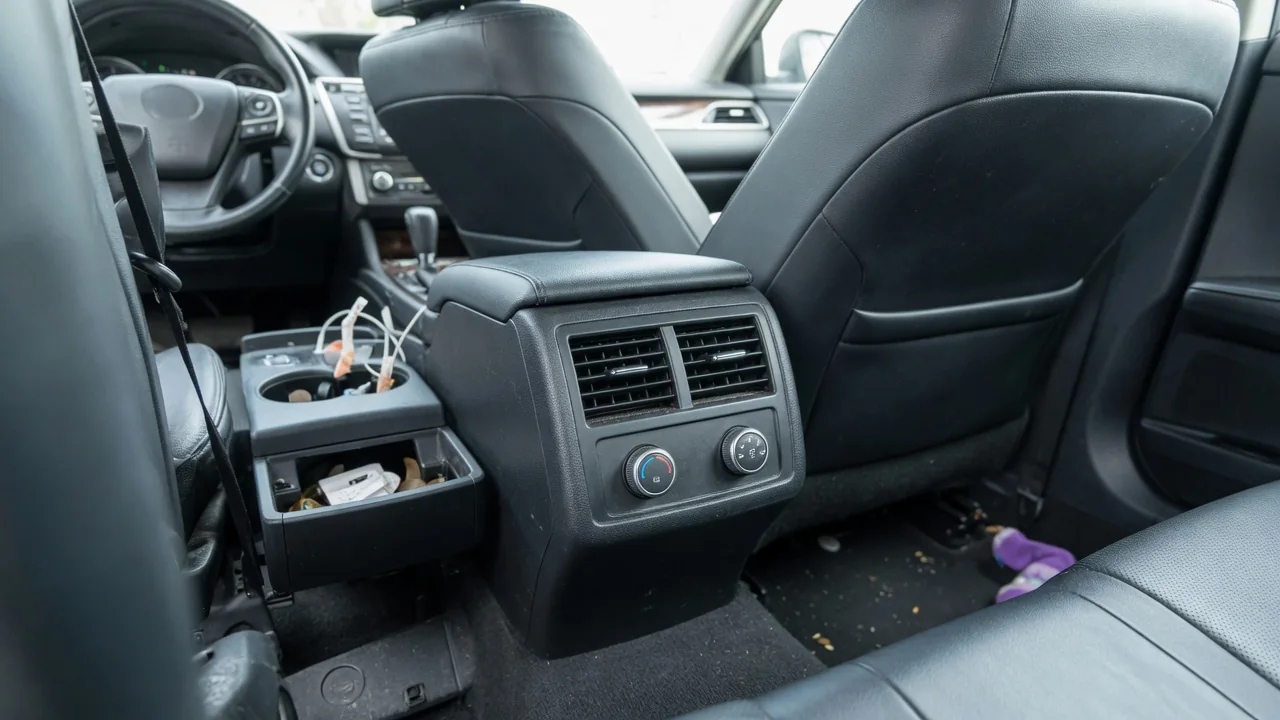
Anyone who has ridden in the back on a hot afternoon has probably wondered what are rear seat climate vents and how much they really do. Put simply, they are outlets that carry heated or cooled air from the HVAC system to second- and third-row passengers. How well they work depends on duct routing, blower capacity, and the controls a particular vehicle provides.
Air distribution
In most vehicles, rear vents are fed by the same blower and heater-evaporator case that serves the dashboard. Conditioned air travels through plastic ducts running under the center console or beneath the front seats, then exits through louvered outlets at the back of the console or through openings near the rear footwells. Because the air covers a longer path, it usually arrives with less force than at the front outlets, and it may be slightly warmer or cooler than expected after passing through the cabin floor.
Larger vehicles often take a different approach. Many three-row SUVs and minivans add an auxiliary unit in the rear quarter panel with its own blower, and sometimes its own evaporator and heater core, feeding roof-mounted outlets for cooling and floor outlets for heat. Some sedans place vents in the door pillars instead of the console. Outlet location matters because cool air sinks and warm air rises, so high vents favor air conditioning while low vents favor heating. The owner's manual shows which layout a vehicle uses.
Passenger settings
Control over rear airflow ranges from almost none to fully independent. The simplest setups give rear passengers only a thumbwheel to open or close each outlet and vanes to aim it; temperature and fan speed follow whatever the front occupants select. In that arrangement, a rear vent can only pass along air the front system is already producing, so a low front fan speed or a windshield-only mode may leave the back row with a faint stream.
Vehicles with a dedicated rear zone add a small panel on the console or headliner where passengers set temperature and fan speed. These systems commonly blend air with a separate door or run a separate blower, yet they still depend on the same compressor and engine coolant. Many also let the driver lock or override the rear panel from the front screen, which explains why rear buttons sometimes seem unresponsive. Checking whether a rear lock or sync function is active is a sensible first observation.
Blockage check
Weak rear airflow is often a simple obstruction rather than a fault. Under-seat outlets get covered by floor mats that have slid backward, stowed bags, umbrellas, or fallen wrappers, and console vents collect crumbs and small toys pushed through the louvers by curious children. A look with a flashlight at each outlet, along with confirming that the shutoff wheel is fully open, takes a minute and rules out the most common causes before anything more involved is considered.
If the outlets are clear, compare airflow front to back with the fan on a high setting. Weak flow everywhere points toward a restricted cabin air filter or a blower concern, since a clogged filter reduces the volume available to every duct. Strong front flow with little at the rear suggests something specific to the rear path, such as a duct that has separated under the console or a mode door that is not moving. Those parts sit behind trim, so confirming them is usually a job for a technician.
Everyday Use and Observations
In daily driving, rear vents work best when the whole system is set up to support them. On a hot day, starting with the windows briefly lowered to release trapped heat, then selecting recirculation with the dash outlets open, helps the cabin cool down faster and gives the rear ducts colder air to deliver. Aiming rear louvers toward passengers' torsos rather than straight at faces tends to be more comfortable, particularly for children in car seats who cannot move away from a direct stream.
A few observations are normal and worth knowing. Rear outlets typically lag the front by several minutes in reaching a comfortable temperature, and rear-facing child seats may sit outside the airflow entirely because the seat shell blocks it. A musty smell from the back vents often traces to moisture in the system rather than the vents themselves. Faint airflow in defrost mode is also expected on many vehicles, because the system prioritizes the windshield. How pronounced these traits are varies by make and model.
Limits and Next Steps
Rear vents distribute air; they do not create cooling or heating capacity. If the air conditioning is underperforming or the engine has not warmed up, the back row gets the same lukewarm air as the front, only later. Dark interiors, large glass areas, and a full load of passengers all increase the demand on the system. Vehicles without factory rear outlets cannot easily gain them, since ducting is built into the console and floor structure during assembly.
When a rear zone stops responding, blows the wrong temperature, or makes clicking noises behind the trim, a professional diagnosis is the sensible next step. A scan tool may show stored climate control codes, but a code is evidence that directs testing, not proof that an actuator or sensor has failed, and many such codes are manufacturer-specific and need vehicle-specific confirmation. Before the visit, note which outlets are affected, which modes were selected, and whether the problem changes with fan speed, since those details shorten the diagnostic process.