Why Does a Car Beep When You Open the Door?
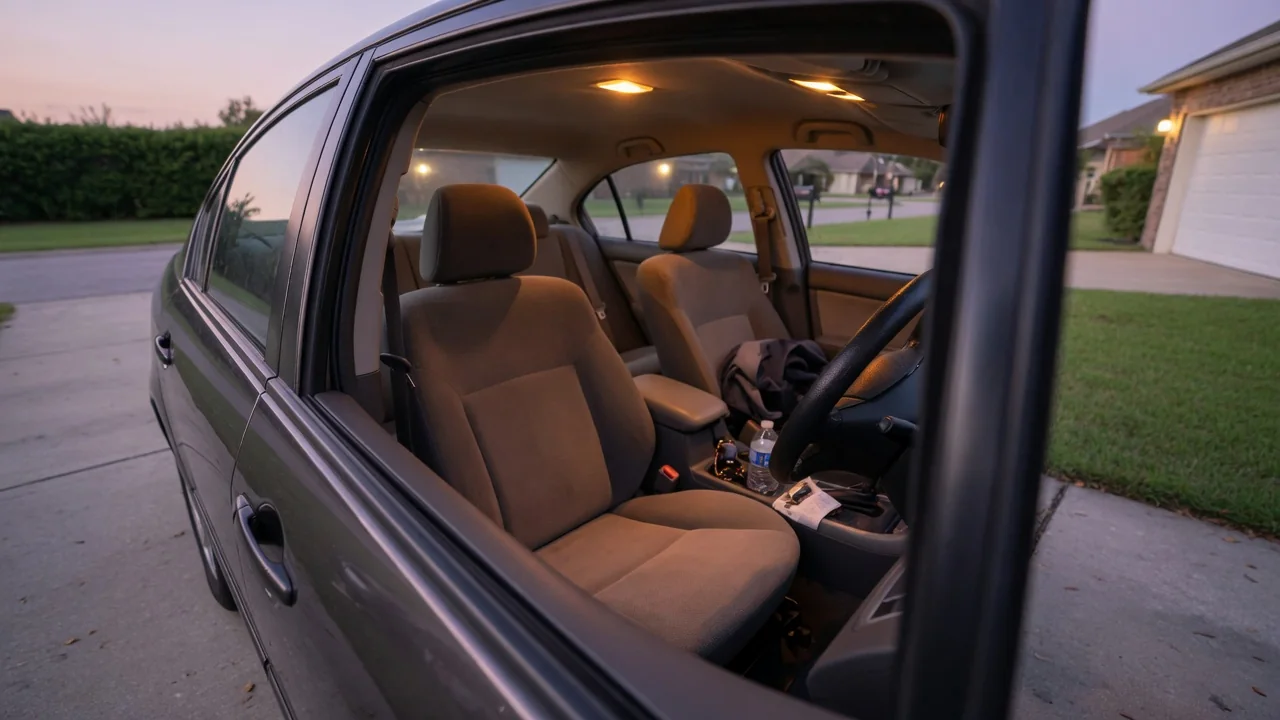
If you have ever wondered why does a car beep when you open the door, the short answer is that the vehicle has compared the door's position against other conditions and found something worth mentioning. The chime is a reminder, not a fault in itself. Understanding which condition triggered it helps you tell a routine nudge from a warning that deserves attention.
Lights and key alerts
The most familiar door-open chime is the headlight reminder. When the driver's door opens with the ignition off and the exterior lights still switched on, a body control module recognizes the combination and sounds a tone so the battery is not drained overnight. Many vehicles with automatic headlights or a battery-saver timer skip this alert because the lights will shut off on their own, so the same action can produce a chime in one car and silence in another.
Key alerts follow similar logic. On vehicles with a traditional ignition cylinder, a switch senses that the key is still inserted and the chime sounds when the door opens, reducing the chance of locking the key inside. Push-button systems instead track the fob: a beep may sound if the vehicle is still on as you step out, or if the fob leaves the cabin while the engine is running. The tone pattern, and whether the horn chirps outside, differ between manufacturers.
Parking state
A second group of chimes relates to whether the vehicle is secured. If the driver's door opens while the transmission is in drive, reverse, or neutral, many cars sound an urgent, repeating tone because the vehicle could roll or creep. Some models go further and shift themselves to park or apply the electric parking brake, while others only warn. With a manual gearbox, the reminder may instead be tied to the parking brake being released when the ignition is switched off.
Powertrain state matters too. Opening the door with the engine running, or with a hybrid or electric vehicle still in its ready mode, commonly triggers an alert because these vehicles can be silent and easy to walk away from while active. Auto stop-start systems add another case: the engine may be off at a standstill yet the car remains on, so the door opening prompts a chime or an engine restart. How each manufacturer handles this varies, so the owner's manual is the reliable reference.
Read displayed message
The sound alone rarely tells the whole story, so look at the instrument cluster the moment the chime starts. Most modern vehicles pair the tone with a text message or an icon, such as a key symbol, a lamp symbol, a door-ajar graphic showing which door is open, or a prompt to shift to park. That message identifies the condition the car detected, which is far more useful than trying to guess from the pitch or rhythm of the beep.
Older or more basic vehicles may show only a small warning light or nothing at all, in which case the pattern itself offers clues. A slow, soft chime that stops when you turn off the lights or remove the key points to a simple reminder. A fast, insistent tone that continues until you select park or switch the vehicle off signals a safety-related condition. Messages can disappear quickly, so some clusters let you review recent alerts through a menu on the display.
Everyday Use and Observations
In daily driving, a useful habit is to notice what changed just before the beep. If it appears only at night, the headlight switch position is a likely explanation. If it happens when you hop out to grab the mail with the engine running, the car is reacting to an active vehicle with an open door. A chime that stops the instant you remove the key, switch off the lights, or press the start button confirms which reminder you were hearing.
Pay attention to which door causes it as well. Many reminders are tied specifically to the driver's door, while door-ajar warnings can come from any door, the hood, or the liftgate. A beep while driving, or a dome light that stays on, may suggest a door that is not fully latched or a latch switch that is reading incorrectly. Some vehicles also let owners adjust chime volume or certain reminders through the settings menu, though safety-related alerts usually cannot be turned off.
Limits and Next Steps
General explanations only go so far, because chime logic is programmed differently by each manufacturer and can change between model years and trim levels. The same sound might mean a key reminder in one vehicle and a parking brake alert in another. The owner's manual lists the warning tones and messages for your specific car, and it is the right place to confirm what a particular pattern means before assuming something is wrong or trying to silence it.
If the beep occurs with no obvious cause, such as the lights off, the key out, the vehicle in park, and every door firmly closed, the system may be receiving a false input. Worn door latch switches, a tired ignition key sensor, or moisture in a connector are possible explanations, but they need testing rather than guesswork. If a scan tool shows a stored code, treat it as a clue to investigate, since it does not prove a specific part has failed. A qualified technician can verify the cause.