What Is a Flow-Formed Wheel? Cast Center, Stretched Barrel, and Uses
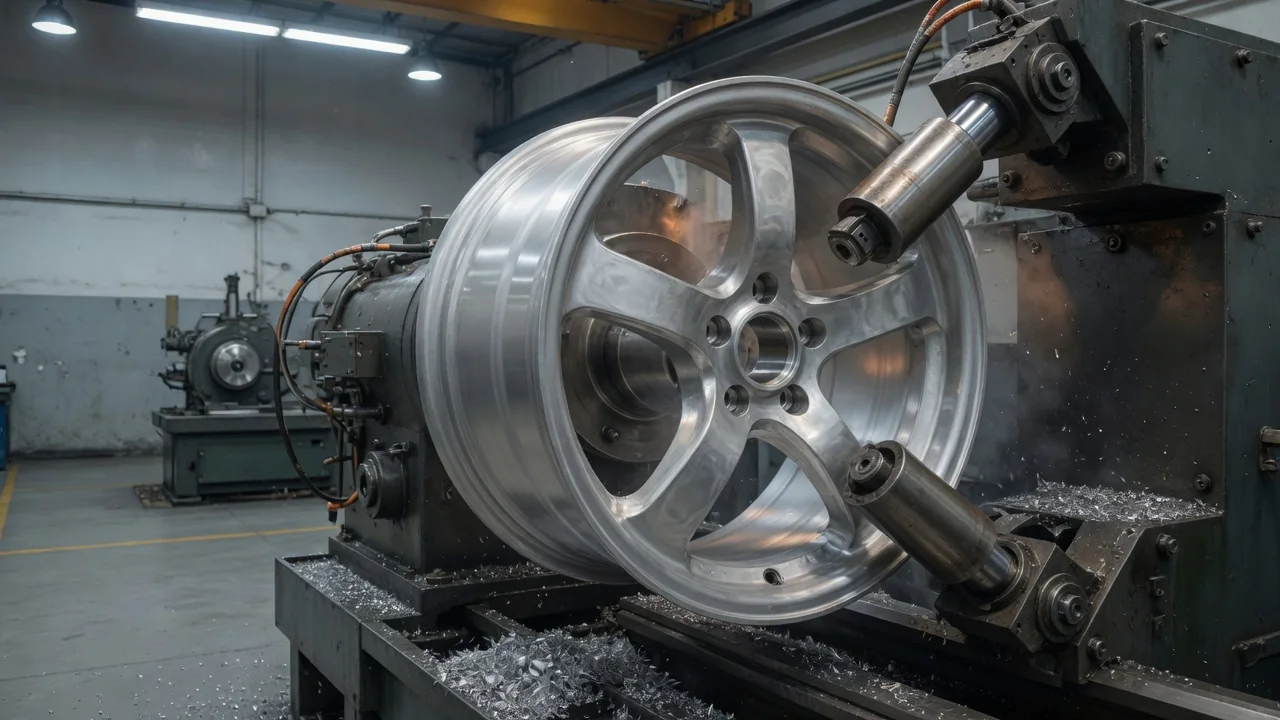
A flow-formed wheel is an aluminum alloy wheel made with two manufacturing methods. The center, including the hub mounting area and spokes, is cast. The barrel that holds the tire is shaped afterward by spinning it under heat and pressure until the metal stretches to its final width. The result sits between a conventional cast wheel and a fully forged wheel in how it is made, how its material behaves, and what it typically costs to produce.
Cast Center: Where a Flow-Formed Wheel Begins
The process starts much like an ordinary cast wheel. Molten aluminum alloy goes into a mold, often by low-pressure casting. This fills the cavity in a controlled way and helps limit porosity compared with simple gravity pouring. What comes out of the mold is not yet a finished wheel. The face, spokes, and hub section are cast close to their final shape, but the outer section is left as a short, thick ring of metal instead of a full-width barrel. That ring is deliberately thick because it supplies the raw material for the barrel in the next stage.
Because the center remains a casting, it has the material properties of cast aluminum. Casting can produce complex spoke designs, deep faces, and decorative shapes efficiently, which is one reason it is so widely used for wheels. However, cast metal has a relatively random grain structure and can contain small internal voids, so designers usually add material in highly loaded areas to compensate. In a flow-formed wheel, the design of the center still determines much of the strength around the hub. That design includes spoke count, spoke thickness, and the lug seat area.
Stretched Barrel: How the Flow-Formed Wheel Process Works
In the flow formed wheel process, the semi-finished casting is mounted on a spinning machine against a mandrel. The mandrel is a precisely shaped tool that defines the inner contour of the barrel. The thick outer ring is heated, and as the wheel rotates, hydraulically driven rollers press against it. The rollers push the metal along the mandrel, thinning the wall and lengthening it toward the full barrel width. In effect, the barrel is stretched and compressed into shape rather than poured into it.
This mechanical working changes the metal. Pressure and deformation compact the material and elongate its grain structure in the direction the metal flows. This tends to improve strength and ductility compared with the same alloy left in its as-cast state. That improvement is why manufacturers can make the barrel thinner while still meeting their design requirements, which can reduce weight in the outer part of the wheel. Marketing uses various names for the method, such as rotary forging or flow forging. These terms describe the same general approach of spinning and rolling a cast blank. They do not mean the wheel is fully forged.
After forming, the wheel usually goes through heat treatment to bring the alloy to its intended temper. It is then machined to finish the bead seats, mounting surfaces, center bore, and any visible faces. Painting, powder coating, or clear coating follows. The exact sequence, temperatures, and alloy choices differ between manufacturers and are not standardized across the industry.
Applications: Where Flow-Formed Wheels Fit
Flow-formed wheels are common in the aftermarket among buyers who want lower weight and a stronger barrel without paying for fully forged construction. They are frequently marketed for performance street driving, track days, and motorsport classes where wheel cost matters. Less weight at the rim reduces rotating mass and unsprung mass. That can help the suspension follow the road surface and reduce the effort needed to accelerate and brake the wheel. How noticeable this is depends on the vehicle, the tire, and the driving conditions.
The method also appears on some original-equipment wheels because it lets manufacturers balance weight, strength, and production cost. Wider wheels are a natural fit, since the barrel makes up a larger share of their mass and gains more from the stretched construction. Flow forming is also used for wheels meant for heavier vehicles and off-road driving, where the barrel needs to withstand impacts from potholes, curbs, or rocks. Whether a particular wheel suits a given use depends on its rated load capacity and intended service, not on the manufacturing method alone.
Practical Implications and Limits
For an owner, the key point is that flow forming describes how the barrel was made, not a guaranteed level of performance. Two flow-formed wheels from different manufacturers can differ substantially in alloy, wall thickness, heat treatment, and quality control. The label is a useful starting point. More useful are the wheel's published load rating, any applicable certification markings, and the manufacturer's stated intended use. Check those figures against the axle loads and fitment data in the vehicle's owner's manual or from the vehicle manufacturer.
The construction method does not change the fitment rules. Bolt pattern, center bore, offset, width, diameter, brake caliper clearance, and the lug nut or bolt seat type must all match the vehicle. Hub-centric rings may be needed when the wheel's bore is larger than the hub, and lug hardware should be torqued to the vehicle maker's specification. A lighter barrel does not make up for incorrect offset or a seat type that does not match the hardware.
Damage and repair call for caution. A worked barrel may resist bending well, but any aluminum wheel can bend or crack after a hard impact. A qualified wheel repair shop can sometimes straighten minor bends. However, heating or welding can alter the alloy's heat-treated properties, and many manufacturers advise against repairing cracks. Because the center is still cast, a cracked spoke or damaged hub area is a reason to replace the wheel rather than repair it. Whatever the construction, the practical safeguard is to watch for vibration, air loss, or visible damage and have the wheel inspected when they appear.