What Is a Wheel Barrel? Tire Mounting, Width, and Damage Explained
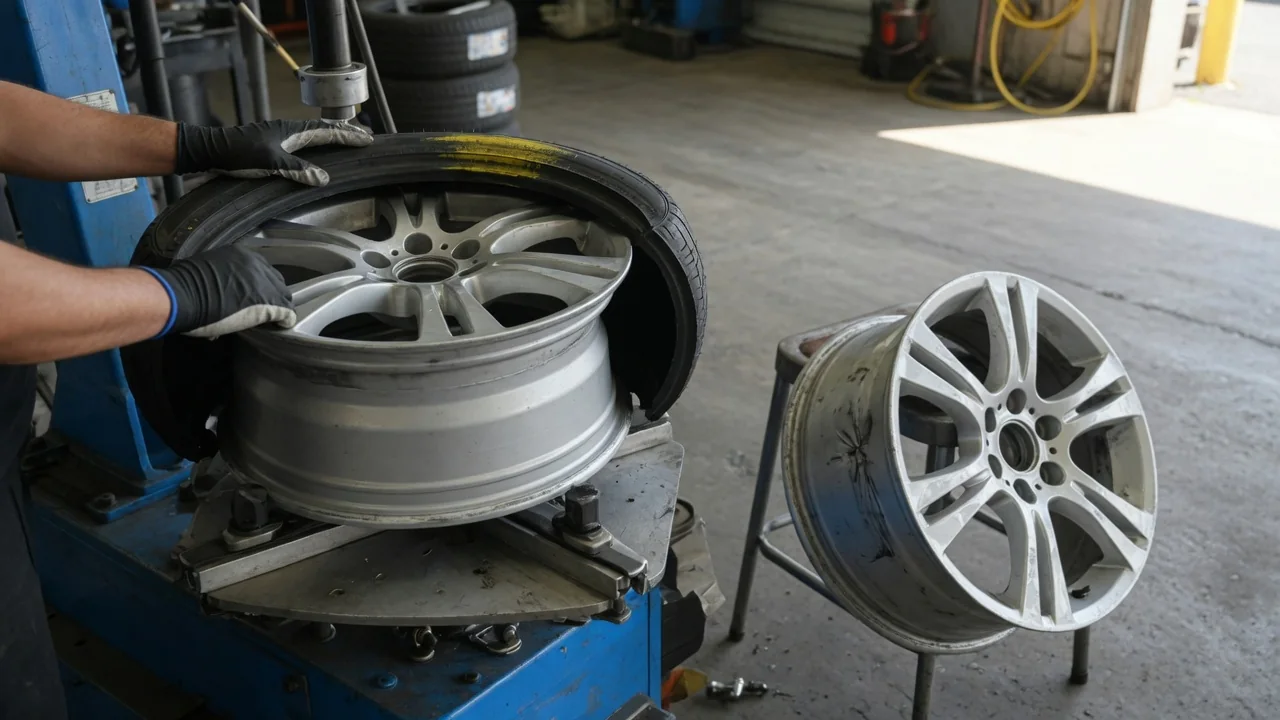
A wheel barrel is the cylindrical outer shell of a wheel. It is the hoop of metal that runs between the inner and outer edges and carries the tire. If you have seen the term in a parts list or repair quote and wondered what a car wheel barrel means, it refers to everything except the center section, or face, that bolts to the hub. The barrel determines how a tire mounts, how wide the wheel is, and where certain kinds of damage tend to occur.
Tire mounting: how the barrel holds the tire
The barrel is not a plain tube. In cross section, it has a flange at each edge, a bead seat just inside each flange, and a deeper channel called the drop center, or well, between them. The tire's beads are its stiff, wire-reinforced edges. They sit on the bead seats and press outward against the flanges once the tire is inflated. On most passenger car wheels, a small raised ridge called a hump sits just inboard of each bead seat. The hump helps keep the bead from sliding into the well if the tire loses pressure while the vehicle is cornering.
The drop center exists for mounting and dismounting. A bead cannot stretch over the flange. Instead, a technician pushes one section of the bead down into the well, where the smaller diameter gives enough slack to work the opposite side of the bead over the flange. The position of the well therefore matters. On many wheels it sits closer to the outer face, which is why tires are normally mounted from that side. During inflation, air pressure forces the beads over the humps and onto the bead seats, often with an audible pop as they lock into place.
The barrel also carries the valve stem hole. On vehicles with direct tire pressure monitoring, the sensor is typically attached to the valve inside the barrel. Most modern car tires have no inner tube and seal directly against the bead seats, so the condition of those surfaces determines whether the assembly holds air.
Width: what barrel width means and how it is measured
Wheel width is a barrel measurement. In the common size format such as 17x8, the first number is the bead seat diameter and the second is the width, both in inches. That width is measured between the inside faces of the flanges, where the tire beads sit. It is not measured across the outermost edges of the wheel. The flanges add material on each side, so a wheel's overall width is greater than its nominal size, which matters when you check clearance.
Barrel width sets the range of tire widths that can be mounted properly. A tire on a barrel that is too narrow for it bulges at the sidewall, and on one that is too wide, the sidewalls are pulled outward. Tire manufacturers publish approved rim width ranges for each tire size, and those published figures, not rules of thumb, are the reference for any given combination. Within the approved range, a wider barrel generally holds the sidewall more upright, while a narrower one gives it a more rounded profile. The letter that sometimes follows the width, such as J, describes the flange profile, not the width itself.
Width also interacts with offset, which describes where the mounting face sits relative to the barrel's centerline. On a wider wheel, the extra barrel width has to go somewhere. Depending on offset, it extends inward toward the suspension and brakes, outward toward the fender, or some of each. On multi-piece wheels, the barrel is built from separate inner and outer sections joined to the center, and different section widths are combined to reach a given total width and offset.
Damage: what happens to a wheel barrel
Impact damage that affects how a wheel functions usually shows up in the barrel. A hard pothole or curb strike can push a section of the flange or bead seat out of round. The inner edge is often affected because the impact travels through the tire to that edge, and damage there is hidden from view. A bend can be too small to see with the wheel on the car and still cause vibration at speed, uneven tire wear, or a slow leak where the bead no longer seals against the distorted seat.
Cracks are a more serious form of barrel damage. They can start at a bend, where the barrel joins the spokes, or at a previous repair, and they may leak air or grow under repeated loading. Corrosion is a quieter problem. On aluminum alloy wheels, oxidation can build up on the bead seat under the tire and create a rough path that lets air seep out. The usual symptom is a tire that loses pressure gradually even though no puncture can be found.
Scuffing on the outer lip, often called curb rash, is damage to the outer flange area of the barrel. It is usually cosmetic. Deep gouges, or damage that reaches the bead seat, should be inspected rather than assumed to be harmless.
Practical implications and limits
Most barrel problems can only be judged properly with the tire removed or with the assembly on a balancing machine. A technician can spin the bare wheel to check radial and lateral runout, which shows whether the barrel is out of round or wobbles, and can examine the bead seats for corrosion or cracking. If you notice a new vibration after an impact, or a tire keeps losing air, it is reasonable to ask for the wheel to be checked, not just the tire.
Repair has limits. Straightening a mildly bent alloy barrel is a common service, and cleaning and resealing a corroded bead seat can cure slow leaks. Cracks are different. Opinions differ on whether a cracked barrel should be welded, and many tire shops will not mount a tire on a wheel with a structural crack. The right outcome depends on the wheel's material and construction and on where the damage is and how extensive it is. A qualified wheel repair specialist's assessment therefore matters more than any general guideline, and replacement is the conservative choice when the damage affects safety.
When choosing new wheels or tires, barrel dimensions are only one factor. The vehicle manufacturer's approved wheel sizes, the tire maker's rim width range, load rating, and clearance to brakes and suspension all apply, and these differ from vehicle to vehicle. The inner barrel shape needs particular attention with large brake calipers, because a wheel that appears to clear on paper can still contact a caliper on the car. Test fitting, or fitment data for the specific vehicle, is more dependable than size numbers alone.