How Wheel Runout Is Measured
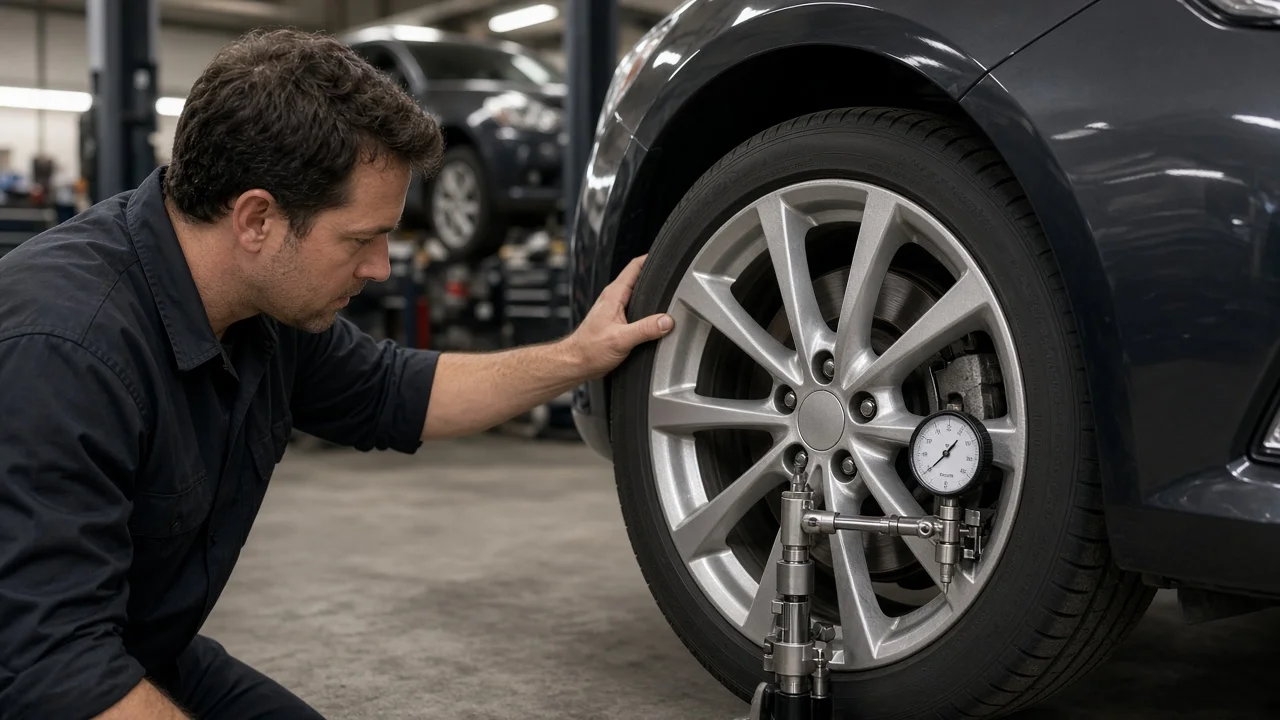
Measuring wheel runout answers a simple diagnostic question: is the rim rotating true, or does it wobble and change radius as it spins? Wheel runout is checked with a dial indicator positioned against the tire or wheel while the assembly is rotated, because small deviations at the rim are felt as vibration at speed. Lateral and radial wheel runout is measured with a gauge that quantifies side-to-side movement and up-and-down eccentricity separately. This distinction matters because steering shake, brake pedal pulsation, and ride harshness often trace to different runout types, and the measurement method must isolate each one before any repair decision makes sense.
Essential answer
Lateral and radial wheel runout is measured with a dial indicator mounted on a stable base, with its plunger resting against the wheel or tire while the assembly is turned by hand or on a lift. For lateral runout, the indicator contacts the sidewall or inner rim face to record how far the wheel moves side to side. For radial runout, the plunger contacts the tread or rim barrel to record changes in radius. The highest and lowest readings during a full rotation give total indicated runout, which is compared with the vehicle maker's fit tolerance rather than treated as proof of a damaged part.
The measurement works because runout is a geometry check, not a balance test. Balance identifies heavy spots that create centrifugal force, while runout identifies shape errors such as a bent hub pilot, corrosion behind the mounting surface, or a distorted bead area. A technician may zero the dial indicator at one point, rotate the assembly through 360 degrees, and watch the needle swing. This separates radial runout, which can produce a tramping or bouncing sensation, from lateral runout, which more often appears as steering wheel shake or a wobble felt through the seat.