How to Fix Wheel Runout
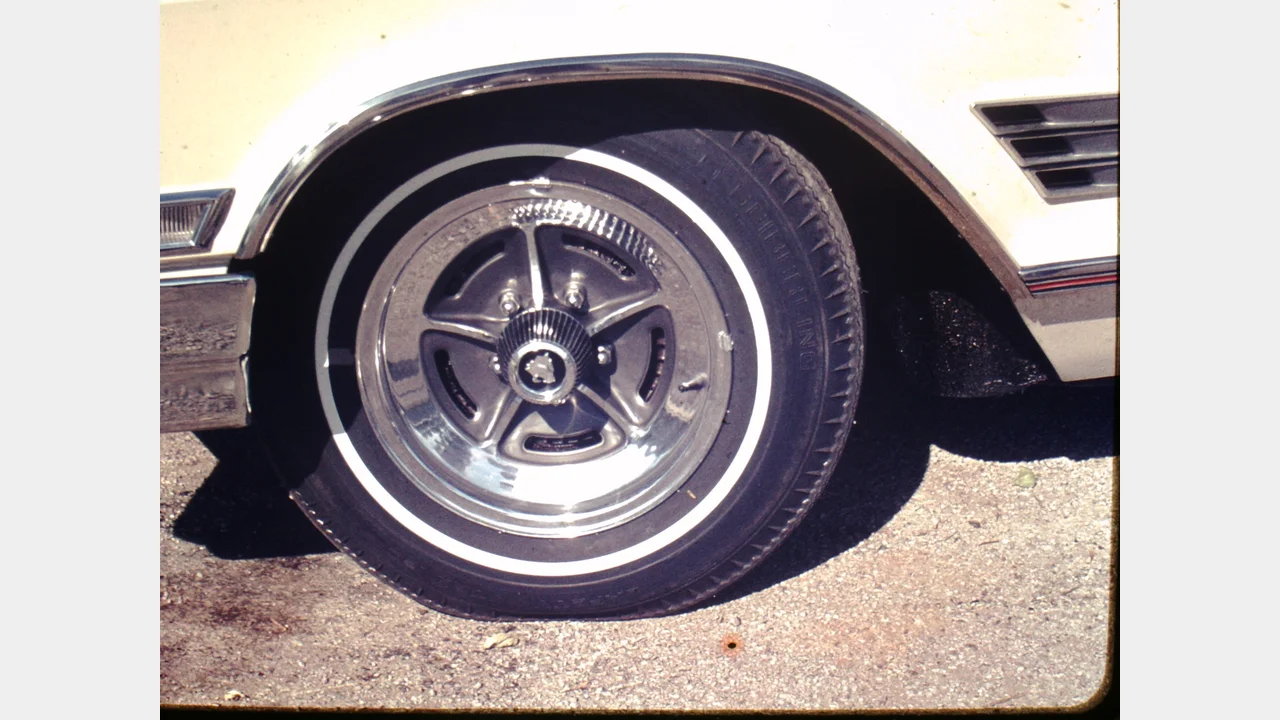
A wheel with excessive runout produces a vibration or shimmy that feels like a tire balance problem, yet balancing alone cannot correct it. Runout is the amount of deviation from a true circular or planar path as the wheel rotates. Lateral runout measures side-to-side wobble, while radial runout measures up-and-down eccentricity. Effective wheel runout repair starts with measurement, then separates the fault between the rim, the hub pilot, the mounting surface, and the tire before any corrective work is attempted.
Direct answer
Fixing wheel runout means first identifying where the deviation occurs. The repair may involve remounting a wheel that is not seated squarely on the hub, correcting corrosion or debris between the mating faces, indexing the rim to the hub to cancel assembly error, or replacing a component that is physically bent beyond an acceptable fit tolerance. There is no single adjustment that fixes every case; the condition that materially changes the answer is whether the measured runout originates in the wheel, the hub, or the mounted tire.
The practical correction sequence is to clean the mounting surface, verify the hub pilot and lug seats, measure with a dial indicator, and compare the rim alone against the tire-and-wheel assembly. A wheel that shows large runout off the vehicle may require straightening or replacement. When the assembly reads high but the bare rim reads low, the tire or its bead seating becomes the likely cause, which changes the repair path completely.
How to proceed
Begin by supporting the vehicle safely and removing the wheel. Clean the hub face, the center bore, and the back of the wheel mounting pad with a wire brush or suitable abrasive to remove rust and scale. Inspect the hub pilot for damage and check that the wheel fits over it without interference. Remount the wheel, snug the lug nuts gradually in a star pattern, and bring the fasteners to the vehicle manufacturer’s torque before taking any measurement. A runout reading made before the wheel is fully seated is meaningless.
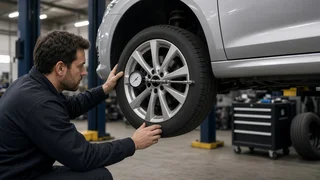
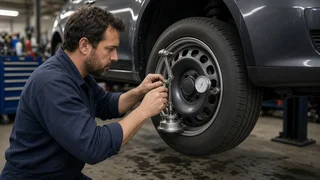
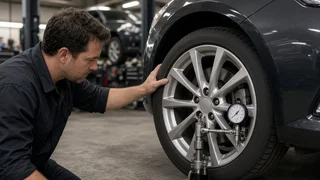
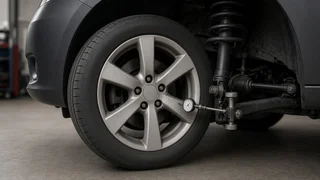
Mount a dial indicator so its plunger contacts the inner rim flange, then rotate the assembly slowly and note the total movement. Check lateral runout on the side face and radial runout on the bead seat area. If the reading exceeds the service limit for that wheel design, mark the high spot, remove the wheel, and rotate it one or two lug positions on the hub to see whether the error follows the rim or the hub. If the high point moves with the rim, the rim is the source; if it stays with the hub, the fault lies in the rotating assembly rather than the wheel itself.
Understanding a problem
A vibration that appears at a certain road speed can come from tire imbalance, a slipped belt, or wheel runout, and the symptoms overlap substantially. Runout tends to produce a rhythmic shake that may also be visible as a wobble at low speed. Measuring the bare wheel and then the mounted tire helps isolate the cause: a bent rim usually shows both lateral and radial deviation on the dial indicator, while a tire with internal damage may measure acceptable at the rim but still create a force variation on the road.
Do not treat a runout reading as proof that the wheel is unusable until the assembly is removed, inspected, and remeasured. Stacked tolerances in the hub, adapter rings, and lug seats can combine to create a reading that disappears after careful remounting. Conversely, a wheel that passes a quick visual check but has a cracked or deformed bead seat may still produce a persistent shake. Narrowing the source with repeatable measurements is what prevents replacing parts that are not actually bent.