How to Measure Wheel Runout
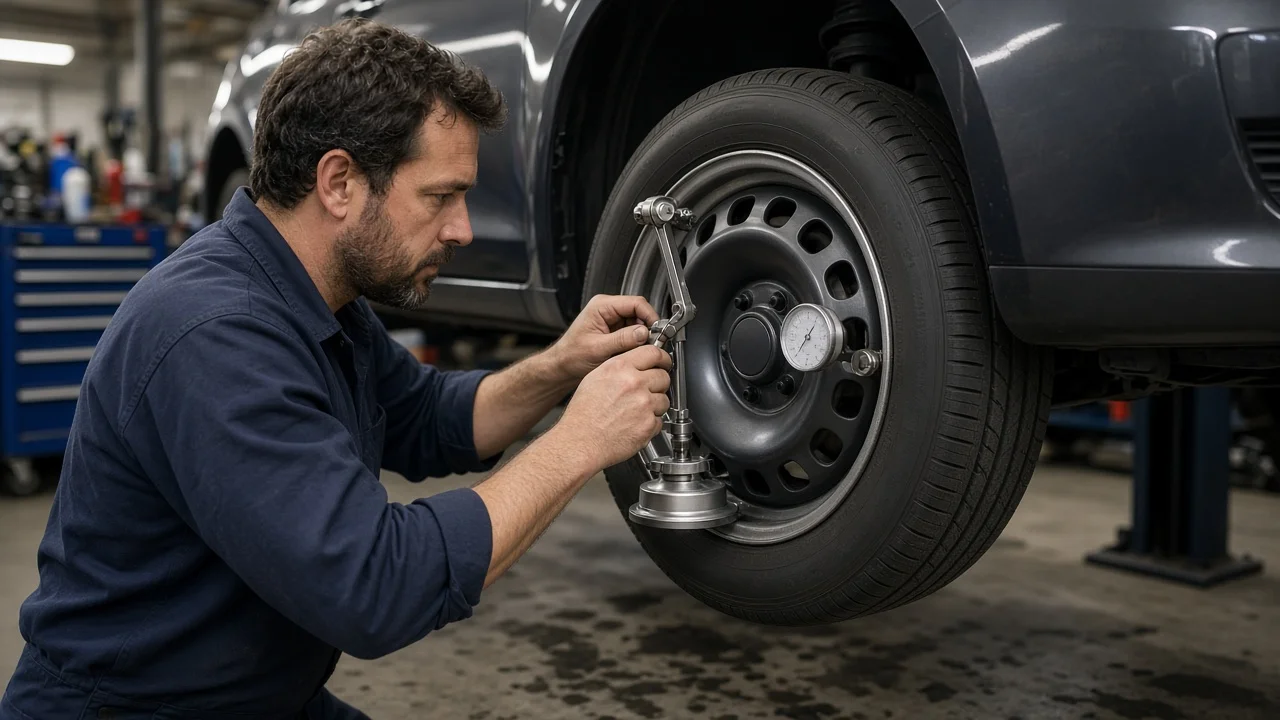
Wheel runout is the amount of wobble or out-of-round movement a wheel exhibits as it rotates. Measuring it helps separate tire wear, vibration, or steering complaints caused by the rim from problems originating in the tire, hub, or suspension. Drivers often check runout after hitting a pothole, noticing a shimmy, or installing replacement wheels. The process compares the wheel's actual rotation against a stable reference using a dial indicator. Understanding radial runout and lateral runout allows you to identify whether the rim is egg-shaped, warped side-to-side, or mounted incorrectly before spending money on parts that cannot fix the underlying problem.
Direct answer
Measuring wheel runout means rotating a mounted wheel while a dial indicator tracks movement at the rim's bead seat or inner barrel and at the side of the rim. Radial runout is variation in the wheel's radius, which can make the tire hop or produce a speed-sensitive vibration. Lateral runout is movement from side to side, which can cause steering wheel shake or uneven brake pad contact. The measurement is only meaningful when the wheel is centered on its hub pilot and the mounting surface is clean. Dirt, rust, or a bent hub flange can create false readings that imitate a warped wheel.
A useful starting point is to compare the highest and lowest indicator readings over one full revolution. The total indicated reading tells how much the rim deviates from a true circle or plane. Fit tolerance varies by vehicle and wheel type, so the number itself is a diagnostic clue rather than a standalone failure verdict. For example, a rim with acceptable radial runout but excessive lateral runout can still cause a pedal pulsation or steering nibble. Conversely, matching runout in the hub and wheel may cancel some symptoms, which is why the setup and reference point matter as much as the final figure.
How to proceed
Begin with the wheel raised safely and the tire removed if you need to measure the bare rim. Clean the mounting surface and the hub pilot, then mount the wheel using the correct lug nuts or bolts in a star pattern to manufacturer torque. Secure a dial indicator base to a stable suspension or chassis point so the plunger rests perpendicular against the rim's inner bead seat for radial runout. Rotate the wheel slowly by hand through at least one full turn while watching the needle. Record the largest and smallest readings, and subtract them to find the total radial runout.
For lateral runout, reposition the dial indicator so the plunger contacts the side of the rim near the outer edge without riding on a machined lip or balance weight. Rotate the wheel again and note the total movement. Before condemning the wheel, loosen and retorque it or index it on the hub to rule out a distorted mounting surface or hub runout. If the reading changes with wheel position, the hub or mating faces need attention. If the runout remains isolated to the rim, the wheel may require straightening or replacement depending on the measured amount and the symptoms it produces.