Acceptable Wheel Runout for a Car
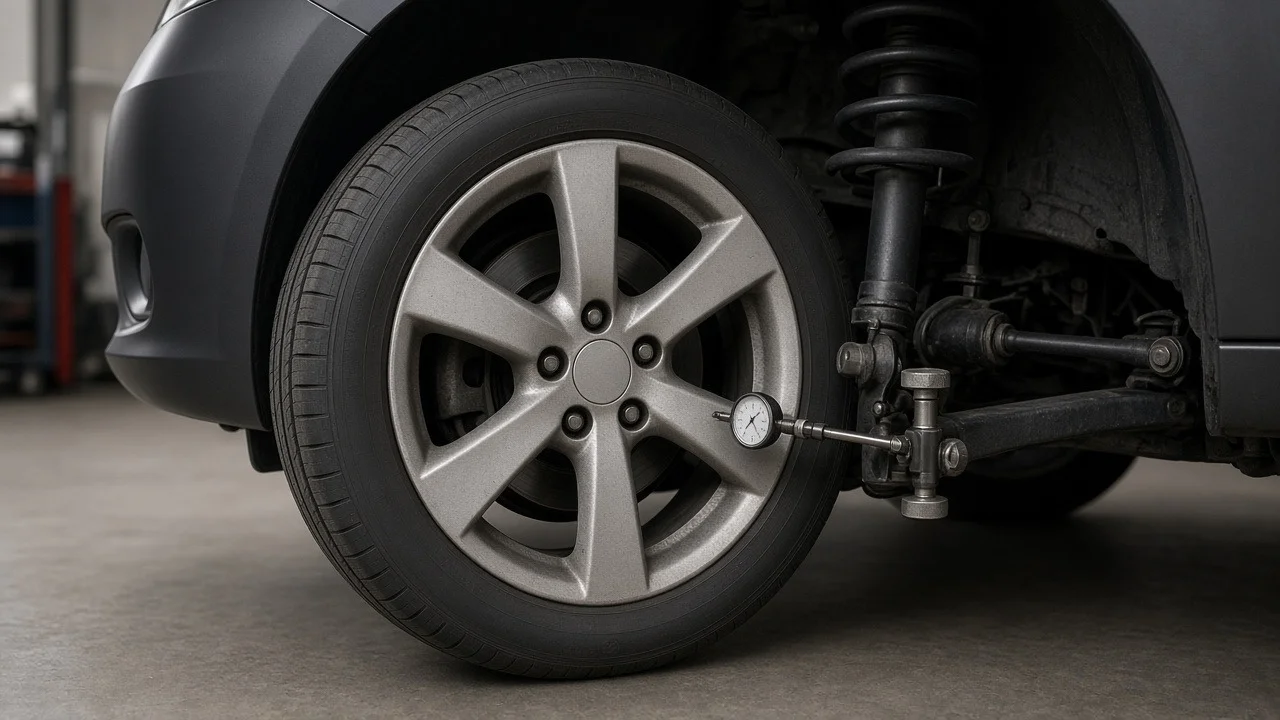
Wheel runout describes how much a rotating rim deviates from a true circle or plane as it spins. A small amount is inevitable in real parts, but excessive movement can create a vibration that feels like an out-of-balance tire. For most passenger cars, the practical target is very tight: often a few thousandths of an inch measured at the bead seat or rim flange. The right reference is the vehicle maker’s tolerance, checked with the wheel mounted on clean hub pilot and mounting surface hardware.
Essential answer
Acceptable runout for a car wheel is best treated as a controlled limit rather than one universal number. Many production assemblies are expected to hold lateral runout near the rim edge and radial runout at the bead seat to only a few thousandths of an inch, but the allowable figure depends on wheel diameter, material, design and how the measurement is taken. A steel wheel and a cast alloy wheel can have different fit tolerance expectations even when both are serviceable.
When a wheel is checked, the total indicated movement on a dial indicator should be compared with the manufacturer’s service specification for that exact assembly. A reading that is slightly above a new-part tolerance may still drive acceptably if the tire assembly balances correctly, while a reading that is sharply higher or changes under load points to a bent rim, corrosion at the mounting surface or a damaged hub pilot condition.
How it works
Runout is separated into two measurements because a wheel can fail in different directions. Lateral runout shows side-to-side wobble at the rim flange, while radial runout shows an out-of-round condition measured perpendicular to the axle centerline. A dial indicator positioned against a clean reference surface turns slow rotation into a visible sweep of high and low spots, giving the mechanic a clear picture of wheel geometry.
The mounting surface is the foundation for every measurement. If the flat area that contacts the rotor or drum is dirty, rusted or distorted, the wheel may sit at a slight angle even when the rim itself is straight. Hub pilot fit also matters because a wheel that centers on the hub flange rather than the lug seats can magnify tiny geometric errors into a noticeable steering wheel shake.
Strengths, limitations and suitability
Checking runout is most useful when a balance problem has already been ruled out. A wheel with acceptable balance weights can still shake because lateral movement steers the tire sidewall slightly with each revolution. In that situation, runout measurement helps separate a tire force variation or an imperfect mounting condition from a bent wheel, reducing the chance of replacing expensive parts without confirming the cause.
The method has limits. A dial indicator reads total movement only at the spot being touched, so damage near the inner rim or a slight out-of-round condition behind the spokes may not appear unless the technician moves the indicator to another reference surface. Runout also does not directly measure tire stiffness or road force, meaning a good wheel with a stiff spot in the tire can still create a similar vibration.
Procedure
Begin with the wheel off the vehicle, the mounting surface clean and the hub area free of loose corrosion. Mount the dial indicator base securely so the plunger touches a smooth, unpainted reference area near the inner or outer bead seat without dragging across valve stem recesses or casting marks. Rotate the wheel slowly by hand and note the total indicator sweep from the lowest to the highest reading.
Repeat the check for lateral runout at the rim flange and radial runout at a horizontal bead seat surface. If the result is near the limit, loosen and reseat the wheel or try another known-good mounting position before replacing parts. A hub-centric adapter or a careful cleaning of the hub pilot and lug seats often removes the small amount of wobble that looked like a bent wheel.
Diagnosing a problem
A vibration that changes with road speed, worsens during cornering, or feels stronger through the steering wheel can point to runout, but the same symptoms can come from tire wear, a separated belt or a distorted brake rotor. If the shake remains after a road-force balance and the indicators show an out-of-spec sweep, the wheel is the more likely source. The measurement should be repeated with the wheel mounted because hub and fastener clamping can change the shape slightly.
When lateral runout is high but radial runout is within range, look for side impact damage, a twisted rim section or uneven clamp-up at the mounting surface. When radial runout is high, check for a flat spot, pothole damage or a tire that has not seated evenly on the bead. A reading that is not smooth and repeatable may point to a damaged wheel bearing or a worn hub flange, so the vehicle side should be inspected before condemning the wheel itself.