How Are Aluminum Body Panels Formed? Material, Presses and Surface Quality
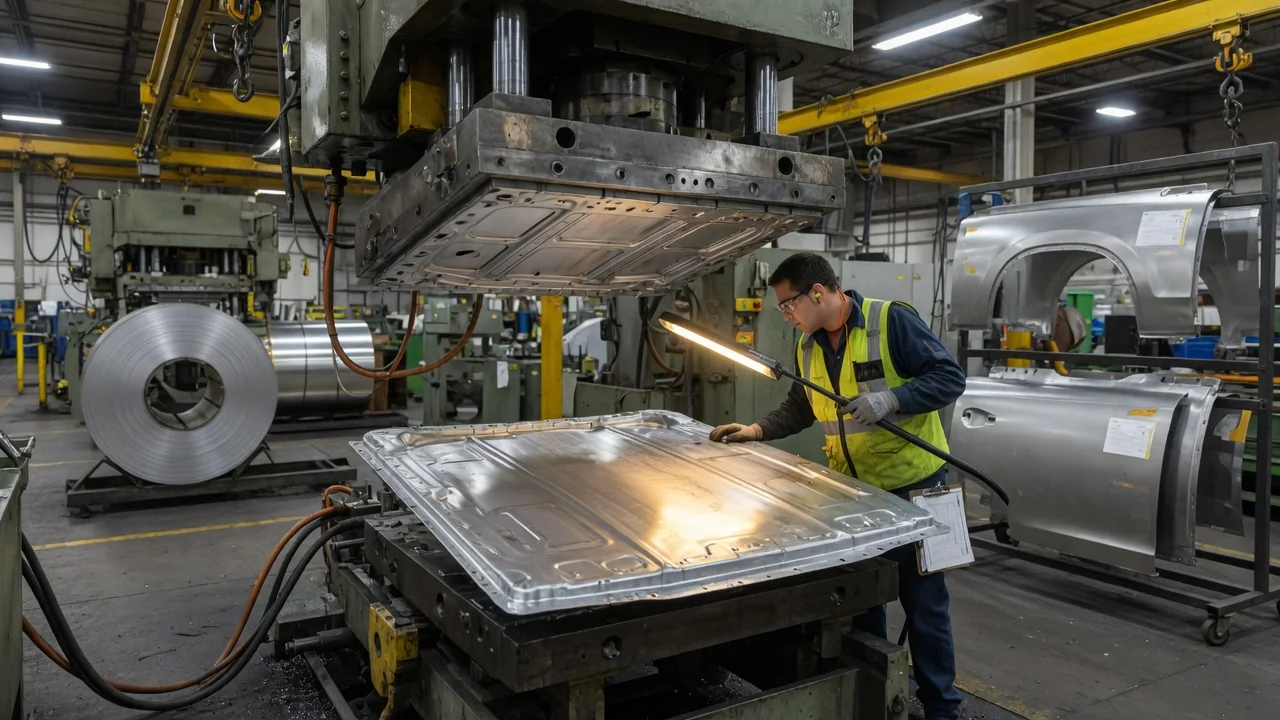
Aluminum body panels are made with the same basic method used for steel: flat sheet is cut into blanks and stamped between matched dies in a sequence of press operations. The details change considerably, though. Aluminum alloys stretch less before splitting, spring back more after forming, and mark more easily, so engineers adjust alloy choice, die geometry, lubrication and finishing. This guide explains how automotive aluminum panel forming works and why it differs from forming steel.
Material behavior
Two families of aluminum alloys dominate automotive body sheet. Heat-treatable aluminum-magnesium-silicon alloys, usually called the 6xxx series, are common for visible outer skins such as hoods, doors and fenders. They are typically delivered in a solution-treated, relatively soft temper so they can be stamped, and they gain strength later when the painted body passes through the paint-curing oven, an effect known as bake hardening. Non-heat-treatable aluminum-magnesium alloys, the 5xxx series, offer good formability and gain strength through work hardening during stamping, which makes them useful for inner panels and reinforcements where appearance matters less.
Compared with the mild and deep-drawing steels traditionally used for body panels, aluminum sheet generally has lower ductility and a weaker ability to spread strain evenly across a part. When a region of the blank starts to thin, aluminum tends to keep thinning in that spot instead of sharing the deformation with surrounding metal. The practical result is that splits appear earlier in deep draws, sharp corners and tight radii, so panel shapes must be designed with gentler transitions and shallower features than an equivalent steel part might allow.
Stiffness is the other major difference. Aluminum's elastic modulus is roughly one third that of steel, so after the press opens a formed aluminum panel relaxes back toward its original shape more noticeably. This springback has to be anticipated rather than corrected afterward. Aluminum panels are also often made thicker than the steel panels they replace to restore stiffness and dent resistance, which still saves weight because of aluminum's low density. Heat-treatable sheet can also change gradually during storage as it ages naturally at room temperature, so manufacturers manage how long material waits between delivery and stamping.
Press design
Most high-volume aluminum panels are produced on tandem or transfer press lines in several stages. The first and most critical stage is the draw, where a binder, or blank holder, clamps the edges of the blank while the punch pushes the sheet into the die cavity. Draw beads on the binder surface add controlled restraint so metal flows into the cavity at the right rate. Later stations trim the excess material, pierce holes, form flanges and restrike features to sharpen lines. Because aluminum tolerates less stretching, its process may spread the shaping over more operations or rely on more precisely controlled binder pressure, which servo-driven presses and programmable die cushions can help provide.
Die geometry is developed with springback in mind. Engineers use forming simulation to predict how the panel will thin, wrinkle and relax, then deliberately shape the die surfaces slightly beyond the target geometry so the part settles into the intended shape once released. This compensation is usually refined over several iterations of simulation and tryout. Generous die radii, carefully designed addendum surfaces outside the finished part, and balanced material flow all help keep strain within the limits the alloy can handle.
Conventional cold stamping is not the only option. Warm forming, in which the sheet or tooling is heated to a moderate temperature, can increase aluminum's formability for difficult shapes. Superplastic forming uses specially processed alloys, heat and gas pressure to blow sheet into a single-sided die, producing complex shapes but with long cycle times that suit lower production volumes. Hydroforming and other pressure-based methods are also used for certain parts. Which process a given panel uses depends on its shape, the volume required and the manufacturer's tooling choices.
Surface
Aluminum has a strong tendency to stick to tool steel under pressure, a problem known as galling. Small particles of aluminum can transfer onto the die and then scratch every following panel. To limit this, sheet is often supplied with a prelube or dry-film lubricant, and dies may receive polished surfaces or wear-resistant coatings. Trimming is another concern: aluminum can shed fine slivers and burrs at cut edges. If those fragments land on a die surface, they press small dents or bumps into the next outer panel, so trim steel clearances, scrap handling and die cleaning receive particular attention.
Some surface defects come from the metal itself. Many 5xxx alloys can develop stretcher-strain markings, also called Lüders lines, when deformed, which is one reason they are generally kept off highly visible exterior surfaces. Certain 6xxx sheets can show roping, a pattern of fine parallel ridges linked to the internal grain structure, and coarse grains can produce an orange-peel texture after heavy stretching. These flaws may be hard to see on bare metal yet become obvious under glossy paint, so aluminum producers control rolling and heat treatment closely and stampers inspect outer panels carefully.
Edges and joining surfaces need care as well. Outer panels are commonly attached to inner panels by hemming, folding the outer edge tightly over the inner one. Aluminum's lower bendability makes the outer surface of a tight fold more prone to cracking, so hem shapes, flange lengths and the sequence of folding steps are adjusted, and roller hemming is frequently used. Panels also receive surface pretreatment before adhesive bonding and painting, because the natural oxide layer on aluminum affects how well adhesives and coatings bond.
Practical implications and limits
For owners, the forming characteristics described above carry over into collision repair. An aluminum panel that has been dented has already work-hardened in the damaged area, so straightening it can crack the metal more readily than a comparable steel panel. Heat must be applied cautiously because excessive temperatures can reduce the strength of heat-treated alloys. Repair shops typically use dedicated tools and separated work areas so steel particles do not contaminate aluminum surfaces and promote corrosion. These factors help explain why aluminum body repairs may require specific training and equipment, and why some damaged panels are replaced rather than reshaped.
The mechanisms in this article describe general industry practice, not the construction of any particular vehicle. Alloy grades, sheet thickness, forming methods and joining techniques vary between manufacturers, models and even individual panels on the same car, and many bodies combine aluminum with steel or other materials. A simple magnet check can suggest whether a panel is steel or not, but it cannot identify the alloy or the repair procedure. For accurate information about a specific vehicle, rely on the manufacturer's body repair documentation or a qualified collision repair facility.