What Is a Car's Coolant Reservoir?
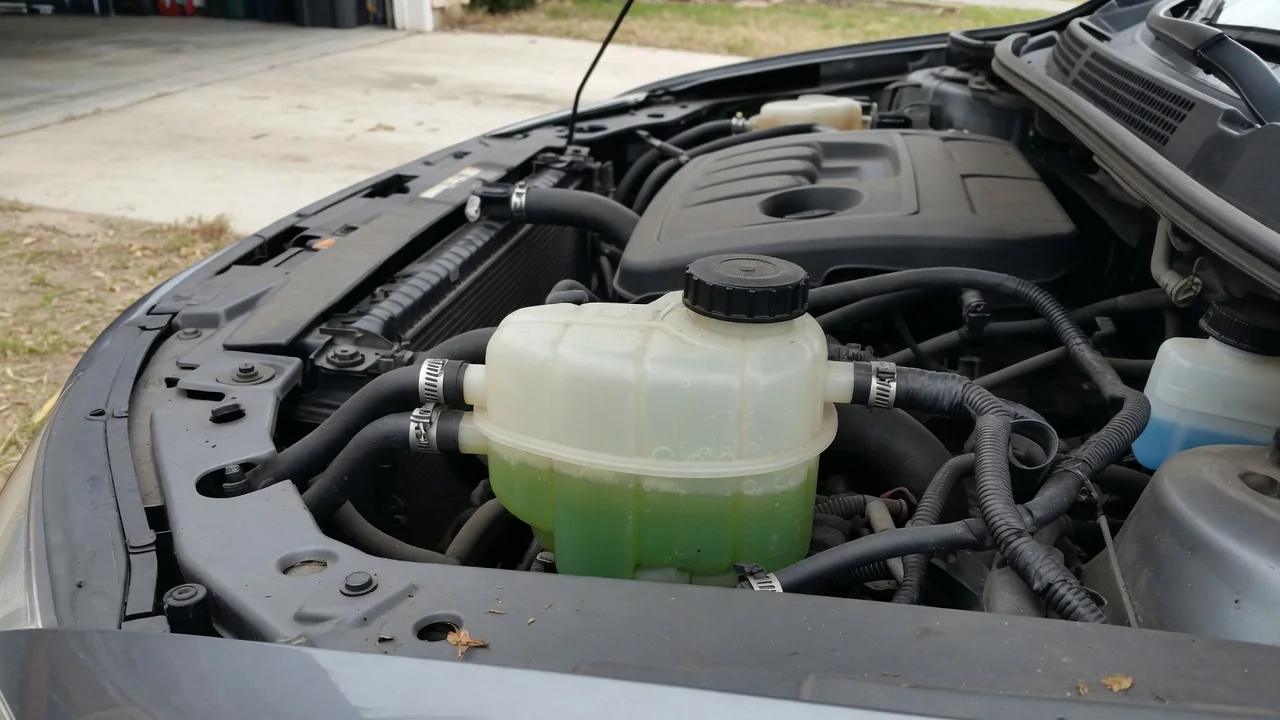
Anyone asking what is a car's coolant reservoir is usually looking at a translucent plastic tank under the hood with lines molded into its side. That tank gives engine coolant somewhere to go as it expands with heat, and it lets you judge the level without opening the cooling system. Knowing how it behaves makes routine checks far more meaningful.
Hot and cold changes
Coolant, a blend of antifreeze and water, takes up more space as it warms. When an engine reaches operating temperature, the fluid in the radiator, engine passages and hoses grows in volume, and the excess has to move somewhere. The reservoir is that space. On many vehicles, a valve in the radiator cap opens under pressure and lets the surplus flow through a small hose into the tank. As the engine cools, the fluid contracts and the resulting vacuum draws coolant back.
This is why the level in the tank is not fixed. After a highway drive, it will sit noticeably higher than it did that morning in a cold driveway. Designs differ, though. Some vehicles use an unpressurized overflow bottle with a simple snap-on lid, while others use a pressurized expansion tank that carries the system's pressure cap and stays part of the circulating loop. The two look similar at a glance, so the owner's manual is the reliable guide to which type your vehicle has.
Level check
The side of the tank normally carries two marks, often labeled minimum and maximum, low and full, or cold and hot. Wording varies by manufacturer, but the idea is consistent: with the engine cold, the fluid should sit at or above the lower line, and with the engine fully warm it should not rise past the upper one. Checking cold, on level ground, gives the most repeatable reading, because the fluid has contracted and a sloped surface can tilt the level misleadingly.
Older tanks can yellow or stain on the inside, making the level hard to see. Shining a flashlight through from behind or gently rocking the vehicle to make the fluid move usually reveals it. The cap on a pressurized tank, or on the radiator itself, should never be opened while the engine is hot, since scalding coolant can spray out under pressure. If topping up is needed, the manual specifies the coolant type, and mixing incompatible formulas is worth avoiding.
Leak signs
A level that sinks slowly between checks suggests coolant is leaving the system somewhere. External leaks often leave clues: a sweet smell after driving, colored drips or puddles under the front of the vehicle, or crusty dried residue in green, orange, pink or blue around hose connections, the water pump, the radiator seams or the tank itself. Plastic reservoirs can develop hairline cracks with age and heat cycling, and those sometimes weep only when the system is hot and pressurized.
Not every loss is visible outside. Coolant can also escape internally, which may show up as white exhaust vapor with a sweet odor, a milky appearance in the engine oil, or persistent bubbling in the tank. A damp carpet on the passenger side or a fogging windshield can point toward the heater core. None of these signs identifies a failed part on its own; they narrow the search, and a pressure test by a technician is the usual way to confirm where the fluid is going.
Everyday Use and Observations
In normal driving, the reservoir quietly rises and falls with every warm-up and cool-down, and a healthy system returns to nearly the same cold level each time. A quick glance when you check the oil or refill washer fluid is enough to learn your vehicle's usual pattern. Seasonal temperature swings shift the cold reading slightly, so a small difference between a winter morning and a summer afternoon is expected rather than alarming.
The fluid's appearance is worth noting too. Fresh coolant is clear and brightly colored, with the shade depending on the formula the manufacturer specifies. Rusty brown fluid, floating debris, an oily film or sludge on the tank walls suggests contamination or coolant that is overdue for replacement. Location and shape vary widely: some tanks sit beside the radiator, others near the firewall or a fender, and some hybrids and electric vehicles carry more than one reservoir for separate cooling loops.
Limits and Next Steps
The reservoir reports quantity, not the overall health of the cooling system. A correct level says nothing certain about the thermostat, water pump, radiator cap, fans or the coolant's freeze and corrosion protection. On vehicles with an overflow bottle, the tank can even look full while the radiator is low, if a faulty cap or a leak prevents coolant from being drawn back. A level reading is therefore one piece of evidence to weigh alongside the temperature gauge and any warning lights.
A single small top-up after a long period is usually nothing to worry about, but repeated refilling means the cause needs to be found rather than masked. If the temperature gauge climbs toward hot or a coolant warning appears, pulling over safely and shutting the engine off limits the risk of serious damage. From there, a professional inspection that includes a pressure test and a check of the coolant's condition is the sensible next step, with your vehicle's service information guiding fluid type and maintenance timing.