Coolant Reservoir: How to Check Its Level and Condition
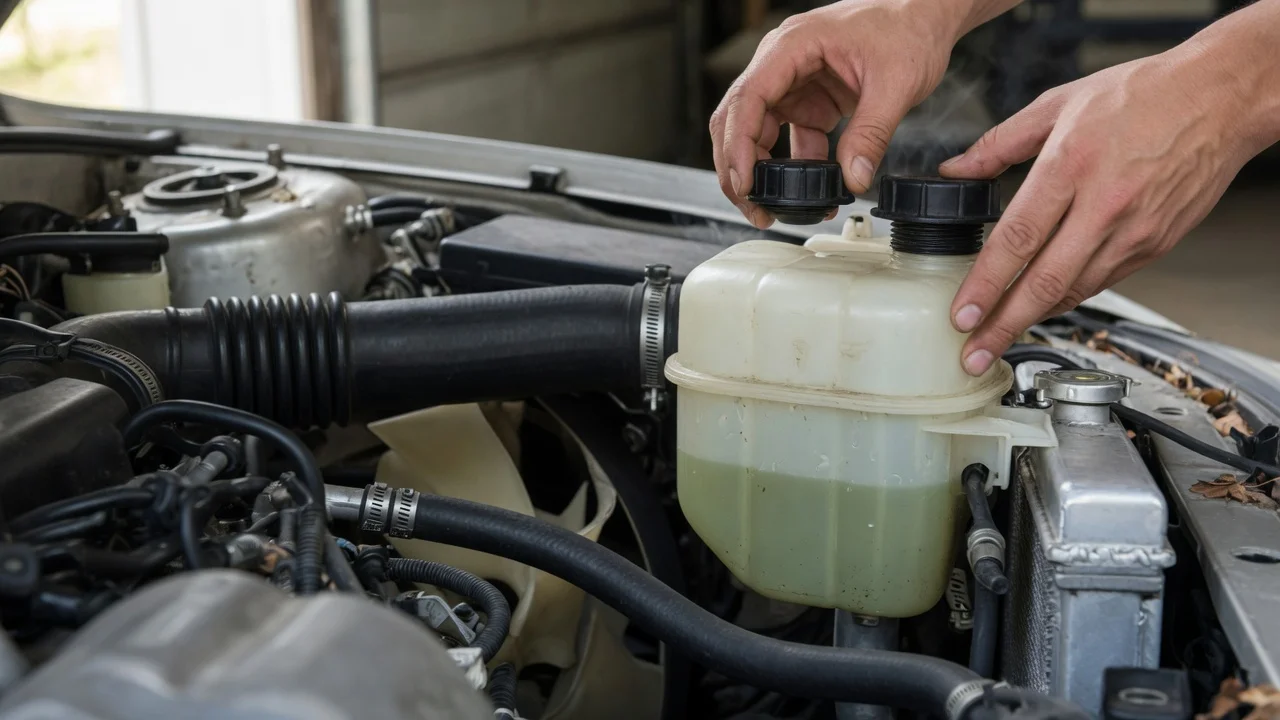
Before you start
Park the car on level ground and let the engine cool before opening the cooling system. The radiator and coolant lines can stay hot after driving, and opening a pressurized cap too early can release hot coolant. Work only when the hood area feels cool. Identify the correct service item for your vehicle before checking the level; the reservoir is separate from the radiator fill neck on many cars.
Step-by-step instructions
Open the hood and locate the coolant reservoir. It is usually a translucent plastic tank near the radiator, often with a pressure or screw cap. The side of the tank may have minimum and maximum markings used for a cold-level check. On some vehicles, the cap itself carries the pressure rating and is not the same as a plain reservoir lid.
Compare the coolant level with the marks on the side of the tank. A cold engine may show a level near the minimum line, while a warmed engine can show a higher level as the coolant expands. If the level is below the minimum mark, add the correct type of coolant or premixed product specified for the vehicle, unless the owner's manual directs using water in an emergency. Add only when the engine is cool and the reservoir cap can be opened safely.
Check the condition of the fluid while you are there. Coolant can look bright green, orange, yellow, blue, pink, or another color depending on the formula, so color alone is not a reliable indicator of compatibility. Look instead for signs such as debris, oil, sludge, or a milky appearance. Also check the tank and cap for cracks, leaks, or residue that may indicate a pressure or sealing problem.
Check the output
A correctly filled reservoir should hold coolant between the minimum and maximum marks when the engine is in the same condition used for your reading. After topping up, replace the cap securely and start the engine briefly if the vehicle instructions require warming the system. Recheck for leaks around the cap, tank, and connected hoses. Keep in mind that a reservoir level check does not confirm the condition of coolant inside the engine block or radiator, and a repeated loss of level may require further diagnosis.
Common problems and next steps
If the coolant drops quickly after refilling, look for an external leak at hoses, the water pump, radiator, or tank. A failing reservoir cap can also prevent correct pressure control. If the fluid looks oily, milky, or has floating sludge, corrosion or contamination may be present. Do not mix two different coolant chemistries unless the product says they are compatible; mixing can reduce corrosion protection and create difficult-to-remove deposits.
For an overheated engine, turn the engine off and wait until it cools before inspecting the coolant. If a leak or repeated coolant loss appears, have the cooling system inspected rather than continuing to add fluid. Use the exact coolant type and concentration recommended for the vehicle, and follow any replacement interval in the service information to keep the system working correctly.