What Is a Brake Bleeder Tool?
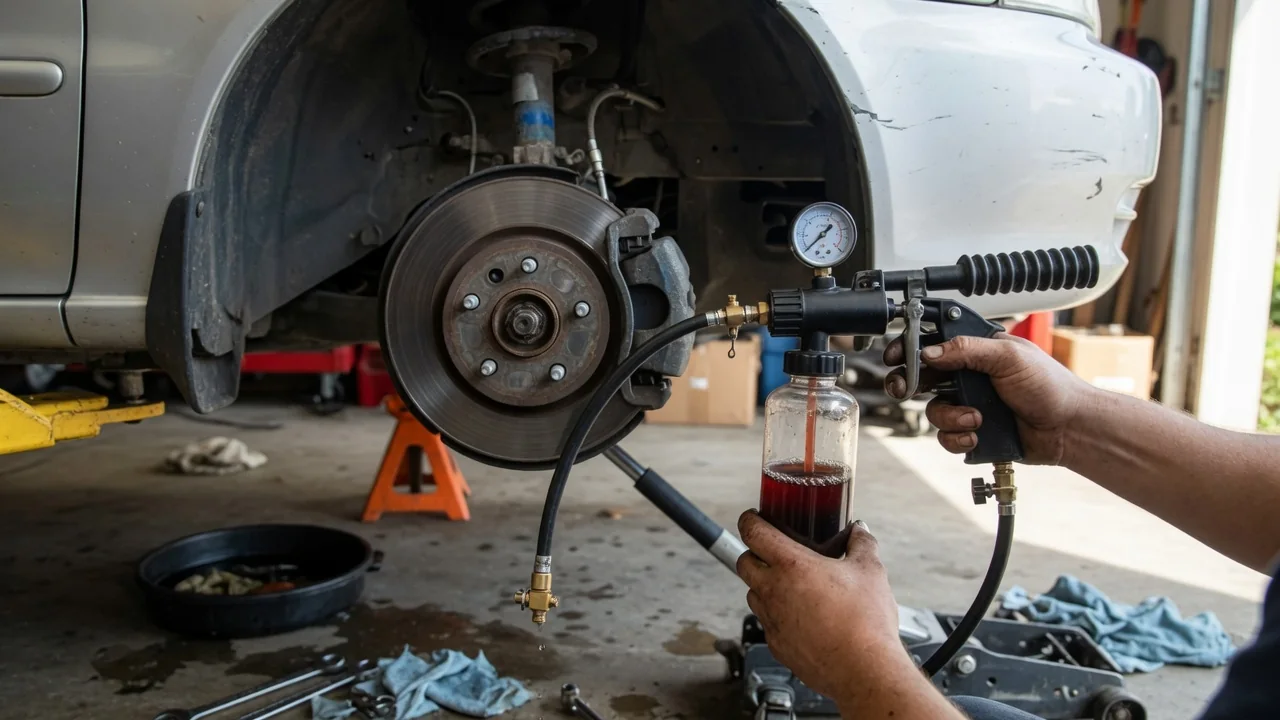
What is a brake bleeder tool? It is a device that helps move brake fluid through a vehicle's hydraulic circuit so trapped air can escape at the bleeder screws. Because air compresses and fluid does not, even small bubbles can soften pedal feel. This guide explains how the tool works conceptually, the main designs, and where its usefulness ends.
Fluid path
Pressing the brake pedal moves pistons in the master cylinder, which pushes fluid from the reservoir through rigid steel lines and flexible hoses to the calipers or wheel cylinders at each wheel. On most modern vehicles the fluid also passes through an anti-lock brake hydraulic unit containing valves and a pump. Each caliper or wheel cylinder carries a small bleeder screw, usually at its highest point, where air naturally collects. A bleeder tool uses that screw as the exit for old fluid and bubbles.
Air matters because it compresses under pressure while brake fluid essentially does not, so pedal travel gets spent squeezing bubbles instead of clamping pads. The tool creates controlled flow in one direction, carrying air toward an opening while fresh fluid follows behind. Circuit layout varies: some vehicles split the system front to rear, others diagonally, and some hydraulic clutches share the same reservoir. That is why the recommended wheel sequence and any special steps should come from the service information for the specific vehicle.
Tool types
Vacuum bleeders attach to the bleeder screw with a hose and draw fluid outward using a hand pump or a unit driven by shop compressed air, collecting waste in a catch container. Pressure bleeders work from the opposite end, sealing to the master cylinder reservoir with an adapter and pushing fluid downstream under modest pressure. Both let one person do a job that traditionally needed a helper on the pedal, and both keep fluid moving steadily rather than in pulses.
Simpler designs include one-way check valve hoses and catch bottles, which let fluid leave when the pedal is pressed but resist air being drawn back in. Reverse bleeders push fluid upward from the wheel toward the reservoir, following the direction bubbles naturally rise. Reservoir cap shapes and thread patterns differ between manufacturers, so a pressure bleeder often needs a matching adapter, and bleeder screw sizes vary as well. Transparent tubing is common across all types because it lets the user watch the fluid stream.
Safety-critical service
Brakes are a safety-critical system, so bleeding carries consequences that most maintenance jobs do not. Letting the reservoir run low during the process draws new air into the master cylinder, undoing the work. Brake fluid absorbs moisture from the atmosphere, which is why containers should be freshly opened, and it can damage paint on contact. The correct fluid type is normally marked on the reservoir cap or listed in the owner's manual; mixing incompatible fluids can harm seals.
A vehicle should not be driven until the pedal feels firm and consistent with the engine running and the fluid level is correct. Bleeder screws can seize or snap, particularly on corroded components, and an overtightened screw may damage its seat and leak. The vehicle must also be supported securely if wheels come off. Anyone unsure about any of these points is better served by a qualified technician, since a mistake here may not reveal itself until a hard stop.
Everyday Use and Observations
In practice, the tool comes out after work that opens the hydraulic system, such as replacing a caliper, hose, or master cylinder, and during a routine fluid exchange. Through the clear tube, the user typically sees dark, aged fluid first, sometimes with strings of bubbles, followed by cleaner, lighter fluid as fresh supply arrives. A steady, bubble-free stream is the usual sign that a given wheel's branch has been purged, though the reservoir level needs watching throughout.
Vacuum tools can be misleading, because suction may pull air past the bleeder screw threads and produce a stream of tiny bubbles that never came from inside the circuit. Experienced users learn to tell this fine, constant fizz from the larger, irregular pockets of genuinely trapped air. Pedal feel afterward is the more meaningful result: a firm, high pedal suggests success, while a soft or sinking one suggests air remains or another fault exists. Fluid color and the time each wheel takes vary by vehicle and condition.
Limits and Next Steps
A bleeder tool removes air; it does not repair what let the air in. A leaking line, worn master cylinder seals, or a failing flexible hose will produce a soft pedal again no matter how thoroughly the system is purged. Many vehicles with anti-lock brakes or electronic stability control can trap air inside the hydraulic unit, and the manufacturer's procedure may require a scan tool to cycle the pump and valves. Some hybrid and electric vehicles with brake-by-wire systems have their own specific routines.
If the pedal stays spongy after a careful bleed, the sensible next step is diagnosis rather than repetition. A warning lamp or stored fault code related to the brake system is evidence to interpret alongside pedal feel, fluid level, and a visual inspection for leaks, not proof that a particular part has failed, and manufacturer-specific codes need confirmation against that vehicle's documentation. Consulting the service manual or a professional shop at that stage protects both the braking system and the people relying on it.