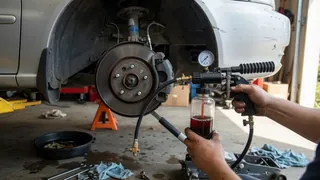
Toolstation Brake Bleeder: What to Check Before You Buy
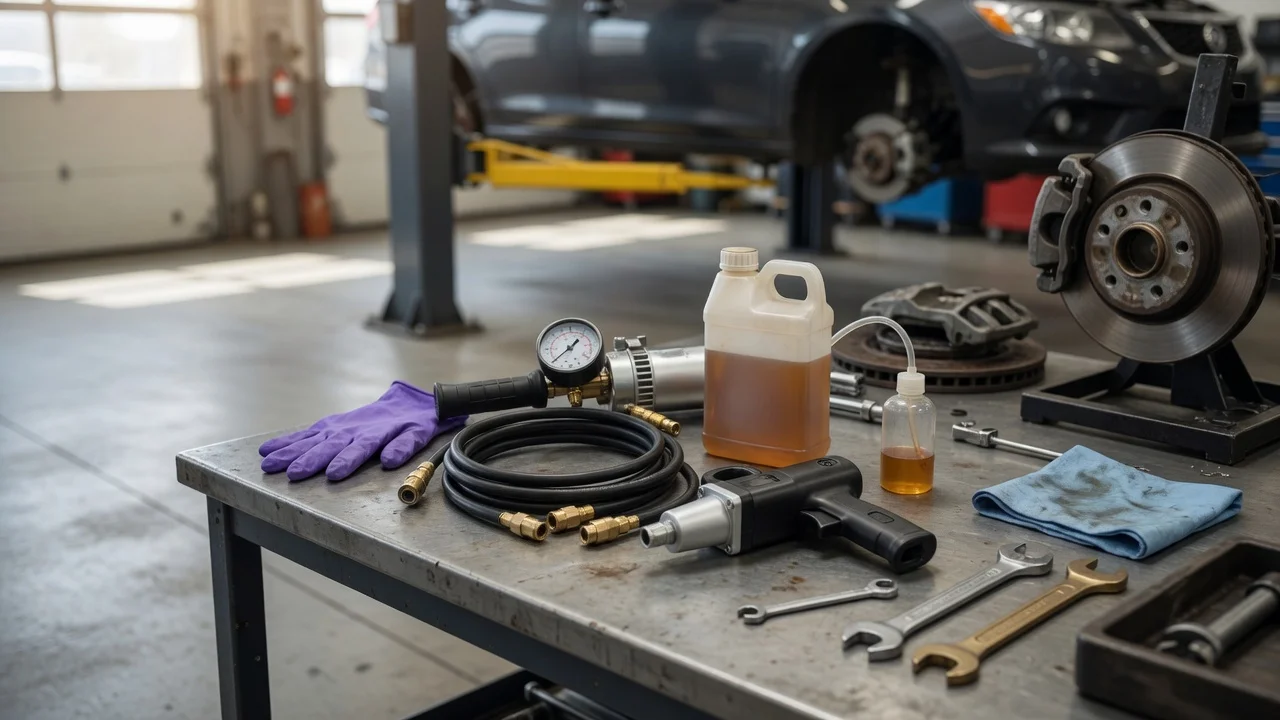
The short answer
Toolstation is a UK trade and DIY retailer, so it is a reasonable place to look for a brake bleeder. No current product listings, prices or stock levels were supplied for this guide, so the exact models on sale are not covered here. Check the current listing before you rely on any particular kit. Whichever kit you find, the right choice depends more on your car than on the shop. The main factors are how you plan to work, whether your vehicle's ABS needs special treatment, which brake fluid it uses, and whether the kit fits your reservoir and bleed nipples.
What a brake bleeder does
Bleeding the brakes removes air and old fluid from the hydraulic lines. Air compresses while brake fluid does not, so trapped air causes a soft or spongy pedal. A bleeder kit controls fluid as it leaves the bleed nipple, the small valve on each caliper or wheel cylinder, so that air cannot be drawn back into the system.
Common bleeder types and who they suit
Type | How it works | Suits; One-way valve hose and bottle | A tube with a non-return valve fits the bleed nipple while someone presses the pedal. The valve stops air returning. | Simple, low-cost jobs. Often usable by one person. Vacuum bleeder | A hand or air-powered pump draws fluid out through the nipple. | Working alone, without anyone pressing the pedal. Pressure bleeder | Pressurises the fluid reservoir through a cap adapter and pushes fluid through to each nipple. | Full fluid changes and solo work. Needs the correct cap adapter for your vehicle.
Conditions that change the answer
ABS units: Some vehicles need a diagnostic tool to cycle the ABS pump during bleeding, particularly if the ABS module has been opened or run dry. A basic bleeder kit will not do this. Check the procedure for your specific model year and trim. Brake fluid type: Most cars use glycol-based fluids such as DOT 3, DOT 4 or DOT 5.1. DOT 5 is silicone-based and must not be mixed with glycol-based fluids. Use the specification printed on the reservoir cap or given in the handbook, and use a bleeder that has not been contaminated with a different fluid. Reservoir cap fit: Pressure bleeders need an adapter that matches your reservoir. Fittings vary by manufacturer and model, so confirm the kit includes one for your car or that a compatible adapter is available. Bleed nipple size: Nipple sizes vary between vehicles, and sometimes between the front and rear of the same car. Check your nipple size so you have the correct spanner and a hose that seals on the nipple. Shared clutch reservoir: On many manual cars the hydraulic clutch draws from the brake reservoir. Keep the reservoir topped up so the clutch circuit does not take in air.
Limits of vacuum bleeders
Vacuum bleeders can pull air in around the threads of the bleed nipple. This can show up as bubbles in the hose even when the system itself is clear of air. Some people seal the threads to reduce this. Bubbles in the tube are therefore not always a reliable sign that air remains in the system.
What to confirm on the product listing
Bleeder type: one-way valve, vacuum or pressure; Which adapters or hose sizes are included; Whether the listing states which brake fluid types the kit can be used with; Capacity of the catch bottle or reservoir, if listed; Current price and whether it is in stock for delivery or collection
Safety note
Brakes are safety-critical. Follow the bleeding sequence and procedure in the manufacturer's service information for your exact vehicle. Do not let the reservoir run dry during bleeding. Brake fluid damages paintwork, so clean up spills straight away. If the pedal still feels soft after bleeding, or the ABS warning light is on, have the system checked before you drive.
Gaps in this guide
This guide does not include Toolstation's current range, model names, prices, stock levels or specifications, and no test results were supplied. Vehicle-specific details such as nipple size, fluid specification, ABS bleeding procedure and reservoir adapter fit must be checked against your car's make, model year, market and trim.