What Does an ECO Mode Button Change?
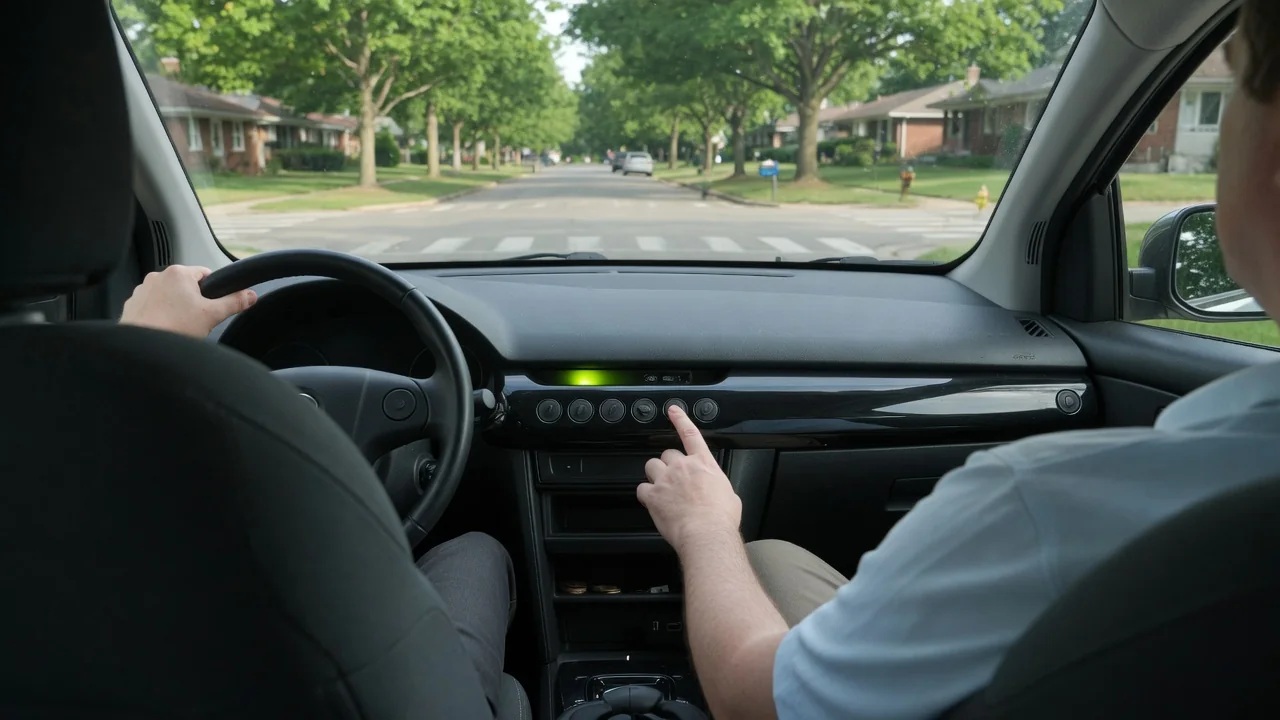
Many drivers press it without knowing exactly what happens next. So what does an ECO mode button change? In most vehicles, it adjusts how the car responds to the accelerator, how the transmission selects gears, and how hard the climate control works, all in the name of using less fuel or battery energy. The specifics depend on the manufacturer, so treat the following as general guidance.
Throttle response
The most noticeable change usually happens under your right foot. Modern vehicles use electronic throttle control, meaning the pedal sends a signal to a computer rather than pulling a cable. In ECO mode, the software typically remaps that signal so the same pedal movement requests less power than it would in the normal setting. The engine or motor has not lost any capability; the pedal simply requires a deeper press to reach the same output, which discourages the quick bursts of acceleration that consume extra fuel.
From the driver's seat, this feels like a softer, more gradual launch from a stoplight and a calmer reaction when you nudge the pedal at cruising speed. Some vehicles still deliver full power once the pedal is pressed to the floor, while others keep the response muted throughout most of its travel. Hybrids and electric vehicles may also limit how quickly the motor delivers torque. Because the calibration differs between makes and even between model years, the owner's manual is the reliable place to confirm what your vehicle does.
Transmission behavior
On vehicles with an automatic transmission, ECO mode often changes the shift strategy. The control module may upshift earlier to keep engine speed low, since an engine turning fewer revolutions per minute generally burns less fuel at light loads. It may also hold a higher gear longer before downshifting when you ask for moderate acceleration. With a continuously variable transmission, the equivalent behavior is a ratio that keeps the engine speed down and rises more slowly as you press the pedal.
You can watch this on the tachometer. On a familiar stretch of road, compare the engine speed at a steady pace in normal mode and then in ECO mode; a lower reading or earlier shifts suggest the transmission logic has changed. Some vehicles also lock the torque converter sooner or allow more coasting when you lift off the pedal. Others leave the transmission untouched and alter only the throttle, and vehicles with manual gearboxes may simply display a shift prompt, so observations are worth more than assumptions.
Driver expectations
It helps to treat ECO mode as a set of gentle nudges rather than a transformation. The button cannot change the vehicle's weight, aerodynamics, or tire rolling resistance, and those factors, along with speed and driving style, shape consumption far more than software tuning. Any savings tend to be modest and depend heavily on conditions. A driver who already accelerates smoothly and anticipates traffic may see little difference, while someone with a heavier foot may benefit more because the mode smooths out abrupt inputs.
Climate control is the other area where expectations matter. Many systems reduce air conditioning compressor activity, lower blower speed, or allow cabin temperature to drift further from the set point before responding. On a hot afternoon, the cabin may take longer to cool; in winter, seat heaters or defrost performance may be trimmed on some vehicles, particularly electric ones where heating draws from the battery. Whether your vehicle makes any of these adjustments, and how aggressively, is a manufacturer decision that the manual or the settings menu should clarify.
Everyday Use and Observations
ECO mode tends to suit steady, low-demand driving: commuting in moderate traffic, cruising through town, or covering flat highway miles at a constant pace. In those situations the softened pedal and earlier upshifts rarely get in the way, and reduced climate output is easy to live with in mild weather. Many drivers leave the mode on for routine trips and stop noticing it within days, which is largely the point of a calibration designed to work quietly in the background.
Pay attention to a few signals during regular use. A dashboard indicator, often a green light or leaf symbol, usually confirms the mode is active, and some instrument clusters add a gauge or score that rewards gentle inputs. Tracking fuel economy or energy consumption across several tanks or charges, on similar routes and in similar weather, gives a fairer picture than a single trip. Also check whether the mode stays on after a restart, since some vehicles remember the selection and others return to the default setting.
Limits and Next Steps
There are moments when the trade-off works against you. Merging onto a fast highway, passing on a two-lane road, climbing a steep grade, or towing all call for prompt power, and a dulled pedal can make the vehicle feel hesitant. Extreme heat or cold may also make reduced climate performance uncomfortable or slow to clear fogged glass. Switching back to the normal mode in these situations is reasonable, and some vehicles do part of that automatically when the pedal is pressed firmly.
ECO mode is also not a cure for a real problem. If fuel economy has dropped noticeably, the engine hesitates in every mode, or a warning light is on, the cause deserves proper diagnosis instead of a different drive setting; underinflated tires, overdue maintenance, or a fault that needs professional evaluation are more likely explanations. As a next step, read the drive mode section of your owner's manual, try the back-to-back comparison described above, and ask a dealer or qualified technician about anything the documentation leaves unclear.