Water and Foam Fire Extinguishers: What They Do and Whether They Suit a Vehicle Fire
Water and foam fire extinguishers are related but not interchangeable. A water extinguisher is meant for fires in ordinary solid combustible material such as paper, wood, cloth and many plastics. A foam extinguisher covers those same solid-material fires and can also handle many flammable liquid fires, such as gasoline or oil, by forming a blanket over the burning surface. For a vehicle, neither is usually the first choice in the US. Car fires often involve fuel, oil and live wiring at the same time, and a multipurpose dry chemical extinguisher is generally better suited to that mix. This guide explains how each type works, what the ratings on the label mean, and where water and foam fit in roadside fire response.
The Short Answer
Water extinguisher: suited only to Class A fires (ordinary solid combustibles). Do not use it on fuel, oil or energized electrical equipment. Foam extinguisher: suited to Class A and Class B fires (solids and flammable liquids). Standard foam is generally not rated for energized electrical equipment in the US. For a passenger car, a multipurpose dry chemical unit with an ABC rating is the more common and more versatile choice. In any vehicle fire, getting people out and away and calling emergency services comes before any attempt to fight the fire.
How Fires Are Classified in the US
A fire needs three things: heat, fuel and oxygen. An extinguisher works by removing one or more of them. The type of fuel decides which extinguisher is safe and effective, so US extinguishers are labeled by fire class.
Class | What is burning | Vehicle examples; A | Ordinary solid combustibles | Seat fabric, carpet, interior trim, cargo, tires; B | Flammable liquids and gases | Gasoline, diesel, engine oil, transmission fluid; C | Energized electrical equipment | Wiring, battery cables, alternator, accessories while powered; D | Combustible metals | Rare in typical car fires; K | Cooking oils and fats | Not relevant to vehicles, except food trucks
A vehicle fire can involve several classes at once. An engine bay fire may start at an electrical fault, which is the ignition source, spread to leaking fuel or oil, and then reach plastics and insulation. This is the main reason single-class extinguishers are a poor match for cars.
Understanding a Fire Extinguisher Rating
In the US, extinguishers carry a rating made of numbers and letters. The letters show which fire classes the unit is listed for. The number in front of A indicates relative extinguishing capacity for solid-material fires, and the number in front of B indicates relative capacity for flammable liquid fires. Higher numbers mean more capacity within that class. Class C carries no number, because it only confirms that the extinguishing agent does not conduct electricity. When comparing extinguishers, check the label on the specific unit instead of assuming that all water or all foam models perform the same.
How a Water Extinguisher Works
A pressurized water extinguisher, sometimes called an APW (air-pressurized water) unit, sprays a stream of water that cools burning solids below the temperature they need to keep burning. Water soaks into materials like fabric and wood, which helps prevent rekindling. That makes it effective on Class A fires.
Its limits matter for vehicles:
Flammable liquids: a water jet can splash burning fuel and spread the fire instead of putting it out. Fuel also floats on water and can keep burning. Electrical equipment: plain water conducts electricity, so a standard water extinguisher is not rated for Class C fires and can create a shock hazard. Cold weather: plain water can freeze in a vehicle parked outdoors, and some units are designed with additives to lower the freezing point. Check the temperature range on the label. Size: water extinguishers tend to be bulky for the amount of firefighting capacity they provide, which makes them awkward to carry in a car.
A separate category, water mist extinguishers, uses deionized water discharged as a fine spray. Some of these are listed for both Class A and Class C fires because the mist and purified water reduce electrical conductivity. They are a different product from a standard water extinguisher, so the label rating is what counts.
How a Foam Extinguisher Works
A foam extinguisher discharges a mix of water and a foam concentrate. On solid materials it cools and soaks like water. On a flammable liquid, the foam spreads across the surface and forms a blanket that separates the fuel from oxygen and suppresses the flammable vapors rising from it. That is why foam units commonly carry both A and B ratings.
Foam is applied differently from water. On a pool of burning liquid, the goal is to let the foam flow gently over the surface, for example by aiming at a nearby surface so it runs onto the fuel, rather than blasting directly into the liquid and splashing it. Foam works best on liquids lying in a pool or spill. It is less effective on fuel spraying or running from a pressurized line, which is a common pattern in engine bay fires.
Most foam extinguishers are not listed for Class C, so they should not be used on energized electrical equipment. Some foam products have historically been based on fluorinated chemistry (AFFF). Concern over PFAS has led to a shift toward fluorine-free foam formulations, so the foam type is worth noting when choosing a unit.
Water vs Foam: Key Differences
Feature | Water | Foam; Typical classes | A | A and B; How it works | Cools and soaks | Cools, soaks and blankets liquid fuel; Flammable liquids | Not suitable; can spread fire | Suitable for many pooled liquid fires; Energized electrical | Not suitable (except water mist units listed for C) | Generally not suitable; Cleanup | Water only | Water and foam residue; Fit for a passenger car | Poor | Limited
Are Water or Foam Extinguishers Right for a Car?
For most drivers, a water extinguisher is the wrong tool for a car, because the fires most likely to occur under the hood involve fuel, oil and wiring. A foam extinguisher closes part of that gap by covering flammable liquids, but it still does not address electrical fires. A multipurpose dry chemical extinguisher rated ABC covers all three of the common vehicle fire classes in a compact size, which is why it is the usual recommendation for passenger vehicles. Dry chemical leaves a powder residue that needs cleaning afterward, which is a reasonable trade for its coverage.
Commercial vehicles regulated under US federal motor carrier rules are required to carry extinguishers rated for B and C fires, which reflects the same reasoning: fuel and electrical fires are the main risks on the road. A water-only extinguisher does not meet that kind of requirement.
Electric and hybrid vehicles add another factor. Fires involving high-voltage lithium-ion battery packs can be very difficult to put out, may reignite, and give off toxic gases. Firefighters typically handle these fires with large volumes of water over an extended period, far beyond what a handheld extinguisher holds. A portable extinguisher of any type may help with a small cabin fire in an EV, but it is not a solution for a battery pack fire. In that situation, the priority is evacuation and calling emergency services.
What to Do if Your Vehicle Catches Fire
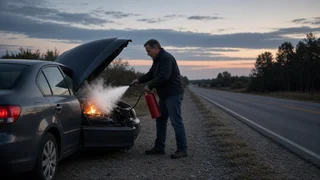
Signal, pull over and stop as soon as it is safe, away from buildings, other vehicles and dry vegetation if possible. Turn off the engine. This provides some electrical isolation and stops the fuel pump on many vehicles, although batteries and high-voltage systems may remain energized. Get everyone out and move at least well away from the vehicle, upwind and away from traffic. Safe evacuation comes first; do not go back for belongings. Call 911 and give your location and, if known, whether the vehicle is electric or hybrid. Only attempt to use an extinguisher if the fire is small, you have a clear escape route behind you, and you have an extinguisher rated for the fire. Do not open the hood fully. Fresh air can make an engine fire flare up. If you discharge an extinguisher, aim through gaps such as the grille or the edge of the hood. Stop and retreat if the fire grows, the extinguisher empties, or smoke builds. Wait for emergency services.
When using any handheld extinguisher, the common method is PASS: Pull the pin, Aim at the base of the fire, Squeeze the handle, and Sweep side to side. With foam on liquid fuel, adjust the aim so the foam flows onto the surface rather than splashing it.
Ownership and Maintenance Tips
Mount the extinguisher securely with a bracket so it cannot become a projectile in a crash or roll under the pedals. Keep it within reach of the driver, not buried under cargo in the trunk. Check the pressure gauge regularly; the needle should sit in the operating range. Inspect for damage, corrosion and a missing pin or tamper seal. Replace or recharge the unit after any use, even partial. Confirm the label's temperature range suits where the vehicle is parked, especially for water-based units in freezing climates.
Bottom Line
Water extinguishers fight ordinary solid-material fires only, while foam extinguishers add coverage for flammable liquids. Neither is generally listed for energized electrical equipment, and a car fire often involves all three hazards at once. For a vehicle, a multipurpose ABC dry chemical extinguisher is usually the better fit, and in any serious fire, especially one involving an EV battery, the right move is to get clear and let emergency services handle it.