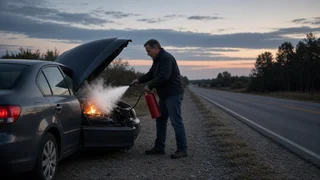
When Foam Extinguishers Can Be Used: Fire Classes, Vehicle Fires and Limits
A foam fire extinguisher is used for two types of fire: Class A fires in ordinary solid combustible material such as fabric, paper, wood, rubber and many plastics, and Class B fires in flammable liquids such as gasoline, diesel and oil. That combination makes foam relevant to vehicle fires, where spilled fuel and burning upholstery or tires are both possible. The major qualification is electricity. Most foam extinguishers sold in the US are not rated for Class C fires, which involve energized electrical equipment. Foam is also unsuitable for burning metals and is not a solution for electric-vehicle battery fires.
Which fire types foam is used for
US extinguishers are labeled by fire class. Foam's suitability depends on the class of fuel that is burning, so checking the label matters more than the extinguisher's color or shape.
Fire class | What is burning | Foam suitable? Class A | Ordinary combustibles: seat fabric, carpet, paper, wood, rubber, many plastics | Yes, if the label shows an A rating; Class B | Flammable liquids and gases: gasoline, diesel, motor oil, some solvents | Yes for liquid spills, if the label shows a B rating; not effective on pressurized gas leaks; Class C | Energized electrical equipment | Generally no, unless the specific extinguisher is labeled for Class C; Class D | Combustible metals such as magnesium | No; Class K | Cooking oils and fats in commercial kitchens | Not the preferred choice; wet chemical extinguishers are designed for this
How foam puts out a fire
Foam extinguishers discharge a water-based solution mixed with a foaming agent. On solid materials, the water content cools the fuel and soaks into it, which helps prevent rekindling, a frequent problem with smoldering upholstery. On flammable liquids, the foam spreads across the surface and forms a blanket. This blanket separates the fuel from oxygen and suppresses the vapors that actually burn. That sealing effect is the main advantage foam has over dry chemical powder on fuel spills. A dry chemical agent can knock flames down quickly, but it does not leave a lasting barrier, so a hot fuel pool can reignite.
Where foam helps in a vehicle fire
Fuel spill fires: burning gasoline or diesel pooled under or near the vehicle after a leak or collision. Interior fires: burning seats, headliners, carpets and trim, which are Class A materials. Tire and cargo fires in their early stage, where cooling and soaking reduce the chance of reignition. Small oil fires on external surfaces, provided no energized wiring is involved.
In practice, many vehicle fires mix fire classes. An engine-bay fire can involve leaking fuel or oil, plastic components and live 12-volt wiring at the same time. This is why the multipurpose ABC dry chemical extinguisher is the most common choice for personal vehicles in the US. It covers all three classes in one unit, although it leaves a corrosive residue and no lasting blanket on fuel.
When not to use a foam extinguisher
Live electrical fires: water-based foam can conduct electricity. Do not use it on energized wiring or components unless the extinguisher is specifically labeled for Class C use. Electric and hybrid high-voltage battery fires: lithium-ion battery fires can sustain themselves through thermal runaway and may reignite after appearing to go out. A handheld extinguisher of any type is not a realistic way to control them. Burning metals: some vehicle parts contain magnesium or other metals that react dangerously with water-based agents. Pressurized fuel leaks: foam cannot blanket a spraying or jetting fuel source. Freezing conditions: water-based foam may freeze or perform poorly in cold weather. Check the operating temperature range on the label before storing one in a vehicle.
Electrical isolation and the ignition source
In a conventional vehicle, switching off the ignition removes one ignition source and usually stops the electric fuel pump. That can slow the fire's fuel supply. Even so, switching off the ignition does not fully de-energize the 12-volt system, because the battery stays connected. Disconnecting the battery during an active fire is generally not advisable, since it means working close to the flames. A foam extinguisher therefore should not be treated as safe for engine-bay electrical fires just because the engine is off. In electric and hybrid vehicles, the high-voltage system can stay energized and dangerous regardless of the vehicle's on or off state.
Reading the fire extinguisher rating
A US fire extinguisher rating combines numbers and letters. The number in front of A indicates relative firefighting capacity on ordinary combustibles. The number in front of B indicates relative capacity on flammable liquids. The letter C appears only if the unit has passed testing for use near energized electrical equipment, and it carries no number. A typical foam extinguisher shows A and B ratings only. If C is missing, treat the extinguisher as unsuitable for electrical fires. Ratings and temperature limits vary by product, so the label on the specific unit is the authority.
Using foam correctly on a fuel fire
Fight a fire only if it is small, everyone is out of the vehicle, you have a clear escape route, and emergency services have been called or are being called. The general extinguisher method is to pull the pin, aim, squeeze the handle and sweep the discharge. Foam on burning liquid needs one adjustment. Do not blast the stream directly into the pool, because that can splash burning fuel and spread the fire. Instead, let the foam fall gently onto the surface or bounce it off a nearby object such as the ground beside the spill, so it flows across and builds a continuous blanket. Keep the blanket intact once it forms. For solid materials, aim at the base of the flames and soak the burning area.
Safe evacuation comes first
Pull over away from traffic, buildings and dry vegetation, and switch off the ignition. Get all occupants out and move well away from the vehicle, staying upwind of the smoke, which can be toxic. Call 911 and give your location. Do not fully open the hood on an engine fire; the rush of air can feed the flames, and the hood can trap your hands or face. Do not return to the vehicle for belongings. If the fire grows, reaches the passenger compartment or fuel tank area, or involves an electric-vehicle battery, abandon any attempt to fight it and keep your distance.
After the fire
Watch the area for reignition until firefighters arrive, especially around smoldering upholstery and hot fuel. Tell emergency responders what agent you used. Some traditional foams contain fluorinated compounds known as PFAS, which raise environmental concerns about runoff. Fluorine-free formulations are increasingly common, and the product label or safety data sheet identifies which type you have. A discharged or partially used extinguisher must be recharged or replaced before you rely on it again.
Is foam the right extinguisher for your car?
Foam is a strong choice where the main risks are fuel spills and solid combustibles, and its cooling, blanketing action resists reignition better than dry powder. For a typical passenger vehicle, a fire can involve fuel, plastics and live wiring together, so an ABC-rated dry chemical unit is the more versatile single extinguisher. If you choose foam, confirm three things on the label: the A and B ratings, whether a C rating is present, and a temperature range that suits your climate and where the extinguisher will be stored in the vehicle. Mount it securely so it cannot become a projectile in a crash. Remember that any extinguisher is only for small, early-stage fires. Safe evacuation and calling emergency services take priority.