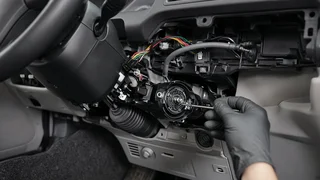
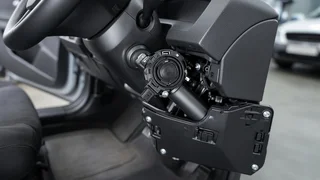
Volvo S60 2007 steering angle sensor

A 2007 Volvo S60 steering angle sensor question usually starts with a warning light, a traction-control message, or steering that feels vaguely incorrect. This component measures how far and how quickly the driver turns the wheel, then reports that position to stability and brake systems. Understanding its role helps an owner distinguish a true sensor defect from a damaged clock spring, a wiring fault, or a suspension problem such as wheel alignment wear. The following overview explains where the sensor sits, what it influences, and how its failure can change the driving experience.
Essential answer
The steering angle sensor is the electronic element that tells the S60’s control modules where the steering wheel is pointed. In this generation, it generally works with the steering column or clockspring, reading rotational position through optical, magnetic, or contact-based methods. Its signal is used by stability control to detect whether the car is following the driver’s intended path. A 2007 model can store a manufacturer-specific fault code when the signal is missing, implausible, or outside an expected range, but that code is diagnostic information rather than proof that the sensor itself is bad.
Several conditions can mimic a failed sensor. A weak battery or voltage interruption can erase the stored steering center calibration, producing a fault until the system is recalibrated. Damage to the clockspring ribbon, disturbed mounting points, or excessive joint play in the column can also corrupt the signal. For that reason, the essential answer is not simply “replace the sensor.” The practical first step is to read the specific fault, inspect the connector and wiring, check for related chassis concerns, and confirm whether the issue is electrical or mechanical before buying parts.