Vehicle Inspection Center: Where to Get a Mandatory Inspection and How to Choose One
The short answer
If your vehicle needs a mandatory inspection, it has to be done at a facility your state has authorized to perform that specific type of inspection. Depending on the state, that may be a state-run inspection station, a licensed private repair shop or dealership, or a dedicated emissions testing site. A general repair garage that is not licensed for inspections cannot issue a valid certificate, even if it can check the same components.
One condition changes the answer more than any other: there is no single national inspection requirement in the US. Whether you need an inspection at all, and what kind, depends on your state and sometimes your county or metro area. Vehicle age, fuel type, vehicle class and the reason for the inspection (registration renewal, a sale, or bringing a vehicle in from another state) can also change what is required.
First, confirm which inspection you actually need
The agency that handles vehicle registration in your state (often called the DMV, though the name varies) is the authoritative source for what applies to your vehicle. Your registration renewal notice may also state whether an inspection is due. The common types are:
Inspection type | What it generally covers | When it tends to apply; Safety inspection | Brakes, lights, steering, tires, wipers, horn, and other equipment the state lists | Periodic renewal in states that require it, or at sale or transfer in some states; Emissions test | Exhaust output or, on newer vehicles, the onboard diagnostic system (OBD-II) | Usually in specific counties or regions rather than statewide; exemptions often depend on vehicle age or fuel type; VIN verification | Confirming the vehicle identification number matches the title and paperwork | Commonly when registering a vehicle previously titled in another state
Some locations offer all of these; many offer only one or two. Knowing which you need before choosing a location avoids a wasted trip.
What to check when choosing an inspection shop
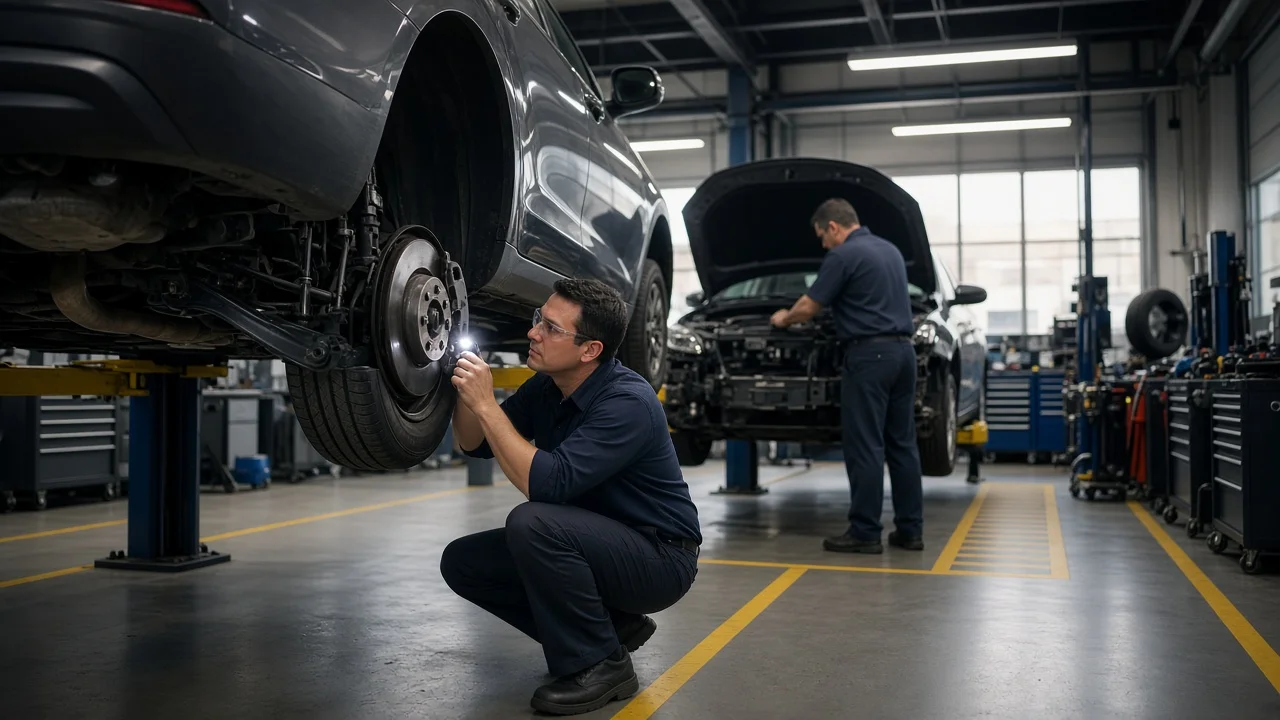
State authorization: the facility should be licensed or certified for the exact inspection you need. Licensed stations typically display a sign or certificate, and many states publish a station locator. Vehicle capability: confirm the shop can handle your vehicle class. Diesel vehicles, heavy-duty trucks, motorcycles, trailers and some hybrids or electric vehicles may need a different station or procedure. Fee disclosure: in many states the inspection fee is set or capped by regulation. Ask for the fee up front and compare it with what your state publishes. Inspection-only versus repair shops: some stations only inspect and do not sell repairs, which removes any incentive to fail a vehicle. Repair shops that also inspect can be convenient, but you are generally not obligated to have them do the repairs. Retest policy: ask whether a re-inspection after repairs is free or discounted, and within what time window. Appointments and wait times: some sites are walk-in only, others take bookings. Ask how long the inspection itself takes. Documentation: you should receive a written result showing what passed, what failed and why.
What to bring
Requirements vary by state, but stations commonly ask for current registration, proof of insurance and a driver's license. For a VIN verification on an out-of-state vehicle, bring the title or other ownership documents. Check your state's list before you go, since a missing document can mean being turned away.
Quick pre-inspection check
A few minutes of checking can prevent an avoidable failure:
All exterior lights work, including brake lights, turn signals, reverse lights and the license plate light. The horn sounds and the wipers clear the windshield; washer fluid is filled. Tires have adequate tread and no visible damage. The windshield has no cracks in the driver's line of sight (rules on chips and cracks differ by state). The check engine light is off. In areas with OBD-II emissions testing, an illuminated check engine light commonly results in a failure. The vehicle has been driven normally for a while if the battery was recently disconnected or trouble codes were recently cleared. The onboard diagnostics need driving time to complete their self-tests, and a vehicle whose self-tests are incomplete may be rejected.
If the vehicle fails
Read the failure report to see exactly which items need attention. You can usually have repairs done anywhere you choose and then return for a retest; ask the station how long you have to do so. Some states offer waivers or extensions for emissions repairs that exceed a set cost, but the rules and thresholds differ, so confirm with your state agency.
What this guide does not cover
No verified state-specific details were available for this article, so it does not list inspection fees, station locations, deadlines, exemption cutoffs or contact information. Treat your state's vehicle registration agency as the final word on whether you need an inspection, what type, how often and where it can be performed.