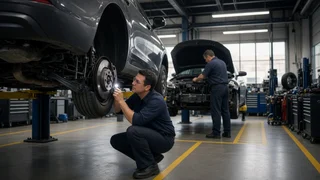
Why mandatory vehicle safety inspections matter
Mandatory vehicle safety inspections exist because mechanical failures can turn ordinary traffic situations into serious crashes. The importance of vehicle safety inspections lies partly in catching defects that a driver may not notice during daily use, such as thinning brake linings, worn steering joints, failing lamps, or weakened suspension components. Inspections also help connect a vehicle to the safety standards expected on public roads. They provide a repeatable check of critical systems and an opportunity to correct problems before they affect stopping distance, directional control, or visibility in poor conditions.
Essential answer
The essential answer is that regular safety inspections reduce the chance of operating a vehicle with a hidden defect in a system that directly affects crash avoidance or occupant protection. Brakes, tires, steering, suspension, lights, glass, mirrors, and seat belts all degrade gradually, so a driver may adapt to the change without realizing how much performance has been lost. A periodic inspection interrupts that drift and requires measurable attention to the components most likely to cause harm.
This does not mean an inspection guarantees future reliability. It is a snapshot of condition at a specific time, and parts can fail between inspections. The safety value comes from removing vehicles with obvious, serious defects from use until repairs are made and from encouraging owners to maintain systems they might otherwise ignore. For a vehicle owner, the practical benefit is earlier awareness and a clearer record of what was checked.
How it works
A safety inspection works by comparing key vehicle systems against pass-or-fail criteria that relate to basic roadworthiness. An inspector typically examines brake performance or lining condition, tire tread depth and damage, steering free play, suspension looseness, lamp operation, windshield integrity, and seat belt function. The goal is not to judge cosmetic condition or long-term durability, but to identify defects that could immediately affect control, visibility, or restraint in a collision.
The procedure creates a practical threshold. A component may be worn but still acceptable if it keeps enough reserve capacity for normal driving and emergency maneuvers. If wear passes the point where a system can no longer perform reliably, the vehicle fails until the condition is corrected. That line between acceptable wear and unsafe condition is what makes the inspection useful, because it turns vague concern about an older vehicle into a specific, checkable result.
Strengths, limitations and suitability
The main strength of a mandatory inspection is uniformity. It applies the same basic expectations to different vehicles and drivers, reducing the chance that a severely neglected car or light truck remains in service simply because its owner does not notice the problem. It also catches issues that develop slowly, such as rust damage around suspension mounting points or brake lines, which may not feel dramatic until a sudden failure occurs under load.
The limitations are real, however. An inspection cannot test every possible failure mode, and it does not cover maintenance that affects long-term durability but not immediate safety. It also adds time and cost, and pass results may give a false sense of security if a driver neglects the vehicle between checks. The system is most suitable for owners who want a structured minimum safety standard rather than a complete mechanical assessment or a substitute for attentive maintenance.
Procedure
A typical safety inspection begins with identifying the vehicle and confirming that it is in a condition that can be safely examined. The inspector then checks the required systems in a sequence that allows the vehicle to be observed while stationary and, where applicable, during a short rolling test. Items such as lights and horn are checked with the vehicle stationary, while steering and brake behavior may be evaluated during low-speed movement in a controlled area.
Because specific procedures and pass criteria vary by state or inspection program, an owner should confirm which items apply to the vehicle and jurisdiction before arriving. The completion check is the inspection result itself: a record showing which items passed and which require repair. If the vehicle fails, the owner should address the listed defects and arrange a recheck according to program rules rather than assuming that one failed lamp or worn tire is the only concern.
Diagnosing a problem
When a vehicle fails an inspection, the defect listed is a starting point for diagnosis, not a complete explanation. A failed brake test may result from low friction material, contaminated linings, a hydraulic problem, or another issue that affects stopping performance. Similarly, excessive steering free play can come from a worn tie rod end, a loose steering gear mount, or play inside the steering gear. The practical next step is to inspect the identified system thoroughly and find the source of the measured or observed condition.
Intermittent symptoms are especially important to investigate before returning for reinspection. A lamp that works during one check but not another may indicate a loose connection or failing switch. A vehicle that pulls during braking only when warm may have a caliper or drum issue that is not visible on a quick test. If the cause is unclear, a professional diagnosis is appropriate, particularly when the condition involves brakes, steering, or structural attachment points where a wrong guess could create a serious risk.