Mandatory Vehicle Safety Inspections: Requirements and Process
An annual vehicle safety inspection is a periodic check of a car's basic safety equipment, such as brakes, lights, tires, steering and windshield, carried out by a state-licensed inspector or station. In the US there is no single national rule for privately owned passenger vehicles. Each state decides whether to require a safety inspection, how often, which vehicles are covered and what counts as a pass. Some states require an inspection every year, some on a different cycle, some only when a vehicle is sold, re-registered or brought in from another state, and many require none. Before planning around an inspection, confirm what your own state's motor vehicle agency requires for your vehicle type and model year.
What a Safety Inspection Is and How It Differs From an Emissions Test
A safety inspection checks whether a vehicle's equipment meets minimum roadworthiness standards. An emissions test checks whether the engine and exhaust system keep pollutants within limits, usually by reading data from the onboard diagnostic (OBD) system on newer vehicles or by measuring tailpipe output on older ones. The two are separate requirements. A state may require both, only one or neither, and some states require emissions testing only in certain counties or metropolitan areas. When both apply, they may be done during the same visit or at different facilities, depending on the state's program.
A safety inspection is also different from a mechanic's general checkup. The inspector follows a fixed list of state inspection criteria and records pass or fail results. They are not diagnosing every problem with the car or recommending maintenance beyond what the inspection standards cover.
Who Needs an Inspection
Whether a vehicle must be inspected usually depends on the following factors, all set by the state:
Vehicle type: passenger cars, light trucks, motorcycles, trailers and commercial vehicles are often treated differently. Model year or age: some programs exempt new vehicles for a period, and some treat older or classic vehicles differently. Triggering event: an inspection may be due on a fixed schedule, at registration renewal, at a change of ownership, or when a vehicle is first registered in the state. Use: commercial, for-hire and school transportation vehicles often face stricter or more frequent inspections than private cars, including federal requirements for certain commercial vehicles. Location: emissions requirements in particular may apply only in designated areas.
Because these rules change and vary widely, the reliable source for your situation is your state's motor vehicle or transportation agency, or the state police in states where they run the inspection program.
Common Inspection Criteria
Exact checklists differ by state, but most safety inspections cover the same core systems. The table below shows typical areas and what inspectors generally look for. Your state may check fewer items, add others, or apply different pass thresholds.
Area | What is typically checked; Brakes | Service brake performance, pedal feel, visible wear or leaks, and parking brake function; Tires and wheels | Tread depth against the state minimum, visible damage such as cuts or bulges, and secure mounting; Steering and suspension | Excessive play, worn or loose components, and damaged shocks or springs; Lights and signals | Headlights (including high and low beam), tail and brake lights, turn signals, hazard lights and license plate light; Windshield and glass | Cracks or damage in the driver's view, and window tint within state limits; Wipers and washers | Wiper blade condition and washer operation; Mirrors | Presence and condition of required mirrors; Horn | Audible operation; Seat belts | Presence, latching and condition of required belts; Exhaust system | Leaks, missing components and secure mounting; Body and frame | Rust, sharp edges or damage that affects safety or structural integrity; Vehicle identification | VIN matching the registration and title documents
Many states also fail a vehicle if a warning light that signals a safety fault is illuminated. Which lights matter, such as an airbag or anti-lock brake warning, depends on the state's criteria.
How the Inspection Process Works
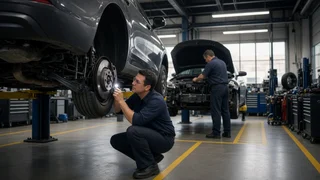
Find a licensed station. Inspections are usually done at state-licensed private garages, dealerships or state-operated lanes, depending on the program. Bring the required documents. These commonly include the vehicle registration and proof of insurance, and sometimes a driver's license or previous inspection record. Vehicle identification. The inspector confirms the VIN and records details such as make, model, year and odometer reading. Equipment check. The inspector works through the state checklist, often combining a visual review, functional tests and, for some items, measurement. Result. The vehicle either passes, and a test certificate, windshield sticker or electronic record is issued, or fails, and the inspector documents which items did not meet the standard. Fees. Most states set or cap the inspection fee. Ask the station or check the state agency for the current amount.
The Car Safety Inspection Form and Test Certificate
The car safety inspection form is the inspector's record of the test. It usually lists the vehicle's identifying details, the station and inspector, the date, and a pass or fail mark for each checklist item, with notes on any defects. Many states now submit results electronically to a state database, so the paper or printed report serves mainly as the owner's copy.
When a vehicle passes, the state issues proof of inspection. This may be a windshield sticker, a printed test certificate, an electronic record linked to the registration, or a combination of these. Keep your copy of the report, especially after a failure, because it lists exactly what must be repaired before a retest.
Car Safety Inspection Validity
How long a pass remains valid is set by each state. In an annual program, a pass generally covers one year, but the expiration may be tied to the month of inspection, the registration renewal date or a fixed calendar schedule. In states that require inspection only at sale or transfer, the certificate may be valid for a limited window, and the transfer must be completed within that time. Check the sticker or certificate for the expiration date, and confirm with your state whether an out-of-state inspection is accepted when you move. Usually it is not, and a new inspection is required after registering in the new state.
Driving with an expired inspection where one is required can lead to a citation and may block registration renewal. Penalties and any grace periods vary by state.
Failing an Inspection and the Retest
A failed inspection does not mean the vehicle is banned from the road permanently. It means specific items must be fixed. The typical path looks like this:
Review the failure report to see which items did not pass and why. Have the repairs done at the inspecting station or any repair shop. In most states you are not required to use the station that performed the inspection. Return for a retest. Many states allow a reduced-fee or free retest if you return to the same station within a set period. Ask about the window and cost at the time of failure. Keep repair receipts, which can help if a defect is disputed or if a waiver process exists for emissions-related failures in your state.
Some states restrict driving a vehicle that failed for a serious safety defect, such as brakes. If the inspector flags an item as unsafe, have it repaired before regular use, whatever the paperwork deadline.
Preparing for an Inspection
Many failures come from simple items the owner can check in a few minutes before the appointment:
Walk around the vehicle with someone else operating the controls, and confirm every exterior light works, including brake lights, turn signals and the license plate light. Test the horn, wipers and washer fluid. Check tire tread and look for sidewall damage. Look for windshield cracks in the driver's line of sight. Make sure all seat belts latch and release. Address any dashboard warning lights before the visit. Have your current registration and insurance documents in the vehicle.
Key Takeaways
Mandatory vehicle safety inspections in the US are a state-level requirement. Whether you need one, how often, what is checked and how long a pass lasts all depend on where the vehicle is registered and what kind of vehicle it is. The process itself is broadly similar across programs: vehicle identification, a standardized equipment check, a recorded result, and either a certificate or a repair-and-retest cycle. Treat the emissions test as a separate requirement, keep your inspection form and certificate, and confirm current rules with your state's motor vehicle agency before your deadline.