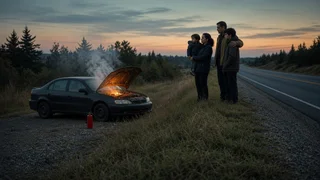
Truck on Fire: Immediate Roadside Safety Steps
If your truck catches fire, your priority is people, not the vehicle. Stop as soon as it is safe, shut off the engine, get everyone out, move well away, and call 911. Only try to put out a small fire, and only if you have the right extinguisher and a clear way to retreat. This applies to pickups, box trucks, and tractor-trailers. The only differences are scale and a few extra hazards, such as cargo, hazardous materials placards, air brakes, and high-voltage battery systems on electric and hybrid trucks.
Why Truck Fires Escalate Quickly
Every fire needs heat, fuel, and oxygen. A truck carries all three close together. Common ignition sources include electrical shorts, overheated brakes or bearings, hot exhaust and aftertreatment components, and fluid leaks onto hot surfaces. Nearby combustible material can then carry a small flame into a large fire within moments. That material includes fuel, oil, hydraulic fluid, wiring insulation, tires, plastic trim, and cargo. Heavy trucks add more fuel volume, large tires that burn intensely, and loads that may be flammable or hazardous.
Warning Signs Before Visible Flames
Smoke from under the hood, the wheel wells, or the trailer; A smell of burning plastic, rubber, or fuel; Repeatedly blown fuses or sudden electrical faults; A temperature gauge rising unusually fast; A strong burning odor near one wheel, which can point to a dragging brake, hot hub, or overheating tire; Smoke or flames reported by other drivers
Treat any of these signs as a reason to pull over and investigate from a safe position. Do not keep driving to the next exit. Airflow at speed can feed a fire, and smoke can hide how far it has spread.
Immediate Steps When a Truck Is on Fire
1) Signal and get off the road
Turn on your hazard lights and move to the shoulder or another open area. Avoid stopping under bridges, near fuel pumps, beside buildings, or over dry grass if you have a choice. Do not trade a safe stop for a perfect location. If the fire is growing, stopping now matters more.
2) Shut down the vehicle
Put the truck in park, or set the parking brakes on air-brake vehicles. Then turn off the ignition. Shutting off the engine stops the fuel pump and cuts most electrical current to the fire. Leave the key or fob where responders can find it, unless your company's procedures say otherwise.
3) Evacuate everyone
Get every occupant out right away and leave belongings behind. Help children, older passengers, and anyone with limited mobility first. Exit on the side away from traffic when you can, and watch for passing vehicles.
4) Move well away and stay upwind
Move far from the truck, ideally upwind and uphill, and put a barrier such as a guardrail between you and traffic. Burning vehicles give off toxic smoke. Tires, fuel tanks, gas struts, and cargo can rupture or burst. Keep bystanders back and do not go back for property. If the truck displays hazardous materials placards, move much farther away and keep upwind.
5) Call emergency services
Call 911 and give your location as precisely as you can. Mile markers, exit numbers, direction of travel, and landmarks all help. Describe the vehicle and say whether anyone is injured or trapped. Also report whether the truck is carrying cargo, hazardous materials, or a high-voltage battery. Commercial drivers should report placard numbers and shipping-paper information if they can do so safely. Follow the dispatcher's instructions.
6) Decide whether to use an extinguisher
Attempt to fight the fire only if all of the following are true. The fire is small and just starting. Everyone is already out. Emergency services have been called. You have a suitable extinguisher. You can stand with your back to a clear exit and the wind behind you. If the fire is in the cargo area, involves a fuel tank, involves a high-voltage battery, or is spreading, do not fight it. Leave it to firefighters.
Using a Fire Extinguisher Safely
In the US, a fire extinguisher rating shows the classes of fire it is approved for. A multipurpose ABC dry chemical unit is a common vehicle choice because a single truck fire can involve several fuel types. The size and number on the label indicate capacity and effectiveness. Commercial vehicle operators should confirm the extinguisher type and rating their regulations and employer require.
Class | Fire type | Typical truck example; A | Ordinary combustibles | Upholstery, cardboard, wood, some cargo; B | Flammable liquids and gases | Gasoline, diesel, oil, hydraulic fluid; C | Energized electrical equipment | Wiring, alternator, battery cables
Pull the pin. Aim at the base of the flames, not the smoke. Squeeze the handle steadily. Sweep side to side across the base of the fire. Back away if the fire does not shrink quickly or the extinguisher runs out.
Do not open the hood fully if you suspect an engine fire. A rush of air can make flames flare toward you. If you must reach the fire, crack the hood only slightly, or discharge through the grille or wheel well. For trailer fires, keep the cargo doors closed. Opening them feeds oxygen to the fire and can expose you to falling or burning freight.
Electrical Isolation and Special Cases
Electrical isolation means cutting power to stop current from feeding an electrical fire. Turning off the ignition does most of this. Many heavy trucks also have a battery disconnect switch. Use it only if it is easy to reach and well away from the fire. Do not try to remove battery cables from a burning or smoking vehicle.
Electric and hybrid trucks need extra caution. A high-voltage battery fire can be very hard to put out with a handheld extinguisher. It can release toxic gases and can reignite long after it seems to be out. Evacuate, call 911, tell the dispatcher the vehicle has a high-voltage battery, and leave firefighting to responders. Battery layout and emergency shutoff points vary by manufacturer and model, which is another reason to leave this work to trained crews.
Tire and brake fires on heavy trucks can look small but often reignite after they appear to be out. Separating a tractor from a burning trailer is a judgment call for trained commercial drivers following their company's procedures. It is not a general recommendation.
After the Fire Is Out
Stay away until emergency services say the scene is safe. Hidden heat can restart the fire. Do not try to start or drive the truck, even if the damage looks minor. Wiring, fuel lines, and brake components may be compromised. Photograph the scene once it is safe, and get any incident report details from responders. Contact your insurer. Commercial drivers should also notify their carrier or fleet manager. Arrange towing and have the vehicle inspected by a qualified technician before any repair decision. Replace or professionally recharge any extinguisher you used, even if you only discharged part of it.
Reducing the Risk of a Truck Fire
Prevention focuses on keeping ignition sources away from combustible material. Fix fluid leaks promptly. Watch for damaged or rubbing wiring, especially after aftermarket installations. Keep debris and oil buildup away from exhaust parts. Check tire pressure and brake condition regularly. Investigate any recurring electrical fault. Carry a properly rated extinguisher that is mounted where you can reach it and checked on schedule, and know how to use it before you ever need it.
Key Takeaway
When a truck is on fire, stop, shut down, evacuate, move upwind, and call 911. An extinguisher is an option only for a small, early fire, with everyone safe and an escape route behind you. Everything else is a job for emergency services.