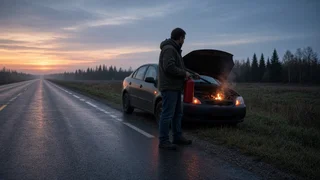
How Do You Extinguish a Fire? A Practical Guide for Vehicle and Small Fires
You put out a fire by removing at least one of the three things it needs: heat, fuel or oxygen. In practice, that means cooling the burning material, cutting off the fuel or electrical supply, or smothering the flames so they cannot get air. Whether you should try to do this yourself depends on one question: is the fire small, contained and easy to escape from? If it is, the right extinguisher used correctly can stop it. If it is spreading, producing heavy smoke, or involves the fuel system or a high-voltage battery in a vehicle, your job is safe evacuation and calling emergency services, not firefighting. This guide explains how to stop a small fire, how extinguisher ratings work, and how those principles apply to the situation many drivers fear most: a fire in or under a vehicle.
The Short Answer: When to Fight and When to Leave
Fighting a fire is only reasonable when every condition below is true. If any one of them is not, get yourself and others away and call 911.
The fire is small and not spreading quickly. Everyone else is already out of danger or moving away. You have a clear exit behind you that the fire cannot block. You have the correct type of extinguisher and know how to use it. The smoke is not thick enough to make breathing or seeing difficult. The fire does not involve a fuel leak, a gas cylinder or a damaged electric-vehicle battery.
If the fire is not clearly out within a few seconds of discharging the extinguisher, stop and leave. Portable extinguishers empty quickly, and a fire that survives the first attempt is usually beyond what one person can handle.
How Fire Works: Heat, Fuel and Oxygen
Every fire needs an ignition source to start it, combustible material to burn, and oxygen to sustain it. Firefighters often describe a fourth element, the chemical chain reaction that keeps combustion going, which is what some dry chemical extinguishing agents interrupt. Understanding this helps explain why different methods suit different fires.
Removing heat: Water cools ordinary combustibles such as paper, wood and fabric, but it is dangerous on burning oil, fuel or live electrical equipment. Removing fuel: Shutting off a gas supply, turning off an engine or moving combustible material away starves the fire. Removing oxygen: A lid on a pan, a fire blanket or a smothering extinguishing agent cuts off air. Interrupting the reaction: Dry chemical agents disrupt combustion chemically as well as smothering it.
Understanding Fire Extinguisher Ratings
In the US, portable extinguishers are labeled by the classes of fire they are designed for. Using the wrong type can make a fire worse, so the rating matters more than the size of the cylinder.
Class | What burns | Common examples; A | Ordinary combustibles | Upholstery, paper, wood, cloth, some plastics; B | Flammable liquids and gases | Gasoline, diesel, motor oil, solvents; C | Energized electrical equipment | Wiring, fuse boxes, appliances that are still powered; D | Combustible metals | Certain metal shavings and specialty metals; K | Cooking oils and fats | Commercial or home kitchen grease fires
Many labels combine letters with numbers, for example a format such as 2-A:10-B:C. The number before A indicates relative effectiveness on ordinary combustibles, the number before B indicates relative effectiveness on flammable liquids, and the C means the agent does not conduct electricity. A higher number means the extinguisher is rated to handle a larger fire of that class. The C designation has no number.
For vehicles, a multipurpose ABC dry chemical extinguisher is the common choice because a car fire can involve upholstery, fuel or oil, and electrical wiring at the same time. Choose one that is rated for vehicle use, can be mounted securely so it does not become a projectile in a crash, and is within reach of the driver. Check the pressure gauge periodically and follow the maintenance guidance on the label.
How to Use a Fire Extinguisher: The PASS Method
Most US fire safety training teaches the PASS sequence. Before you start, position yourself with your back to a clear exit and stay several steps away from the flames, closing in gradually only if the fire is shrinking.
Pull the pin, which breaks the tamper seal. Aim the nozzle or hose low, at the base of the fire, not at the flames or smoke. Squeeze the handle slowly and evenly to release the agent. Sweep from side to side across the base of the fire until it appears to be out.
Once the flames are gone, back away while watching the area. Fires, particularly those involving fuel or electrical components, can reignite. If it flares up again and your extinguisher is spent or the fire is growing, leave.
How to Stop a Small Fire Without an Extinguisher
Sometimes the fastest safe action does not involve an extinguisher at all. The method depends on what is burning.
Grease or oil fire on a stove: Turn off the heat and cover the pan with a metal lid or baking sheet. Never use water, which can cause burning oil to spatter violently. Do not try to carry the pan outside. Small electrical fire: Cut the power if you can do so safely, then use a Class C-rated extinguisher. Do not use water on anything that may still be energized. Ordinary combustibles: A small fire in paper or fabric can be smothered with a fire blanket or put out with water, provided no electricity or flammable liquid is involved. Clothing on fire: Stop, drop and roll, covering your face with your hands, to smother the flames.
Vehicle Fires: What Makes Them Different
A vehicle combines several fire hazards in a small space: flammable fuel and fluids, hot exhaust components, electrical wiring, plastics and upholstery, and in many cases pressurized components or a large high-voltage battery. Fires often begin in the engine compartment from fluid leaks contacting hot surfaces or from electrical faults, though they can also start under the vehicle or in the cabin. Warning signs include smoke from under the hood, a burning plastic or rubber smell, rapid changes in engine temperature, and blown fuses.
What to Do if Your Car Catches Fire
Signal and pull over as soon as it is safe, away from buildings, other vehicles, dry grass and fuel pumps. Turn off the engine. This stops the fuel pump and is a first step toward electrical isolation. Get everyone out immediately and do not go back for belongings. Move well away from the vehicle and keep others away, staying upwind of the smoke and clear of traffic. Call 911 and give your location, the type of vehicle and whether it is an electric or hybrid model.
Should You Open the Hood?
Generally, no. Opening the hood lets a rush of oxygen into the engine compartment, which can turn smoldering material into a fully developed fire in an instant and put your face and hands directly in its path. If you have an extinguisher and the fire is clearly small, a common recommendation is to aim the agent through the gap at the edge of the hood or through the grille or wheel well rather than lifting the hood. If flames are visible coming from the engine bay or the cabin, do not attempt to fight it.
Electric and Hybrid Vehicle Fires
Fires involving a lithium-ion traction battery behave differently from conventional fuel fires. Damaged cells can enter thermal runaway, a self-sustaining reaction that generates its own heat and can continue or restart long after the visible flames appear to be out. A handheld extinguisher is not designed to stop this. If smoke or fire comes from the battery area of an EV or hybrid, evacuate, keep your distance, avoid breathing the smoke, and tell the dispatcher it is an electrified vehicle so responders can plan accordingly. Do not touch the vehicle or try to disconnect high-voltage components yourself.
Common Mistakes That Make Fires Worse
Throwing water on burning fuel, oil or grease. Using water or a non-C-rated extinguisher on live electrical equipment. Opening a car hood or door into an active fire. Aiming at the flames instead of the base of the fire. Standing with the fire between you and your exit. Returning to a burning vehicle for personal items. Assuming a fire is out and walking away without watching for reignition. Delaying the 911 call while trying to fight the fire alone.
After the Fire Is Out
Even if you extinguish the fire yourself, it is sensible to have emergency services or a qualified technician inspect the scene, since heat may remain inside panels, wiring or upholstery. Do not restart or drive a vehicle that has had a fire, however small. Have it towed and inspected, and contact your insurer. Replace or professionally recharge any extinguisher that has been discharged, even partially, because it may not work properly the next time.
Key Takeaways
To extinguish a fire, you remove its heat, fuel or oxygen, using a method and extinguisher matched to what is burning. A multipurpose ABC extinguisher and the PASS technique can stop a small, contained fire. In a vehicle, the priorities are pulling over, shutting off the engine, getting everyone out and calling for help. If the fire is large, spreading, involves fuel or a high-voltage battery, or you have any doubt about your escape route, the correct way to handle it is to leave it to the professionals.