Toyota Camry Brake Pads: How to Choose the Right Set
The short answer
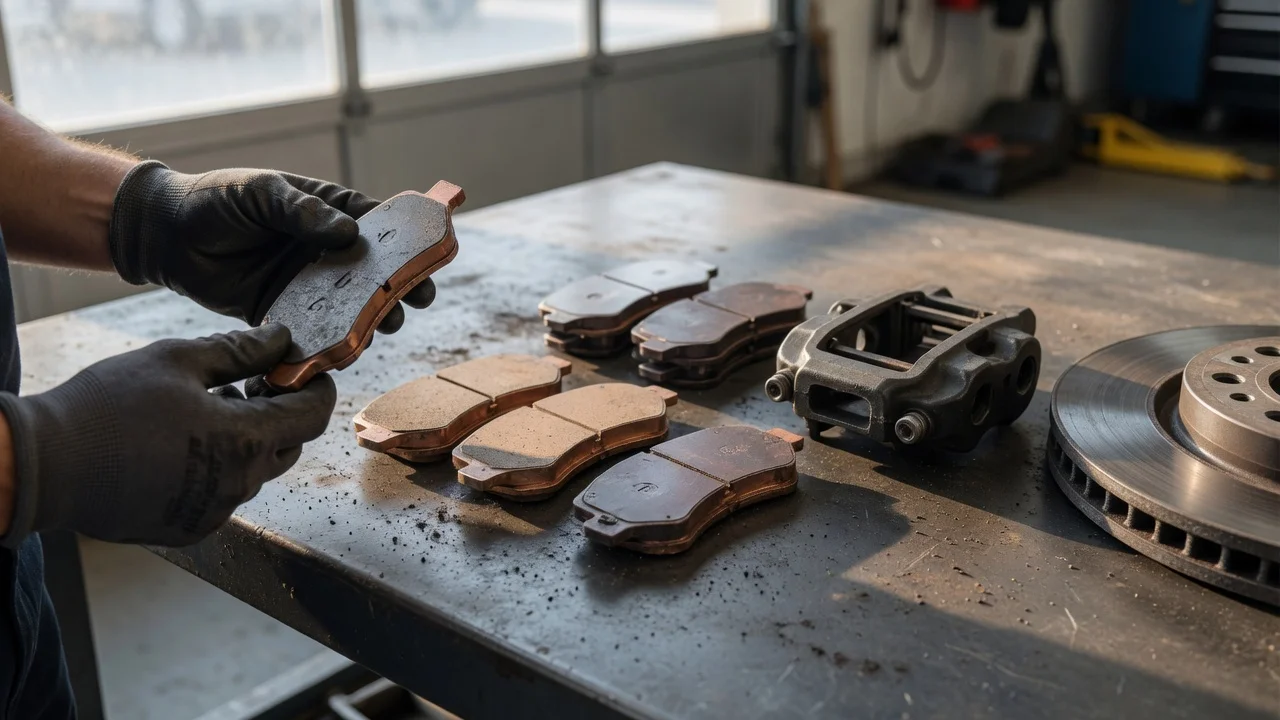
No single brake pad set fits every Toyota Camry. The correct pads depend on the car's model year, the market it was built for, its trim level, its powertrain (four-cylinder, V6 or hybrid, where offered), and whether you are replacing the front or rear pads. Front and rear pads are different parts, and pad shape can change between generations and sometimes within one generation when brake hardware differs by trim. Confirm fitment against your exact vehicle before buying, then choose a pad material based on how you drive.
This guide does not include part numbers, pad dimensions, minimum thickness limits, prices or test results, because no verified data for specific Camry versions was supplied. Check those figures in the vehicle's service information or with the parts supplier's fitment records for your car.
What determines which pads fit your Camry
Model year and generation: brake components can change when a new Camry generation is introduced, and occasionally partway through one. Market: a Camry sold in one region may use different brake hardware from one sold elsewhere under the same name. Trim level: some trims may use larger brakes or different calipers (the clamp that presses the pads against the rotor). Powertrain: four-cylinder, V6 and hybrid versions, where available, may not share the same brake parts. Axle position: front and rear pads differ in size and shape, and are usually sold as separate sets.
The most reliable way to resolve these differences is to search by your vehicle identification number (VIN), which encodes the build details of your specific car. If a supplier's lookup asks you to pick between two options for the same year, such as different engines or brake packages, that is a sign the pads differ and you should confirm which applies before ordering. If you are unsure, comparing the old pads against the new ones before installation is a sensible final check.
Choosing a pad material
Once you know which pads fit, the main choice is the friction material. The three common types involve trade-offs rather than one clear winner.
Pad type | Typical strengths | Typical trade-offs; Ceramic | Generally quiet, low visible brake dust, suited to everyday commuting | Often costs more than organic pads; Semi-metallic | Generally handles heat well, suited to heavier use such as frequent towing or hilly driving | Can be noisier, produce more dust and wear rotors faster; Organic (non-asbestos organic) | Generally quiet and gentle on rotors | Tends to wear faster and tolerate less heat
For a Camry used mainly for daily driving, ceramic pads are a common choice because of their quiet operation and low dust. Semi-metallic pads make more sense if the car regularly carries heavy loads or descends long grades. These are general characteristics of each material; specific products vary, and no comparative test data for particular brands was supplied.
OEM versus aftermarket pads
OEM (original equipment manufacturer) pads are made to Toyota's specification for the vehicle and are a straightforward way to keep the original braking feel. Aftermarket pads come from other manufacturers and range from budget options to performance-oriented sets. Either can be a reasonable choice if the pads are listed for your exact Camry version. If you value predictability, OEM or an aftermarket pad described as matching original specifications is the conservative option.
A note on hybrid models
Camry Hybrid models use regenerative braking, where the electric motor helps slow the car and recovers energy. Because the friction brakes do less of the work in many situations, pad wear patterns can differ from non-hybrid versions. Hybrid models may also have specific service procedures for brake work. Check the service information for your model year before replacing pads on a hybrid.
Signs your pads may need replacing
A high-pitched squeal when braking, which on many pads comes from a built-in wear indicator. A grinding sound, which can mean the pad material is worn through and metal is contacting the rotor. A longer stopping distance or a softer brake pedal than usual. Vibration through the pedal or steering wheel when braking, which can also point to rotor problems. Pad material that looks thin when viewed through the wheel.
Replacement intervals depend heavily on driving style, traffic and terrain, so no fixed mileage applies to every Camry. Use the minimum pad thickness given in the service information for your vehicle rather than a general rule, and have the rotors inspected at the same time, since worn or damaged rotors can affect new pads.
Next steps
Note your Camry's model year, market, trim and powertrain, or have the VIN ready. Decide whether you need front pads, rear pads or both. Use a VIN-based or detailed vehicle lookup to confirm the correct pad set. Choose a pad material that matches how you use the car. Check rotor condition and decide whether rotors or hardware such as clips and shims also need replacing. If you are not experienced with brake work, have the pads fitted by a qualified technician, since brakes are a safety-critical system.